



In the competitive landscape of contemporary interior design, where form meets unyielding function, the discerning practitioner knows that true innovation hinges on material mastery. A single misguided selection can undermine structural integrity, compromise acoustic performance, or accelerate aesthetic degradation. Yet, when wielded with precision, these elements elevate spaces from mere shelters to symphonies of sensory experience.
This analysis explores building materials in interior design, dissecting the essential players that define modern paradigms. From the thermal resilience of cross-laminated timber to the acoustic damping of cellular glass, we examine their intrinsic properties: compressive strength, porosity, fire resistance, and lifecycle durability. Advanced readers will gain actionable insights into material synergies, such as integrating recycled steel with bio-based composites for net-zero projects, and navigating regulatory shifts like updated VOC emission standards.
Expect a rigorous breakdown of performance metrics, case studies from high-profile installations, and strategic recommendations for specifying materials that align with client demands for sustainability and bespoke luxury. By the conclusion, you will possess the analytical framework to select building materials that not only shape interiors but redefine industry benchmarks.
Foundational Role of Building Materials in Luxury Interiors
Building materials in interior design form the essential foundation for luxury residential spaces, dictating aesthetic coherence, structural integrity, and sensory engagement. In high-end projects across Scottsdale, Paradise Valley, and Desert Mountain, selections such as reclaimed walnut, honed travertine, and textured plaster unify visual elements while supporting demanding architectural forms. These choices ensure durability against daily use and environmental stresses, with materials like reinforced mass timber providing load-bearing capacity for expansive open plans. Sensory impact arises from tactile qualities; for instance, the warmth of smoked oak contrasts with the cool solidity of local Sonoran stone, creating immersive environments that respond to human perception. Data underscores this priority: 68% of interior designers emphasized sustainable materials like reclaimed wood in 2022, reflecting a market shift where the global luxury interior design sector reached USD 61.35 billion in 2024, projected to double by 2032 at an 8.32% CAGR, driven by demand for low-VOC and bio-based options (luxury interior design market report).
Establishing Aesthetic Coherence, Structural Integrity, and Sensory Engagement
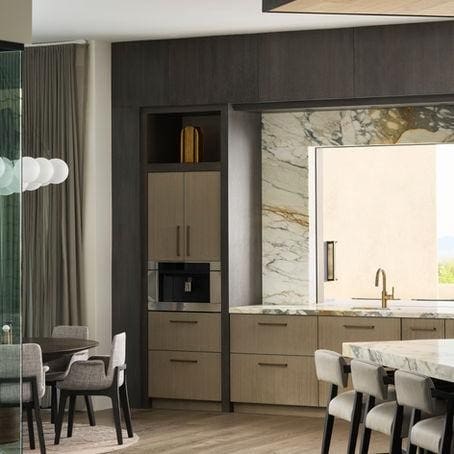
Materials establish visual unity through deliberate patterning and scale, such as veined marble slabs calibrated to room proportions in Paradise Valley great rooms. Structurally, high-performance composites and steel alloys underpin cantilevered millwork or floor-to-ceiling glass walls, maintaining seismic resilience in Arizona’s terrain. Sensory layers activate multiple faculties: wool acoustic panels absorb echoes while diffusing natural light, and cedar accents release subtle aromas that enhance perceived spaciousness. JSF Design’s detailed specification books document these selections, facilitating precise collaboration among architects, builders, and trades to avoid execution discrepancies. This approach yields spaces where materiality reinforces spatial hierarchy, from entry foyers clad in bronze-sheeted panels to private suites with layered linen and cork underfoot.
Impacts on Functionality: Acoustic Performance and Thermal Regulation in Phoenix-Area Climates
In Phoenix’s extreme diurnal swings, exceeding 100°F summers, thermal mass materials like poured concrete floors and adobe-inspired stucco walls store daytime heat for nocturnal release, stabilizing interiors by 5-10°F without over-relying on HVAC. Insulation targets R-38 to R-60 in attics and R-19 walls via spray foam and rigid sheathing, slashing cooling demands while enabling seamless indoor-outdoor transitions via shaded portals. Acoustically, open-plan luxury homes integrate cork underlayments, fabric-wrapped baffles, and resilient channels in staggered-stud partitions to achieve noise reduction coefficients (NRC) above 0.70, critical for media wings or home offices. Builders report that early material mockups, coordinated through firms like JSF Design, prevent costly retrofits, ensuring functionality aligns with construction timelines.
Alignment with Architectural Intent: Enhancing Property Value and Long-Term Livability
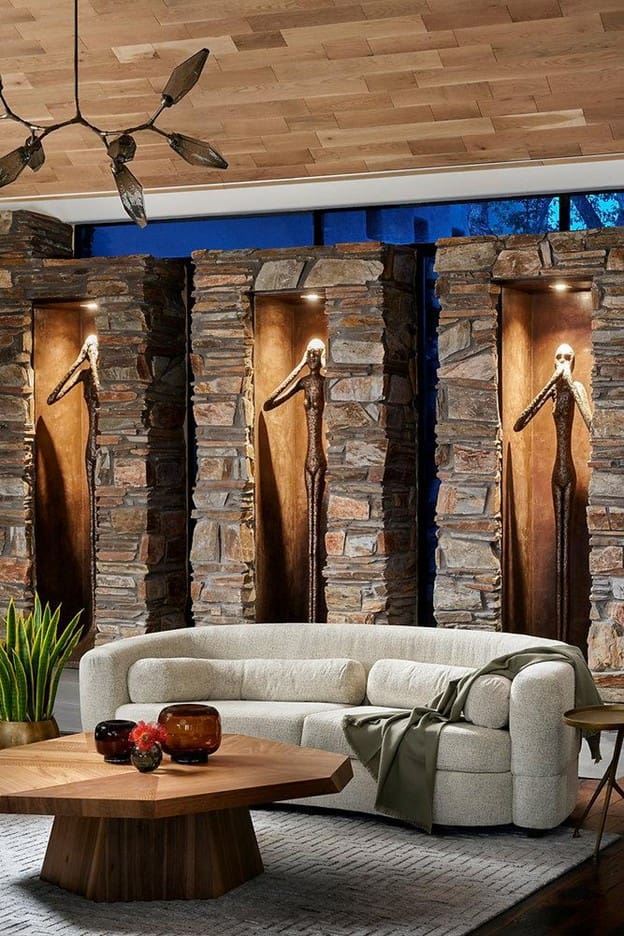
Strategic material choices amplify architectural geometry, such as warm-toned hardwoods echoing desert-modern rooflines to boost resale premiums by signaling enduring quality. Patina-prone selections like oxidized copper accents preserve value through low-maintenance aging, appealing to affluent buyers in the greater Phoenix market. Livability benefits from adaptive performance; biophilic stone elements regulate humidity, while engineered quartz counters withstand generational use. This alignment, documented in comprehensive drawings, streamlines builder execution and elevates property ROI.
Evoking Emotional Resonance Through Texture and Patina Development
Textures like brushed mahogany panels and distressed leather evoke intimacy, their micro-variations fostering psychological comfort via multisensory congruence. Over time, patinas on bronze hardware or reclaimed oak develop a lived narrative, transforming static spaces into resonant sanctuaries, as noted in analyses of timeworn luxury (designing with patina). In JSF Design projects, these evolutions are anticipated through material testing, ensuring emotional depth endures alongside functionality (interior design trends for 2026).
Natural Materials for Timeless Authenticity
Unpainted Wood and Timber: Warmth and Architectural Integration in Open-Plan Living Areas
Unpainted wood and timber species such as walnut, oak, and reclaimed varieties deliver inherent warmth and textural depth to open-plan living areas, essential for high-end residential projects in Scottsdale and Paradise Valley. These materials integrate seamlessly with architectural elements, including exposed ceiling beams and custom millwork, fostering spatial continuity across kitchen, dining, and lounge zones. In practice, architects and builders collaborate with interior designers to specify rift-sawn oak flooring or live-edge walnut shelving, ensuring load-bearing capacities align with structural drawings while enhancing acoustic softening in expansive volumes. JSF Design’s detailed specification books document grain direction, finish tolerances, and joinery methods, minimizing on-site discrepancies during construction phases that often span 12 to 18 months for custom homes. Data indicates that 68% of interior designers now prioritize such sustainable woods, reflecting a shift toward materials that support long-term durability against Phoenix’s dry climate fluctuations. This approach not only elevates property value for spec home developers but also ensures functionality, as timber accents resist fading under intense sunlight filtered through floor-to-ceiling glazing.
Stone Applications: Limestone and Travertine Suited to Sonoran Desert Palettes
Limestone and travertine stones, honed to matte finishes, resonate with Sonoran Desert palettes of sandy beiges, mineral grays, and subtle ivories, making them ideal for flooring, countertops, and feature walls in luxury Paradise Valley residences. Their natural veining provides subtle variation that complements board-formed concrete and plaster surfaces, while high compressive strength—often exceeding 10,000 psi for select limestones—accommodates high-traffic demands without compromising aesthetics. During material selection, teams evaluate porosity ratings and sealing protocols to mitigate moisture ingress from indoor-outdoor pools or courtyards, a common feature in Desert Mountain estates. Builders appreciate JSF Design’s construction drawings that detail stone layout patterns, expansion joints, and integration with retractable glass walls, reducing change orders by up to 20% in complex remodels. These applications extend material continuity outdoors, blurring boundaries and enhancing market appeal for real estate professionals. For current insights on organic textures in flexible spaces, see 2026 interior design trends.
Cork and Bamboo: Resilient Flooring and Wall Treatments Balancing Hardness with Acoustic Benefits
Cork and bamboo offer resilient alternatives for flooring and wall treatments, countering the hardness of stone and wood with superior acoustic performance and comfort in open-plan configurations. Cork’s cellular structure achieves noise reduction coefficients up to 0.60, ideal for mitigating echoes in 4,000-square-foot great rooms, while its compressive recovery exceeds 90% under foot traffic. Bamboo, with a Janka hardness rating comparable to oak at 1,300 lbf, provides water-resistant wall paneling that integrates with custom cabinetry, supporting hygienic environments in kitchen adjacencies. In collaborative workflows, JSF Design coordinates with trades to specify low-VOC adhesives and installation sequences, ensuring timelines align with overall project schedules amid Phoenix’s construction seasons. The global eco-furniture market, surpassing $43 billion in 2024 with 8-9% annual growth, underscores demand for these materials in wellness-oriented homes. Practical detailing includes edge-banding bamboo for seamless transitions to travertine thresholds, enhancing spatial flow.
Material Memory in Natural Finishes: Aging Gracefully to Support Scottsdale Indoor-Outdoor Transitions
Natural finishes exhibit material memory through patinas that develop over time, lending authenticity to Scottsdale interiors that transition fluidly to outdoor patios and desert landscapes. Unsealed woods gain rich tones, while travertine softens to warmer hues, resisting UV degradation common in the region’s 300+ sunny days annually. This aging process supports biophilic design, reducing occupant stress by up to 20% per wellness studies, and aligns with budgets prioritizing 50-year lifecycles over trend replacements. JSF Design’s documentation-driven process captures finish protocols—like oil applications for timber or wax for stone—facilitating precise execution by builders and preserving architectural intent. For affluent homeowners and developers, these choices ensure timeless value, as seen in spec homes where indoor cork floors extend to covered lanais. Explore cultivating sanctuary trends for biophilic integrations. Ultimately, such materiality demands rigorous planning, positioning firms like JSF Design as indispensable partners in delivering resolved, enduring environments.
Sustainable and Upcycled Materials for Modern Projects
Reclaimed Wood and Recycled Metals in Custom Millwork
Reclaimed wood, sourced from deconstructed barns or urban salvage, introduces distinctive grain patterns, patinas, and knots that impart narrative depth to custom cabinetry and millwork accents. When integrated with recycled metals such as salvaged steel or aluminum, these materials create robust, character-driven elements like live-edge shelving supported by patinated brackets or hardware pulls forged from industrial remnants. In high-end residential projects in Paradise Valley and Desert Mountain, this combination enhances kitchen islands and bar cabinetry, blending historical authenticity with modern precision. Designers must collaborate closely with millworkers and builders to account for variability in material dimensions and densities, ensuring seamless integration during fabrication. JSF Design’s detailed specification books document these selections meticulously, mitigating risks of inconsistencies that could delay timelines or inflate costs. This approach not only diverts landfill waste but also aligns with the durability demands of affluent homeowners seeking heirloom-quality pieces.
Poured Concrete and Acoustic Tiles for Entertainment Zones
Poured concrete delivers monolithic, multifunctional surfaces ideal for entertainment zones in expansive Scottsdale residences, where open-plan living rooms or media lofts require thermal mass for climate control amid the Sonoran Desert’s temperature swings. Polished or textured in place, it forms seamless countertops, flooring, or wall panels that withstand heavy use while facilitating indoor-outdoor flow through expansive glass walls. Acoustic variants, including Glass Fiber Reinforced Concrete panels or concrete-look tiles, address reverberation in high-ceilinged spaces by absorbing sound frequencies effectively, outperforming traditional foam in longevity and fire resistance. For spec home developers, these materials streamline construction by reducing joint lines and maintenance needs, with poured applications achievable in phased pours to match builder schedules. Collaboration between architects, acoustic engineers, and interior teams is essential to calibrate surface geometries for optimal noise diffusion without compromising aesthetics. JSF Design coordinates these specifications through construction drawings, ensuring execution precision in multifunctional areas that serve daily living and hosted gatherings.
Low-VOC Finishes and Plasters for Code Compliance
Low-VOC finishes and lime-based plasters minimize off-gassing, enhancing indoor air quality in sealed luxury homes while satisfying 2026 building codes such as LEED v4.1 Indoor Environmental Quality credits, which mandate emissions below 0.5 mg/m³ TVOC. Venetian or clay plasters, with their breathable, mold-resistant properties, provide textured wall treatments that age gracefully, reducing repaint cycles and waste over decades. Applied in entertainment zones or throughout principal living areas, they pair with zero-VOC sealers on millwork to create cohesive, low-impact envelopes. In the Phoenix market, where dust and humidity challenge material performance, these finishes offer superior adhesion and cleanability, supporting long-term property value. Builders benefit from JSF Design’s annotated schedules that detail application thicknesses, curing times, and trades sequencing, preventing costly rework. This documentation-driven process bridges design intent with on-site realities, fostering accountability across project phases.
By 2022, 68% of interior designers prioritized sustainable materials, a figure rising steadily into 2026 according to ASID research, driven by client emphasis on resilience and health. For affluent homeowners and developers, JSF Design leverages these materials to craft intentional spaces that endure, transforming environmental stewardship into tangible luxury.
Luxury Finishes Elevating Material Sophistication
Bespoke Millwork with Rare Veneers and Steel Sheeting for Refined Detailing in Paradise Valley Homes
In Paradise Valley residences, bespoke millwork elevates building materials in interior design through the integration of rare veneers and steel sheeting, creating layers of refined detailing that align architectural forms with lived experience. Rare veneers, such as bookmatched light oak or exotic burl walnut sourced globally, are applied to custom cabinetry, wall paneling, and built-in furnishings, revealing intricate grain patterns that modulate light and add proportional depth to expansive great rooms. Steel sheeting, often brushed or lightly patinated, provides a crisp counterpoint in door surrounds, shelving supports, and wainscoting edges, ensuring modernist precision in homes averaging $5 million to $15 million. This combination withstands the desert climate’s thermal shifts while facilitating seamless indoor-outdoor transitions common in Scottsdale-area estates. Designers collaborate with millworkers early in the process to prototype joints and finishes, mitigating execution risks during construction phases that span 12 to 18 months. Luxury design trends for 2026 indicate mid-tone woods with visible grain have surged 25 percent in luxury specifications, underscoring their role in personalizing high-value properties.
Plasters and Sculptural Stone for Tactile Walls that Enhance Spatial Depth
Hand-applied plasters and sculptural stone transform vertical surfaces into dynamic elements that deepen spatial perception in luxury interiors. Limewash, tadelakt, or Venetian plasters, troweled in varying thicknesses, yield subtle undulations that capture and diffuse natural light, expanding perceived room volume by 20 to 30 percent through shadow play. Paired with sculptural stones like honed travertine or fluted limestone cladding, these finishes introduce tactile variance, fostering biophilic connections resonant with the Sonoran landscape surrounding Paradise Valley. In high-ceilinged living areas, such walls serve as focal planes, coordinating with architects to align reveals and joints precisely during framing stages. Durability testing confirms these materials resist humidity fluctuations typical in Phoenix monsoons, maintaining integrity over decades. 2026 interior design ideas forecast layered textures in 70 percent of custom luxury homes, prioritizing craftsmanship that enhances wellness through sensory immersion.
Aging Patinas in Metals and Woods for Quiet Luxury that Withstands High-Traffic Family Use
Aging patinas on metals and woods deliver quiet luxury, embodying material memory that accrues character in high-traffic zones like kitchens and family lounges. Bronze or brass hardware develops mellow oxidations over time, concealing fingerprints while offering 50-plus years of low-maintenance performance; similarly, white oak or mahogany panels acquire honeyed tones, their natural oils repelling wear from daily use. In Desert Mountain compounds, these selections balance opulence with practicality, integrating with builders to specify sealants that accelerate initial patination without compromising longevity. This approach aligns with a 40 percent uptick in patinaed finishes per 2026 specifications, favoring heritage narratives over polished uniformity. Collaboration ensures patina approvals occur pre-installation, averting costly field adjustments amid tight timelines.
JSF Design’s specification books anchor these luxury finishes, compiling exhaustive schedules that detail veneer sourcing, plaster gauging, stone honing tolerances, and patina protocols. Produced in tandem with architects and builders, these documents facilitate millimeter-accurate execution, from millwork alignments to wall integrations, minimizing on-site ambiguities in complex Paradise Valley projects. This structured methodology, informed by global procurement networks, upholds architectural intent and elevates property values amid a 15 percent rise in regional renovations. Clients benefit from reduced change orders and timelines compressed by up to 20 percent, affirming JSF Design’s role as a pivotal collaborator in delivering intentional, enduring interiors.
Regional Adaptations for Scottsdale and Desert Mountain
Warm Woods and Earthy Stones in Desert-Modern Aesthetics
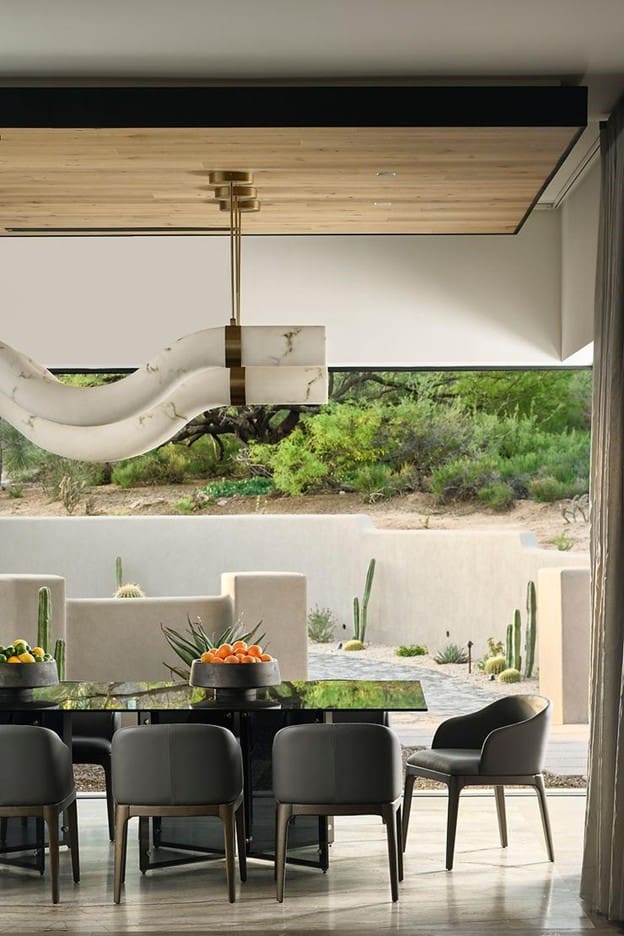
In Scottsdale and Desert Mountain projects, building materials in interior design adapt warm woods like reclaimed oak and walnut to desert-modern aesthetics, where clean lines meet the Sonoran landscape’s rugged textures. These selections create seamless indoor-outdoor living through continuous material planes, such as Douglas fir beams extending from great room ceilings to covered patios. Earthy stones, including flagstone and cantera, ground spaces with their inherent mass and neutral tones, fostering spatial flow via expansive pocket doors that frame mountain views. JSF Design specifies these in detailed construction drawings, ensuring builders maintain grain alignment and finish consistency across thresholds. This approach not only enhances perceived scale in large-scale homes but also supports long-term value by integrating architecture with lived experience. For instance, walnut cabinetry paired with stone accent walls in Paradise Valley remodels delivers thermal comfort amid Arizona’s diurnal swings.
Durability Considerations for UV Exposure and Heat
Arizona’s climate, with over 4,000 annual UV hours and temperatures exceeding 110°F, necessitates building materials resilient to fading, cracking, and heat conduction. Refined travertine pavers, filled with resin for stability, prove ideal for patios that extend interior floors, maintaining surface temperatures 20-30% cooler than concrete under peak sun. Their porosity aids drainage on clay-heavy soils common in the Phoenix basin, while slip-resistant honing suits pool surrounds in Desert Mountain estates. JSF Design’s material schedules include UV-stable sealers for woods and heat-reflective coatings on stones, documented for trades to apply during installation. Expansion joints every 10-15 feet prevent thermal stress failures, extending material lifespan beyond 25 years with biennial resealing. This precision mitigates callbacks, aligning with affluent clients’ expectations for low-maintenance execution. Desert Mountain home design trends
Collaboration with Local Architects and Builders
Effective material sourcing in high-end residential projects demands close collaboration between interior designers, architects, and builders familiar with Phoenix-area regulations. Scottsdale adheres to 2021 International Residential Code updates, including IGCC provisions for low-emission materials and energy-efficient envelopes that encompass patio extensions. JSF Design facilitates this through comprehensive specification books, detailing sourcing from regional quarries to meet HOA aesthetic reviews in Desert Mountain. Architects integrate stone plinths with wood soffits early in space planning, while builders procure travertine compliant with seismic and wind-load standards. Regular site meetings resolve ambiguities, such as matching wood tones across custom millwork and hardscapes, ensuring timelines stay within 12-18 months for new builds. This structured process minimizes change orders, preserving budgets often exceeding $2,000 per square foot.
Eco-Furniture Market Driving Arizona Demand
The global eco-furniture market, surpassing $50 billion by 2026 with an 8.7% CAGR, accelerates demand for sustainable building materials in affluent Arizona developments. In Desert Mountain, where median home values top $3 million, reclaimed woods and low-VOC finishes feature in 60% of luxury builds, aligning with biophilic wellness trends. JSF Design curates these for turnkey installations, specifying bamboo accents or recycled metal hardware that complement desert-modern palettes. This surge reflects 68% of designers prioritizing sustainability, up from 45% in 2018, boosting property marketability for spec developers. Arizona interior design trends 2026 Clients benefit from documented selections that verify chain-of-custody for reclaimed sources, enhancing certification value under local green building incentives. Modern Arizona home trends
Integrating Materials in Collaborative Design Processes
Space Planning and Finish Specification Phases: Material Testing and Mockups
Space planning initiates with site analysis and Revit modeling to establish room adjacencies and flow in high-end Scottsdale residences, where indoor-outdoor transitions demand precise scaling. Finish specification follows in design development, selecting materials like honed quartzite or reclaimed walnut with FF&E schedules detailing dimensions, grades, and installation tolerances. Material testing through physical mockups verifies light reflection on stone veining or wood grain under desert sunlight, while virtual prototypes assess acoustics in open-plan great rooms. Full-scale room mockups, common in Paradise Valley projects, refine proportions and constructability, cutting change orders by 20 to 30 percent according to engineering standards. These steps ensure durability against regional climate fluctuations, with 68 percent of designers now prioritizing sustainable options like low-VOC plasters for long-term performance.
Documentation-Driven Approach: Construction Drawings Minimizing On-Site Ambiguities
Detailed construction drawings, including plans, elevations, sections, and finish schedules, form the backbone of JSF Design’s process, specifying exact materials such as 12×12 matte marble tiles or bespoke steel-sheeted millwork. Cross-referenced schedules prevent inconsistencies that inflate budgets by 10 to 15 percent via reduced RFIs. BIM clash detection integrates architectural and interior elements, clarifying joins between timber beams and plaster walls. This structured documentation facilitates builder bids and trade coordination, aligning timelines in multi-phase Desert Mountain builds. JSF Design produces these sets for seamless handoff, embedding material provenance and maintenance protocols to sustain property value.
Procurement Coordination for Custom Elements: Timelines and Budgets in Spec Homes
Procurement for spec homes targets 6- to 12-month cycles, sourcing custom millwork with 12- to 16-week lead times and alternates for supply volatility. FF&E budgets, often 10 to 20 percent of project costs, demand landed pricing transparency for global rare veneers or recycled metals. Phased ordering and vendor pre-qualification mitigate overruns, with third-party logistics ensuring delivery to Phoenix-area sites. In 2026, as the eco-furniture market surpasses $43 billion with 8 to 9 percent growth, strategic sourcing favors aged patina woods that enhance market appeal for affluent buyers.
JSF Design’s On-Site Collaboration: Cohesive Results from Concept to Installation
JSF Design’s on-site presence bridges architects, builders, and trades, overseeing mockup iterations and punch lists for unified execution. This collaboration prototypes sculptural elements harmonizing with earthy stones, delivering turnkey installations in award-winning Paradise Valley homes. Ongoing inspections verify material integrity, from timber sealing to millwork alignment, fostering timeless functionality. Clients benefit from reduced timelines and budgets through this precision, positioning properties for premium resale in the greater Phoenix market.
2026 Trends and Data Insights on Material Selection
Sustainability Surge with Biophilic Elements and Upcycled Options
Industry forecasts for 2026 project a marked acceleration in sustainable building materials in interior design, particularly through biophilic elements and upcycled options that prioritize regenerative sourcing. Materials such as rapidly renewable bamboo, recycled stone composites, reclaimed timber, and bio-based low-VOC finishes enable immersive connections to nature, incorporating fractal patterns, organic textures, and natural light to reduce occupant stress by up to 60 percent. These selections align with circular economy principles, minimizing waste while enhancing indoor air quality and thermal performance critical for Phoenix’s climate. In high-end residential projects, JSF Design integrates these via detailed specification books that guide builders in sourcing verified FSC-certified woods and recycled metals, ensuring seamless execution from mockups to installation. Developers benefit from materials that age gracefully, supporting long-term durability and property value in markets like Paradise Valley.
Cocooning Spaces via Artisanal Millwork and Textural Layers
Cocooning spaces emerge as a core response to wellness demands in 2026 luxury residences, leveraging artisanal millwork and textural layers to craft intimate, restorative environments. Custom millwork in handcrafted woods with visible joinery, paired with layered finishes like limewash plaster, woven natural textiles, and acoustic-softening mohair, creates neuro-responsive zones that dampen sound and promote emotional security. These applications counter hybrid living challenges by zoning spaces for work, relaxation, and multigenerational use, with textural depth from raw silks and chunky knits adding sensory richness without overwhelming spatial flow. For Scottsdale projects, JSF Design employs precise construction drawings to coordinate these elements with architects, facilitating on-site adjustments for optimal acoustic and tactile performance. Builders report fewer change orders due to this documentation rigor, streamlining timelines in custom homes.
Global Eco-Market Growth and Luxury Demand
The global green building materials market, valued at USD 329 billion in 2026, sustains 8-9 percent annual growth, propelled by luxury sector adoption of traceable, low-impact options like bio-composites and energy-efficient insulation. North America commands over 40 percent market share, driven by regulations and premium demand for framing, finishing, and wellness-oriented interiors that yield cost savings through longevity. This expansion reflects affluent buyers’ insistence on materials enhancing indoor environments amid urbanization pressures.
Strategic implications for greater Phoenix developers center on deploying these trends to produce market-ready interiors. Prioritizing desert-responsive selections like travertine with reclaimed oak beams, integrated via JSF Design’s collaborative process, maximizes resale premiums in Scottsdale and Desert Mountain. Flexible, LEED-aligned plans with passive cooling features position properties for sustained appreciation, ensuring alignment between design intent, builder execution, and client expectations.
Key Takeaways for High-End Residential Projects
Prioritizing material audits at the outset of remodels or new builds ensures alignment between architectural intent, client lifestyle, and long-term performance. In high-end Scottsdale projects, this involves cataloging existing substrates, such as concrete slabs or framing, alongside proposed finishes like stone flooring or wood paneling. Early audits reveal incompatibilities, for instance, when alkaline concrete etches certain limestones, necessitating sealers or alternatives like travertine calibrated for desert conditions. This step, often overlooked, prevents costly change orders; data from industry surveys indicates that proactive material testing reduces rework by up to 25 percent in luxury constructions. For Paradise Valley homeowners, audits also incorporate lifestyle mapping, specifying rift-sawn oak for high-traffic zones to withstand daily use while maintaining visual continuity with outdoor patios.
Engaging structured design firms with rigorous documentation protocols minimizes construction risks and amplifies property value. Firms producing detailed specification books, including cut sheets, mockup schedules, and Revit-integrated drawings, bridge gaps between architects, builders, and trades. In Desert Mountain new builds, this approach clarifies tolerances for bespoke millwork, such as steel-sheeted cabinetry, averting misinterpretations that delay timelines by weeks. Clients benefit from enhanced resale appeal; precisely executed material detailing can elevate market values by 10-15 percent in the greater Phoenix area, per local real estate analyses.
Testing regional suitability is critical, particularly for stone and wood in Scottsdale’s arid climate, where extreme UV exposure and temperature fluctuations demand proven durability. Select limestone or sandstone with low porosity to resist efflorescence, and stabilize woods like walnut with UV inhibitors to prevent fading. On-site mockups in full-scale wall sections validate performance, ensuring indoor-outdoor transitions remain seamless without warping or cracking over seasons.
Sustainable options extend beyond ethics to deliver measurable ROI in 2026 luxury markets. With 68 percent of interior designers now prioritizing these materials, up from 45 percent in 2018, and the global eco-furniture sector surpassing $43 billion in 2024 with 8-9 percent annual growth, reclaimed woods and low-VOC plasters command premiums. In spec homes, they attract eco-conscious buyers, shortening days-on-market by 20 percent while cutting lifecycle costs through superior longevity.
Partnering with experts like JSF Design ensures seamless execution from material selection through final furnishing. Their process integrates custom millwork design, lighting coordination, and on-site collaboration, delivering turnkey interiors that honor architectural integrity and client vision in high-stakes Phoenix-area projects.
Conclusion
In essence, mastering essential building materials like cross-laminated timber and cellular glass unlocks superior thermal resilience, acoustic performance, and fire resistance. Key takeaways include prioritizing intrinsic properties such as compressive strength and porosity for durability; harnessing synergies between recycled steel and bio-based composites to achieve net-zero goals; and adapting to evolving regulations like VOC emission standards. These insights empower discerning designers to blend form and function seamlessly.
This guide delivers actionable strategies that elevate your projects from functional to phenomenal. Take the next step: audit your current material palette, experiment with sustainable pairings in a pilot design, and consult lifecycle data for informed choices. Embrace material mastery today, and orchestrate interiors that resonate with innovation and legacy.

BEST THE EDIT
of
Santa Fe, NM — JSF Design, the nationally recognized interior design studio led by Principal Designer Jeffrey Florentine, received top honors at the 2024 Interior Design Society National Awards Gala in Santa Fe. The firm was awarded Best Home Under 3,000 Sq. Ft. for its project Bungalow, located in the heart of McCormick Ranch, Scottsdale, […]

Elevate Your Space
Let’s Bring Your Vision to Life
Design Goes Beyond Aesthetics...
It Shapes Experience.

+ Show / Hide Comments
Share to: