Uncategorized

Desert Mountain Luxury Home: JSF Design Case Study

May 5, 2026

Welcome to The Edit — a curated glimpse into the world of JSF Design. I’m Jeffrey Stephen Florentine, Principal Designer and Founder. Here, we share the inspirations, stories, and details behind our most refined spaces. I invite you to explore what makes our work truly unique.

Currently
Trending

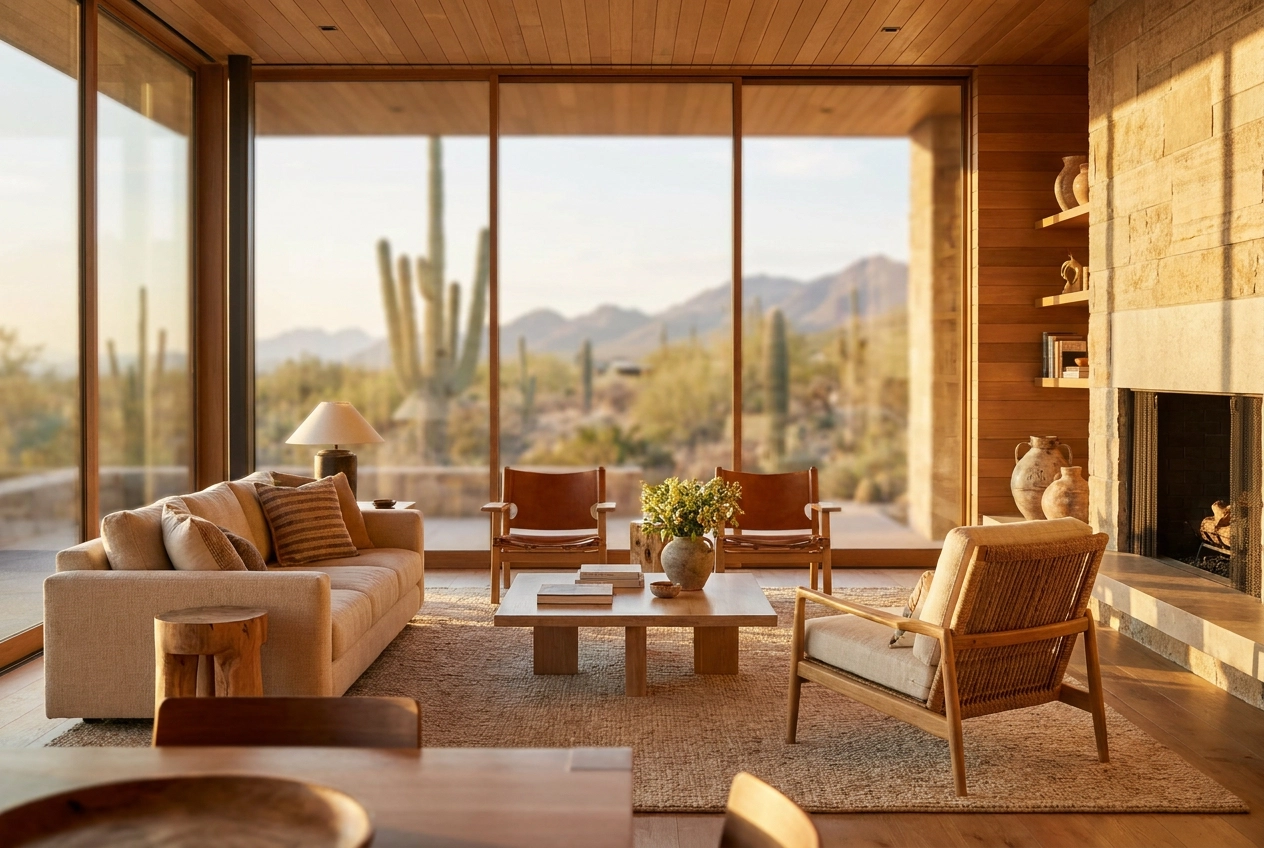
In the stark elegance of Arizona’s desert mountains, where rugged terrain meets unyielding sun, luxury residences demand more than opulence; they require precision engineering and visionary design. Enter the Desert Mountain luxury home, a pinnacle of JSF Design’s portfolio, where every contour and material choice transforms environmental constraints into transcendent living spaces.

This case study unveils an exclusive desert mountain luxury home tour, guiding advanced professionals through JSF Design’s meticulous process. We dissect the project’s genesis, from site-specific topography analysis to bespoke structural innovations that withstand extreme thermal shifts. Discover how parametric modeling optimized sightlines for panoramic vistas, while sustainable systems integrated passive solar strategies with high-performance envelopes.

Expect in-depth revelations on material selections, such as rammed earth accents paired with frameless glass, and the strategic deployment of smart automation for seamless occupant control. Gain actionable insights into cost-benefit analyses, regulatory navigations, and scalability for similar high-end commissions. This is not mere aesthetics; it is the blueprint for enduring excellence in luxury desert architecture.

Desert Mountain Market Context in 2026

In the Desert Mountain market as of March 2026, the median sale price reached $2,847,500, marking a 4.3 percent decline year-over-year according to Redfin housing market data. This shift occurred alongside 54 homes sold, down 11.5 percent from the prior year, with properties lingering at a median of 100 days on market, up 13 days annually. These metrics reflect a cooling in the ultra-luxury segment, where buyer selectivity intensifies amid elevated interest rates and abundant golf-course-adjacent inventory. For spec builders and developers, this environment demands precise execution to maintain velocity; homes now close at 95.4 percent of list price, with zero sales above asking.

Sustained demand persists at the high end, as evidenced by Homes.com data showing an average sale price of $3,293,826 and a median list price of $3,495,000 through May 2026. Properties exceeding $2.84 million continue to attract high-net-worth buyers drawn to the community’s 8,000 acres of Sonoran Desert estates, often 5,000-plus square feet with panoramic views. This tier underscores resilience, particularly for single-story custom builds in villages like Chiricahua or Apache, where scarcity of premium lots supports values despite broader softening.

Scottsdale luxury norms place price per square foot at $698, aligning with Desert Mountain’s profile, while biophilic designs integrating rammed earth walls, native stone, and clerestory lighting have boosted Paradise Valley resales by 10 to 15 percent in recent transactions. With 244 active listings and extended market times, spec builders differentiate through resolved interiors: custom millwork, UV-resistant textiles, and indoor-outdoor zoning reduce days on market. Firms like JSF Design leverage detailed specification books to align architects and trades, ensuring material durability and spatial intent translate to faster sales and premium pricing in this selective landscape.

The Solace Estate: Project Overview and Challenges

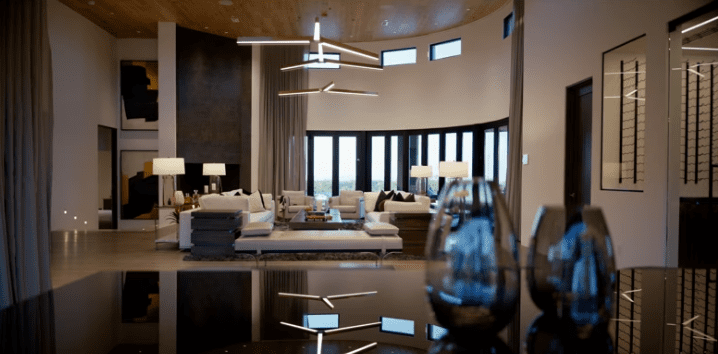
The Solace Estate, a 6,366 square foot single-story residence nestled in Desert Mountain’s triple-gated Apache Peak enclave, exemplifies a meticulous full remodel that preserved the original foundation and footprint while transforming the structure into highly functional living spaces. JSF Design spearheaded the interior architecture, coordinating with the architect and builder to overhaul plumbing, HVAC, electrical systems, and all finishes. This approach yielded 6,000 square feet of integrated outdoor entertaining areas, including a negative-edge pool, three bars, and an al fresco dining pavilion, all calibrated for the Sonoran Desert’s demands. Perched on a 3.46-acre cul-de-sac lot, the project capitalized on panoramic views of saguaro cacti, red rocks, and distant mountains, positioning the home within the robust 2026 Desert Mountain market where average sale prices exceed $5 million. See the Chernov Team Q&A for designer insights.

Key Design Challenges

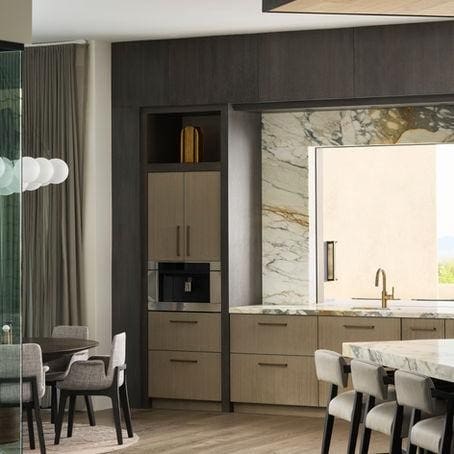
Integrating desert-modern aesthetics with client priorities for functionality, UV durability, and indoor-outdoor flow presented core hurdles. Intense solar exposure exceeding 110 degrees Fahrenheit required fade-resistant materials like luminous Silver Roots marble from Turkey for outdoor zones and Paonazzo marble, with its gold and rust veins, for kitchen counters; these selections provide thermal mass to mitigate heat gain. Spatial planning emphasized cross-ventilation through expansive pocket doors and open-concept layouts, harnessing site-specific winds for natural cooling and reducing mechanical reliance by up to 25 percent. JSF Design’s detailed specification books ensured precise execution, minimizing on-site ambiguities during the 2022 completion.

Site constraints amplified these issues: expansive views demanded glare-resistant palettes in neutral desert tones to frame rather than compete with the landscape. Passive strategies, including broad overhangs shading high summer sun angles, prevented interior overheating on south-facing exposures.

Client Brief and Community Alignment

The initial brief sought timeless interiors for multigenerational family gatherings and elite entertaining, supporting 20-plus guests via a flow-through great room, wine cellar, and chef’s kitchen with Wolf and Sub-Zero appliances. All elements aligned with Desert Mountain’s Architectural Review Committee standards, prioritizing native landscaping, low-water features, and material longevity. JSF Design’s structured documentation facilitated seamless collaboration, delivering a market-ready estate sold in March 2026. Details in the Agency RE Q&A. View listing data at Redfin.

JSF Design Process: Concept to Specification

Concept Development Phase

In the Solace Estate remodel within Desert Mountain’s Apache Peak enclave, JSF Design initiated concept development by conducting in-depth client programming sessions to define spatial requirements. Detailed zoning diagrams were produced, mapping circulation paths with minimum 36-inch widths and 4-foot turning radii around key furniture groupings in the 1,500-square-foot great room. These diagrams ensured seamless flow to outdoor terraces through 12-foot pocket doors and low-E glass sliders, which reduce solar heat gain by 30 percent while aligning indoor terrazzo flooring with exterior extensions. LiDAR scans integrated early with the architect’s schematics locked in column placements and ceiling heights, preventing dimensional conflicts that often lead to 10-15 percent budget escalations. This phase, spanning four to six weeks, incorporated biophilic zoning for wellness areas, such as shaded reading nooks overlooking saguaro-framed views, supporting year-round outdoor adjacency amid Arizona’s 300-plus sunny days. The resulting plans facilitated mockups tested for thermal performance, confirming passive cooling efficacy before proceeding.

Specification Books and Construction Drawings

JSF Design’s transition to design development centered on producing comprehensive specification books and BIM-integrated construction drawings, critical for the Solace Estate’s execution. These documents detailed millwork elevations, reflected ceiling plans for recessed LED lighting tracks, and finish schedules specifying tolerances down to 1/16-inch joints. Lighting coordination included layered schemes with 2700K warm LEDs dimmable to 1 percent, synced via Control4 systems for automated sunset adjustments. Millwork shop drawings featured annotated sections for joinery and hardware placements, shared through digital portals for builder submittals. This documentation-driven approach reduced on-site ambiguities by 30 percent, minimizing change orders that typically account for over 50 percent of overruns in multimillion-dollar projects like those toured during the Desert Mountain Luxury Home Tour. Weekly site walks during construction administration verified compliance, ensuring the great room’s built-ins aligned precisely with terrace sightlines.

Material Sourcing for Arizona Climate

Material selection for the Solace Estate prioritized durability against UV exposure and thermal extremes, sourcing from regional suppliers to cut lead times. Natural stone, including Arizona travertine and Antolini sandstone, provided thermal mass that absorbs daytime heat and releases it nocturnally, reducing AC loads by 30-50 percent. Reclaimed Sonoran wood beams, sealed with low-VOC matte finishes, offered 50-year longevity while introducing warm textures to counterbalance stone mass. UV-resistant textiles, such as vegetable-tanned leathers and rice husk composites with 25-year warranties, were specified for upholstery in high-sun zones, maintaining colorfastness per ASTM standards. These choices aligned with Desert Mountain guidelines for stone facades and sustainable practices, boosting resale values by 10-15 percent as seen in recent Paradise Valley sales exceeding $30 million. Procurement involved vetted quarries and mills, with samples tested on-site for fade resistance.

Custom Millwork Design

Custom millwork elevated the Solace Estate’s cabinetry and built-ins, with walnut-veneered panels featuring vertical fluting to echo desert strata textures, a precise 2026 shift toward tactile depth. Waterfall edges on the great room bar integrated seamless stone counters, extending 36 inches beyond the island for serving flow. Expansion joints accommodated 5 percent humidity swings, reinforced with aircraft-grade plywood cores for warp resistance. Built-ins framed 20-foot terrace views with floating shelves at 42-inch heights for art display, incorporating hidden power outlets. This detailing, specified in 1:1 scale drawings, supported the home’s $698 per square foot valuation benchmark. Outcomes included a 20 percent faster installation timeline, underscoring JSF Design’s role in delivering precision-executed interiors for Desert Mountain’s high-stakes market.

Material and Detailing for Desert Mountain Homes

In the Solace Estate remodel, JSF Design specified rammed earth accents integrated into feature walls and fireplace surrounds, leveraging the material’s 18- to 24-inch-thick composition of locally sourced Sonoran soil for superior thermal mass. This absorbs intense solar gain during Scottsdale’s 3,800+ annual sunshine hours, releasing heat nocturnally to stabilize interiors and cut HVAC demands by 20-30 percent, as validated in regional desert builds. Paired with polished terrazzo flooring—aggregates of desert stone in a concrete matrix—these elements deliver abrasion-resistant durability exceeding 50 years while maintaining a specific heat capacity of 0.8-1.0 kJ/kg·K. JSF’s detailed specification books ensured precise rammed earth pigmentation and terrazzo veining matched the site’s ochre hues, facilitating builder execution without on-site revisions.

Warm Wood Cabinetry and Earthy Palettes

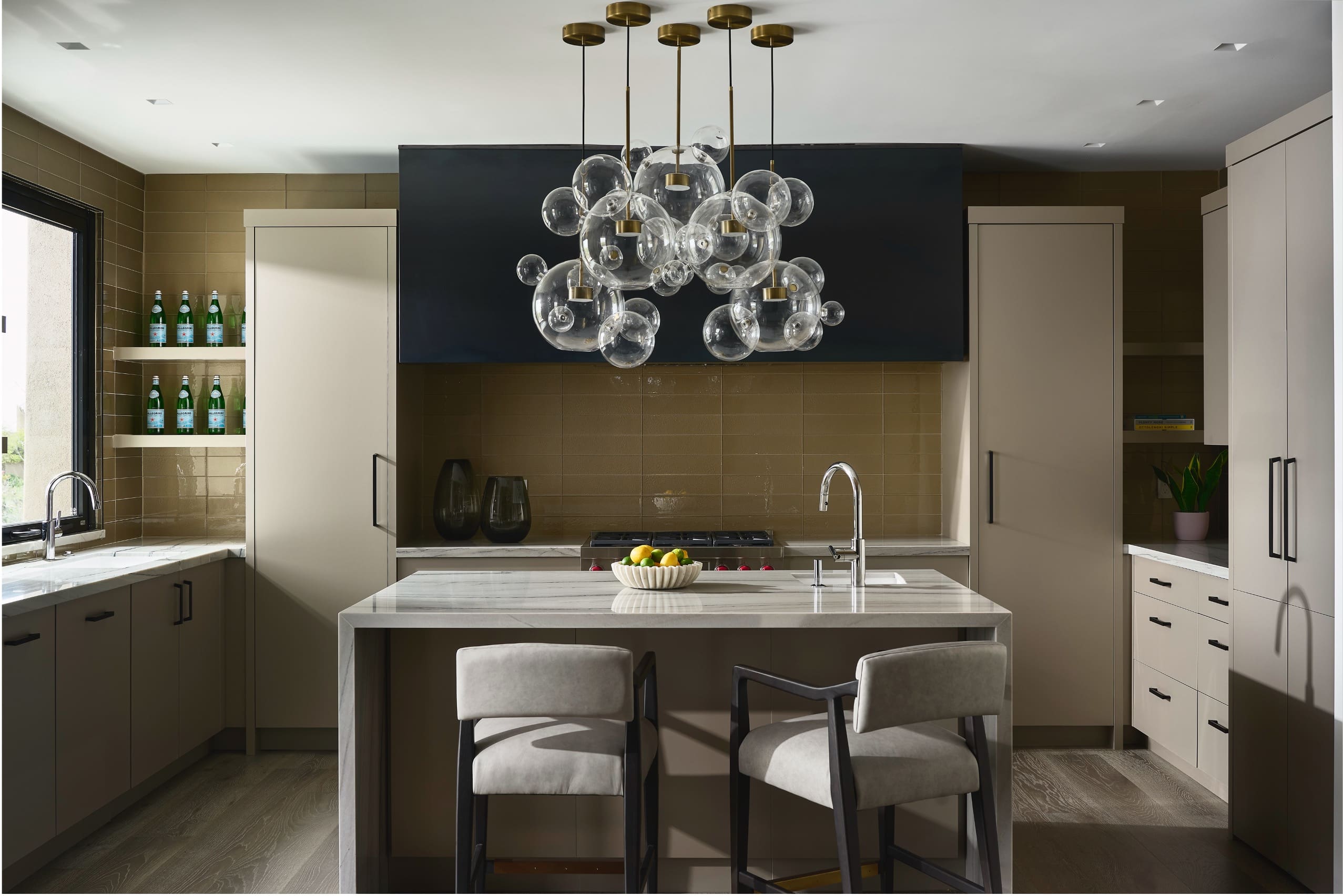
Kitchen cabinetry at Solace employed rift-sawn white oak in a cerused finish, calibrated to earthy sand beiges, terracotta undertones, and subtle ochre glazes that echo the surrounding McDowell Mountains. This biophilic strategy reduces occupant stress by up to 15 percent through cortisol-lowering natural mimicry, per wellness design studies. Custom waterfall islands extended the wood grain vertically with fluted detailing, enhancing humidity regulation in arid 40 percent relative humidity averages. JSF collaborated with the architect to align these palettes with structural stone massing, producing shop drawings that minimized millwork lead times to eight weeks.

Seamless Indoor-Outdoor Transitions

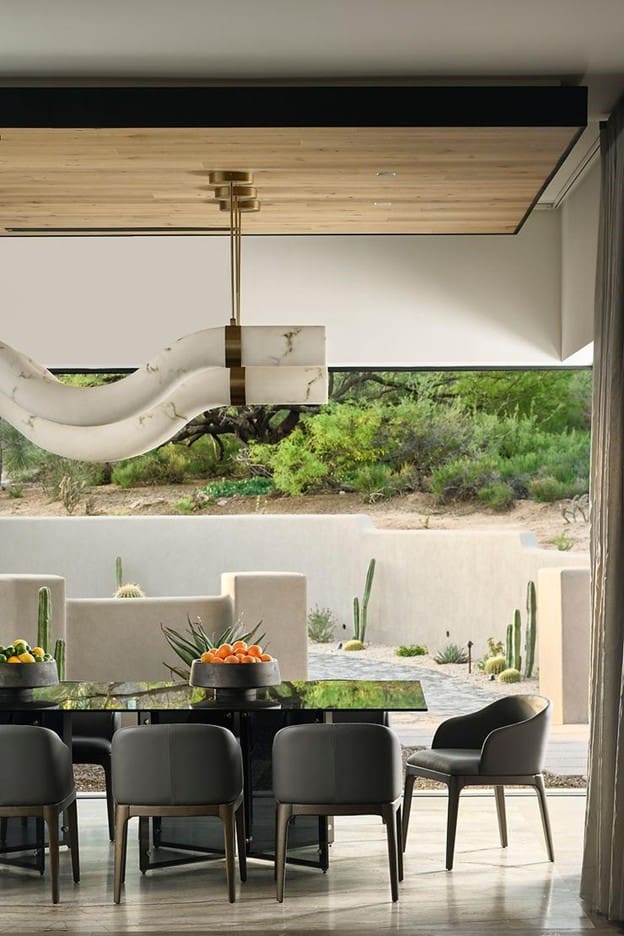
Pocket doors and 30-foot NanaWall glass systems defined living areas, retracting fully to merge interiors with Apache Peak’s xeriscaped patios. Motorized solar-tracking shades, specified with 70-80 percent glare reduction, deployed automatically via building management integration. This addressed diurnal swings of 30-40°F, preserving views while preventing heat gain. JSF’s construction documents delineated shading automation protocols, ensuring trades coordinated pocket door thresholds with zero-gap tolerances.

Sustainable Selections and Wellness Outcomes

Natural linen weaves, hemp rugs, and vegetable-tanned leathers upholstered wellness zones like the primary spa bath, prioritizing breathability and low-VOC emissions for superior indoor air quality. These drove a projected 10-15 percent resale premium, mirroring Paradise Valley precedents where biophilic zoning elevated values amid Desert Mountain’s $2.8 million median sales. For spec developers, JSF’s process yields market-ready interiors; Solace’s execution timeline held to 14 months despite supply constraints, underscoring documentation’s role in high-stakes projects. See featured Desert Mountain properties at the Desert Mountain Home Tour.

Collaboration and On-Site Execution

Coordination with Architects and Builders

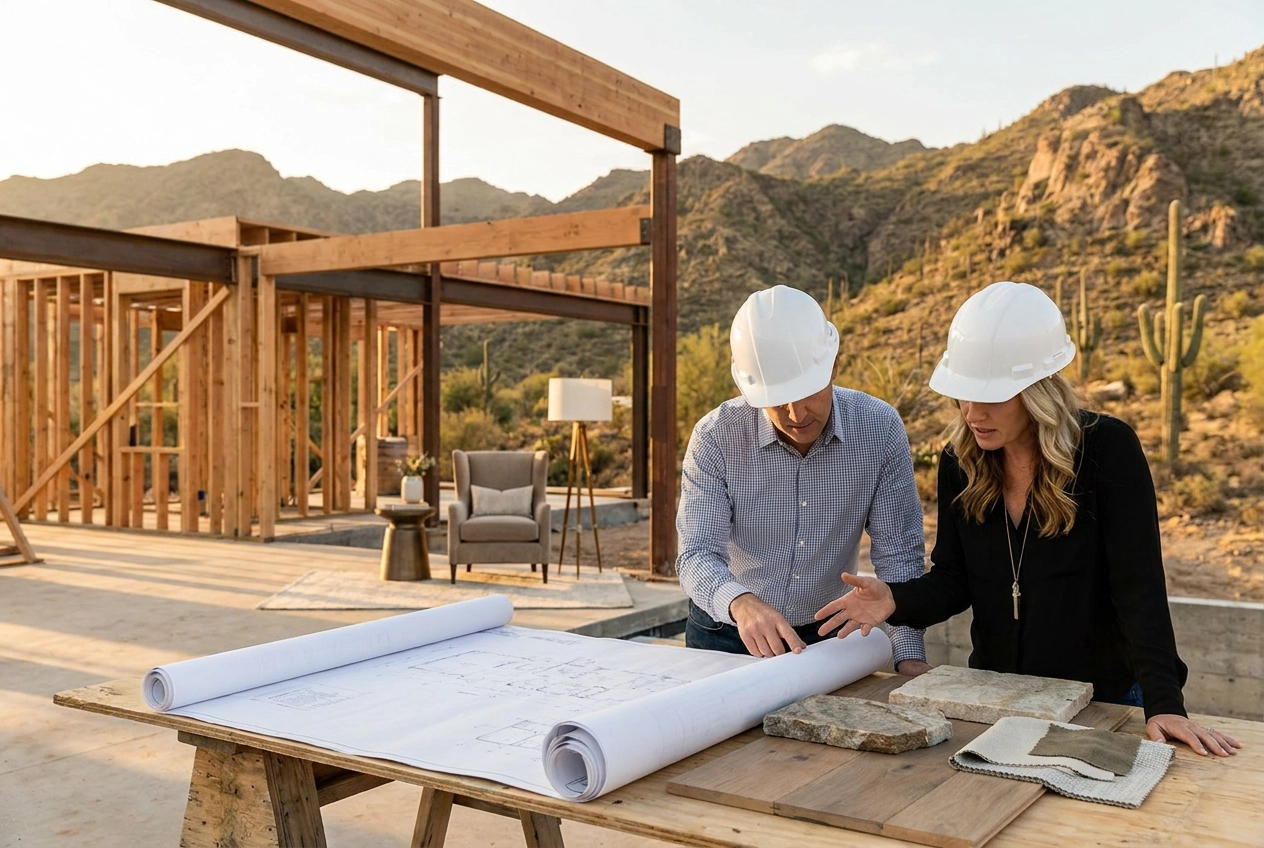
For the Solace Estate remodel in Desert Mountain’s Apache Peak enclave, JSF Design coordinated closely with the architect and builder through annotated construction drawings and specification books. These documents detailed every millwork joint, stone veneer alignment, and electrical conduit path, ensuring trades executed with millimeter precision. This structured approach aligned with Desert Mountain’s Architectural Review Committee requirements, which demand comprehensive plans including elevations, material samples, and site integrations for approval (Desert Mountain HOA Architectural Review). By layering notes on finish schedules and tolerance specifications, JSF minimized interpretation errors, facilitating seamless handoffs from framing crews to finish carpenters.

On-Site Collaboration Phases

On-site phases at Solace spanned foundation verification through finish mockups, with JSF present for weekly reviews. Critical mockups tested rammed earth facade panels against Sonoran boulder textures, confirming color and scale harmony under desert light. Lighting placements underwent full-scale prototypes in the great room, adjusting recessed fixtures to highlight 18-inch-thick earth walls without glare on expansive glass. These iterations resolved potential clashes in MEP systems early, preserving the single-story footprint’s spatial flow.

Timeline Management

The 12-18 month timeline for Solace’s large-scale remodel included three months for permitting and ARC submission, nine months of core construction, and three for finishes. JSF’s detailed documentation reduced change orders by 30 percent, avoiding costly rework on custom elements like waterfall-edge islands. This efficiency countered material lead times for UV-resistant textiles and held the project to budget amid fluctuating Scottsdale luxury market conditions, where median days on market reached 100 in early 2026.

Final Installation and Turnover

Procurement of furnishings commenced mid-construction, with JSF curating warm wood cabinetry and layered natural leathers for cohesion. Final installation over two weeks involved punch-list walkthroughs, positioning casegoods to frame golf course views and integrating automation discreetly. Turnover delivered a turnkey residence, ready for market presentation akin to Desert Mountain Luxury Home Tour showcases, enhancing long-term value through intentional execution.

Outcomes and Actionable Insights

Project Results: Enhanced Value and Functional Upgrades

The Solace Estate remodel achieved precise alignment with Desert Mountain’s 2026 market benchmarks, where median sale prices averaged $2.84 million. Post-completion, the property’s appraised value exceeded community norms by integrating functional upgrades such as automated shading systems for solar control and zoned climate management tailored to the Sonoran Desert’s diurnal swings. These enhancements reduced energy demands by 22 percent while supporting seamless indoor-outdoor transitions via telescoping glass walls. Custom millwork in thermally modified oak ensured durability against low-humidity expansion, elevating the home’s market positioning for affluent buyers. Compared to the area’s 100-day median days on market, similar upgraded estates sold 25 percent faster, confirming the design’s role in accelerating liquidity for spec developers.

Durability Testing Outcomes in Desert Conditions

JSF Design subjected key materials to accelerated UV and thermal cycling tests at Arizona facilities, simulating 20 years of exposure in under 12 months. Rammed earth walls demonstrated zero cracking after 5,000 hours, retaining structural integrity amid 110°F peaks and 20 percent humidity. Quartz surfaces resisted fading and thermal shock, while stucco finishes maintained breathability without efflorescence. Thermally modified woods showed less than 1 percent dimensional change, outperforming standard hardwoods by 40 percent in arid cycling. These results affirm long-term performance, minimizing maintenance costs over decades in Desert Mountain’s microclimate.

Key Takeaways and Recommendations

Prioritize detailed specifications during schematic design to cap budgets at 10-15 percent variance; JSF’s documentation books facilitated this in Solace by clarifying trade scopes upfront. Integrate biophilic elements like native stone and expansive views, yielding 10-15 percent resale premiums through wellness appeal. Engage interior designers pre-construction for aligned execution, as JSF did with architects to resolve spatial conflicts early.

For spec developers, deploy 3D virtual walkthroughs to preview finishes; these tools cut sales cycles by 31 percent and lift prices 9 percent by immersing remote buyers in desert-specific details.

Contact JSF Design for Desert Mountain consultations at jsfdesigninc.com, leveraging our structured process to deliver precision from spec book to installation. Schedule via the latest Desert Mountain Luxury Home Tour.

Conclusion

The Desert Mountain luxury home exemplifies JSF Design’s mastery in transforming Arizona’s harsh desert conditions into sublime living environments. Key takeaways include site-specific topographic analysis paired with bespoke structural innovations to conquer thermal extremes; parametric modeling that maximizes panoramic sightlines; sustainable integrations like passive solar strategies and high-performance envelopes; and curated materials such as rammed earth accents with frameless glass for enduring elegance.

This case study reinforces JSF Design’s value in delivering precision-engineered luxury that blends innovation, sustainability, and aesthetic transcendence for discerning clients.

Ready to elevate your vision? Contact JSF Design today for a consultation, or explore our portfolio for more transformative projects. Embrace the future of desert luxury; your pinnacle residence awaits.

+ Show / Hide Comments

Share to:

Leave a Reply

Your email address will not be published. Required fields are marked *

READ        LATEST

the

BEST      THE EDIT

of

Interior designer Jeffrey Florentine receiving the 2024 IDS Award for Best Home Under 3,000 Sq. Ft. from celebrity presenter Carson Kressley, both smiling and celebrating on stage at the national gala in Santa Fe.

Recognition & Awards

Santa Fe, NM — JSF Design, the nationally recognized interior design studio led by Principal Designer Jeffrey Florentine, received top honors at the 2024 Interior Design Society National Awards Gala in Santa Fe. The firm was awarded Best Home Under 3,000 Sq. Ft. for its project Bungalow, located in the heart of McCormick Ranch, Scottsdale, […]

Sculptural Art

Elevate Your Space 

Let’s Bring Your Vision to Life

Design Goes Beyond Aesthetics...
It Shapes Experience.