



Few design movements have demonstrated the staying power of mid century modern interior design. Born from the post-World War II optimism of the 1940s through the 1960s, this aesthetic continues to shape contemporary interiors with a clarity and purpose that more recent trends struggle to match.
But what separates a genuinely successful mid century modern space from a superficial imitation? The answer lies in understanding the foundational principles that drove the movement’s original designers, the specific materials they championed, and the deliberate decisions that bring those elements together cohesively.
This analysis moves beyond surface-level style guides to examine the structural logic behind mid century modern design. You will gain a working understanding of the core design principles, including organic form, functional simplicity, and the integration of indoor and outdoor spaces. You will also explore the materials that define the aesthetic and learn how to apply these concepts with intention rather than mere decoration.
Whether you are designing a space from scratch or refining an existing room, the insights here will sharpen your ability to execute mid century modern design with confidence and authenticity.
What Mid-Century Modern Actually Means
Mid-century modern emerged between 1945 and 1970 as one of the most cohesive and philosophically coherent design movements of the twentieth century. Its origins were not simply aesthetic; they were ideological. In the post-war period, designers and architects responded to a cultural appetite for optimism, efficiency, and democratic living by rejecting Victorian excess and ornamental tradition in favor of honest material use, functional form, and a deliberate integration of the built interior with the natural landscape. Figures like Richard Neutra, Charles and Ray Eames, and Eero Saarinen did not set out to create a “look.” They were working through a set of principles about how people actually live, and the visual language that resulted was a byproduct of that rigor. Understanding this origin is foundational to applying the style with any real authority.
The most consequential distinction in mid-century modern interior design is the difference between applying it as a philosophy versus deploying it as a surface aesthetic. When MCM is treated as philosophy, every decision traces back to material integrity, proportion, spatial flow, and livability. When it is applied as surface aesthetic, the result is tapered legs on poorly scaled furniture, walnut veneer on box-store carcasses, and rooms that feel costume-like rather than resolved. The distinction determines outcome quality at every level, from the durability of material selections to the long-term satisfaction of the people living within the space. Authentic execution requires understanding why the forms exist, not simply what they look like.
Central to MCM’s spatial character is the productive tension between organic and geometric forms. The movement never committed entirely to either. Biomorphic curves, present in Saarinen’s Tulip base or the molded plywood profile of an Eames lounge, coexist with the rectilinear discipline of case goods, structural bays, and gridded facades. In three-dimensional residential space, this tension is generative. A curved sectional anchored within a rectilinear room plan creates hierarchy and warmth without sacrificing order. Rounded pendant fixtures against flat ceiling planes add visual interest without introducing chaos. The relationship between these two formal registers is what prevents MCM interiors from reading as cold or rigid.
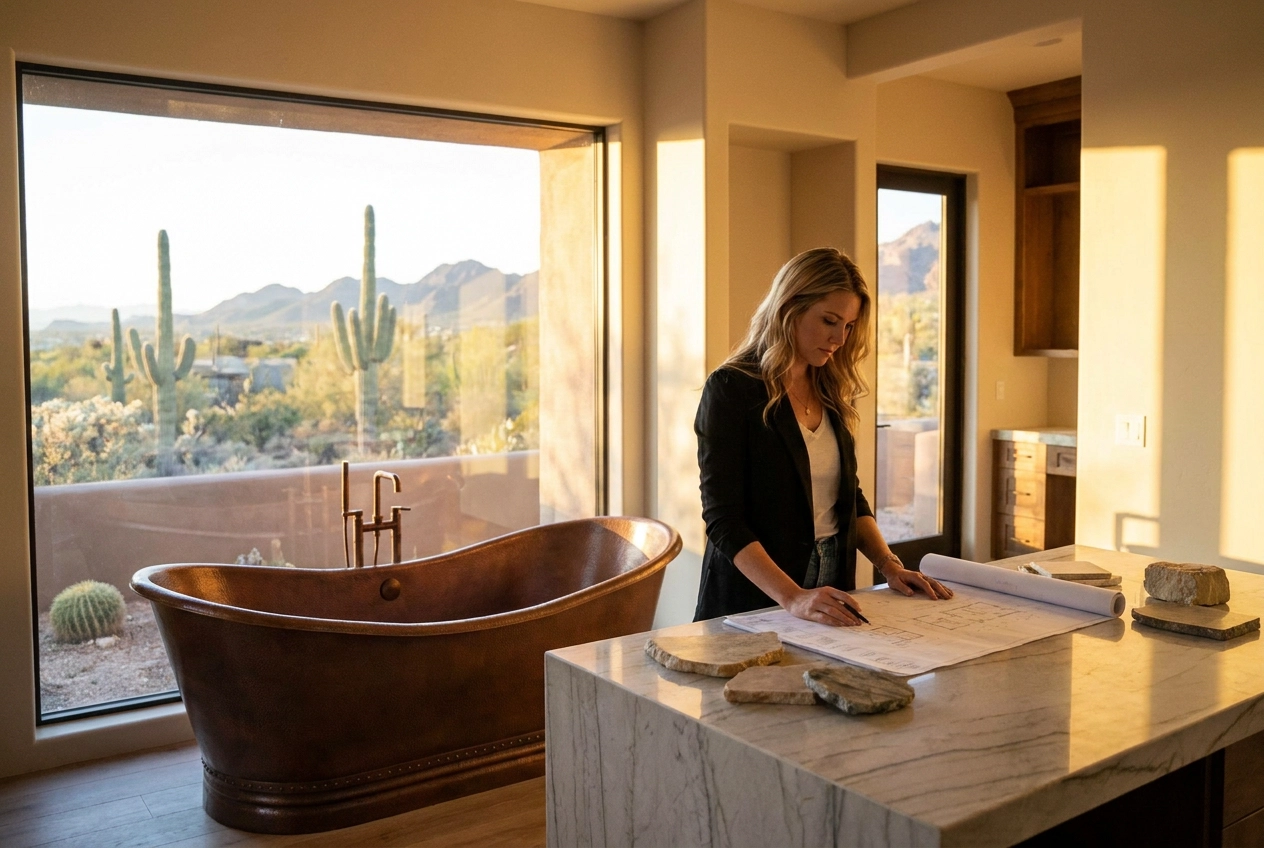
The open floor plan, exposed structural volumes, and large-scale glazing are not stylistic accessories in this vocabulary; they are load-bearing ideas. Post-and-beam construction enabled the flowing, minimally partitioned plans that defined Case Study House–era architecture, and floor-to-ceiling glazing was the mechanism by which the interior became continuous with its site. In the context of Scottsdale and Paradise Valley, where the desert landscape carries extraordinary visual weight, this relationship between structure, aperture, and setting is not historical reference. It is genuinely applicable design logic. Working within this vocabulary means treating the plan and the fenestration as primary decisions, with furnishing and material selection following from that spatial armature.
The shorthand references worth knowing include walnut and teak as the dominant wood species, leather and wool as the primary upholstery materials, and brass and steel as the hardware metals of the period. Forms to recognize: tapered solid-wood legs, pedestal bases, low horizontal profiles, exposed beam structure, and biomorphic table surfaces. These are not decorative clichés when deployed with precision; they are a resolved formal language with traceable logic behind every element.
Core Principles That Hold Up at a High Level
The material palette of mid-century modern design is not decorative shorthand. It is a structural commitment. Teak, walnut, and oak provide the thermal warmth that anchors an otherwise spare composition; travertine and concrete introduce geological weight and textural contrast; glass and steel maintain openness without sacrificing structural expression. What separates a resolved MCM interior from a superficial one is rarely the selection of these materials, but the quality of their sourcing. Solid walnut with visible grain and natural figure reads entirely differently than a thin veneer over engineered substrate. Honed travertine with its characteristic void structure communicates age and permanence; a polished, budget-grade substitute communicates neither. In a high-end Desert Mountain residence, where volumes are expansive and natural light is unfiltered, material quality registers at full intensity. There is nowhere for a compromise to hide. Responsibly sourced hardwoods, premium-grade stone slabs selected for specific veining, and brushed steel that develops a consistent patina over time: these are the decisions that determine whether a space feels authored or assembled.
Scale and proportion are where MCM application most often breaks down in large-scale custom homes. The vocabulary was refined in post-war dwellings, where ceiling heights ran eight to nine feet and room footprints were compact. In that context, a low-profile walnut credenza or a Saarinen tulip table reads with clarity and intention. Transpose those same pieces into a 9,000 square foot Desert Mountain build with fourteen-foot ceilings and uninterrupted sightlines across open-plan living areas, and the result is furniture that appears incidental rather than compositional. Successful MCM application at this scale requires deliberate recalibration: longer horizontal runs of custom millwork, furniture groupings that establish defined zones within large volumes, and the selective use of oversized sculptural pieces that carry visual weight commensurate with the room. Proportion is not a stylistic preference; it is a spatial logic that must be recalculated for every project.
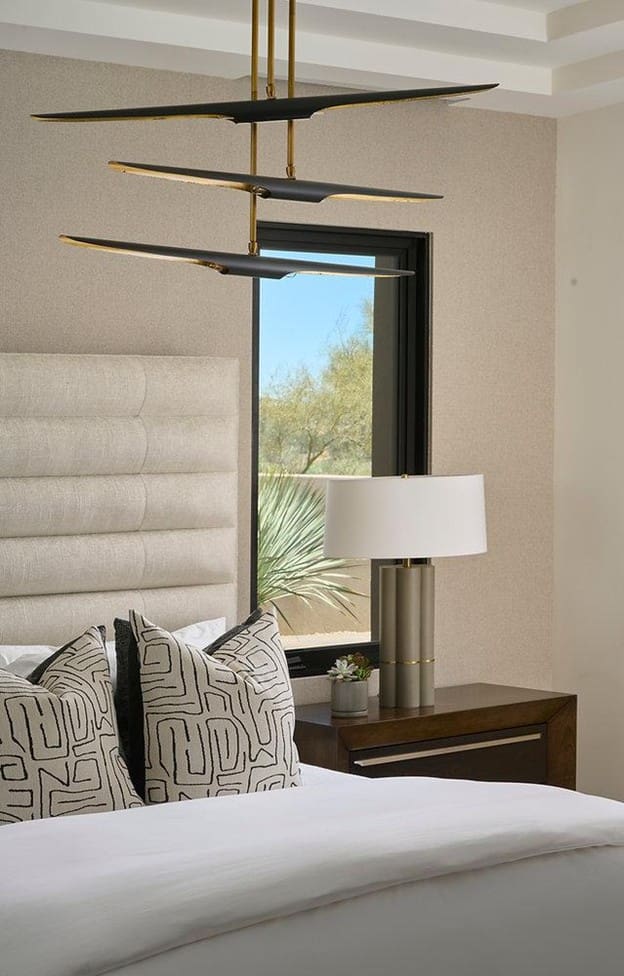
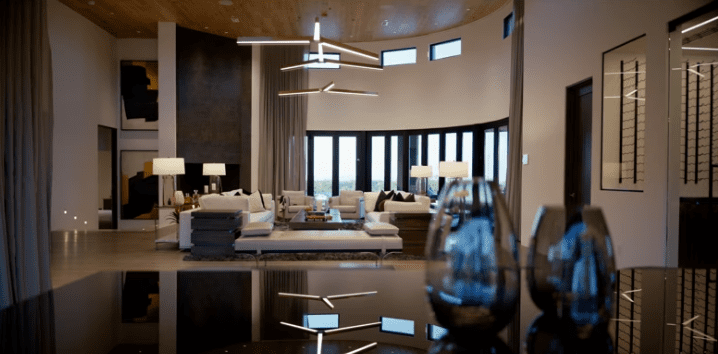
Lighting in MCM is not a finish decision. It is a structural one that must be addressed at the architectural planning stage. Natural light does the primary work: clerestory windows distribute diffused illumination evenly across interior surfaces while maintaining wall continuity for art and millwork. Floor-to-ceiling glazing connects interior volumes to the landscape, a principle that translates directly to the indoor-outdoor orientation favored in Paradise Valley and Scottsdale builds. The coordination demands on artificial lighting within this framework are significant. Open-plan geometry with minimal ceiling interruption requires that every fixture placement be deliberate, as poorly located sources create competing focal points or leave functional zones inadequately served. Sculptural fixtures, including arc floor lamps, geometric pendants, and recessed sources on dimmer systems with warm color temperatures, must work as a layered system rather than as individual selections. This level of coordination requires early integration into the design and construction documentation, not late-stage specification.
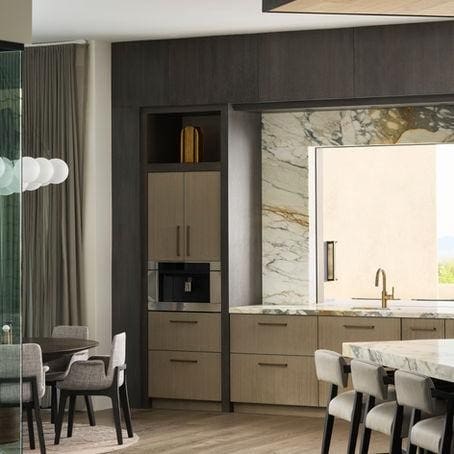
Custom millwork is where the design language is either confirmed or compromised. In MCM, built-in cabinetry and shelving are not storage solutions applied after the fact; they are architectural elements that extend the interior geometry. Profile depth, door reveal spacing, base height, and hardware selection all carry communicative weight. A walnut built-in with flush integrated pulls and a floating base reinforces horizontal emphasis and material continuity. The same case piece executed with ornate hardware or inconsistent reveals fragments the composition. At the custom home level, the specification of millwork requires the same rigor applied to structural detailing: shop drawings, material samples, and close coordination between the interior designer and the millwork fabricator to ensure that proportions hold through execution.
Functionality is not a constraint on MCM design; it is its premise. Every spatial decision, from traffic flow and furniture placement to storage integration and sight line management, must begin with how the space will actually be used. This is what distinguishes disciplined MCM execution from decorative mimicry. A room furnished with period-appropriate pieces but organized without regard to circulation, ergonomics, or program is not mid-century modern in any meaningful sense. It is costuming. The functionality-first principle demands that beauty and utility be solved simultaneously, and at the level of high-end residential design, that requires a process rigorous enough to translate intention into precise, buildable documentation.
The Desert Southwest as a Natural MCM Context
The Desert Southwest is not simply a regional backdrop for mid-century modern design. It is, structurally and philosophically, one of its most coherent natural contexts. The shared values between MCM and desert modern architecture run deeper than aesthetic affinity. Both prioritize low horizontal profiles that defer to the landscape rather than compete with it. Both insist on material honesty, allowing stone, concrete, wood, and steel to read as themselves without excessive cladding or surface treatment. Both resist ornament unless it serves a functional purpose. And both treat the relationship between interior space and the land outside as a primary design decision rather than an afterthought. In Paradise Valley and at Desert Mountain, where sites are defined by boulder formations, saguaro stands, and mountain sight lines, these shared values translate directly into how architecture is sited, how interiors are organized, and how finish selections are made.
The MCM color palette requires meaningful recalibration in Arizona, though the underlying logic remains intact. Where California mid-century work often leaned on bolder accents, including mustard, tangerine, and atomic-era saturated tones, the Sonoran Desert calls for a shift toward sandy neutrals, warm bone whites, terracotta, muted sage, and the gray-brown of regional stone. This is not a softening of the palette; it is a recalibration of the same structural principle. MCM uses color to define planes, establish visual weight, and differentiate surfaces. In an Arizona interior, a terracotta accent wall or a field of warm sandstone achieves the same compositional function while responding honestly to the light and terrain outside the glass. The palette earns its presence through specificity rather than nostalgia.
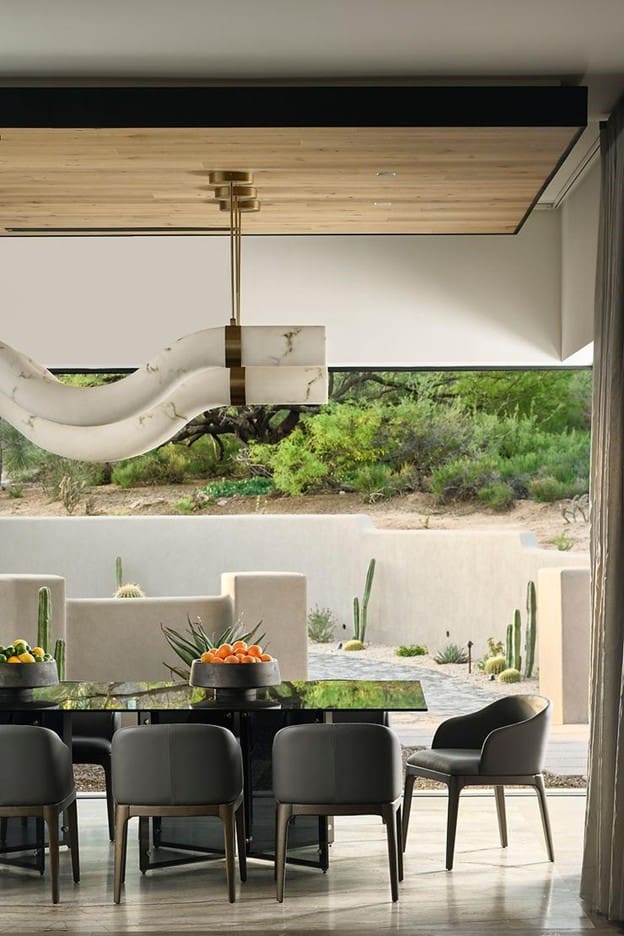
The indoor-outdoor relationship, long central to mid-century modern architecture in its desert context, is directly and immediately applicable to the residential projects that define luxury building in Paradise Valley and Desert Mountain. Covered loggias and deep overhangs create usable outdoor rooms that function as genuine extensions of interior living space rather than transitional zones. Stone threshold transitions, using continuous flagstone or sandstone pavers that carry from interior floors to exterior terraces, dissolve the perceived boundary between the two. Floor-to-ceiling glass systems, when specified with proper solar performance glazing, frame the desert view as a living composition. The treatment of that boundary between inside and outside is among the most consequential decisions on any site in this region, and MCM’s spatial vocabulary gives designers a precise and well-tested framework for resolving it.
Arizona-specific materials integrate into an MCM framework not as decorative gestures toward regional character but as functionally appropriate choices with genuine material integrity. Local sandstone provides thermal mass, durability, and a visual weight that anchors planar wall surfaces. Desert-toned woven textiles in linen, wool, and mohair introduce tactility and acoustic softness without disrupting the compositional restraint of the overall scheme. Board-formed or exposed concrete, sourced or poured regionally, develops patina under desert conditions and pairs with steel and glass in ways that are entirely consistent with MCM’s industrial-natural material logic. These are not styling choices. They are materials that perform well in this climate and belong in this landscape.
Desert light changes everything about how MCM geometry reads. Arizona’s high-angle, high-intensity sun casts hard shadows across planar surfaces, making clean geometry more sculptural and more demanding simultaneously. Matte and honed finishes become non-negotiable where polished surfaces would create uncomfortable glare. Large expanses of glass require low-E coatings and carefully considered shading devices. The scale of these sites also amplifies MCM’s horizontal emphasis, rewarding deep overhangs and wide spans while requiring proportional discipline to avoid forms that read as oversized against the desert floor. Finish selection in this environment is always both aesthetic and performative; the two cannot be separated.
Where Mid-Century Modern Goes Wrong and How to Avoid It
Mid-century modern is one of the most misapplied styles in residential design. Its visual vocabulary is immediately recognizable, which makes it easy to imitate at a surface level, and that accessibility is precisely where projects begin to fail. Understanding the failure modes is as instructive as understanding the principles themselves.
The Architecture Has to Come First
The most common error is treating MCM as a furniture problem rather than a spatial one. Placing tapered-leg seating, walnut case goods, and sculptural lighting into a space that lacks compatible proportions, ceiling heights, and architectural detailing produces a costume rather than a coherent interior. Mid-century modern emerged from a specific building typology: open plans, generous glazing, horizontal emphasis, and structural clarity. When the furniture is asked to carry that character without the architectural foundation supporting it, the result reads as set dressing. The pieces become props. In new construction or full remodels, this is correctable through millwork design, fenestration decisions, and spatial planning that establishes the right bones before a single furniture selection is made.
Period Accuracy Is Not the Goal
A strictly period-accurate MCM interior in a 2026 luxury home faces a different problem. Rather than feeling cohesive, it risks feeling static, thematic, and closed. A decade of broad MCM saturation in retail and media has made the more literal interpretations feel formulaic. Designers tracking current residential work note that the pre-prescribed look, defined by recurring hairpin legs and high-contrast orange accents, has worn thin precisely because it signals effort toward a style rather than toward a life. In luxury residential work, the style performs best when it operates as a structural framework: retain the silhouettes, the material logic, and the spatial philosophy, then layer in varied texture, transitional warmth, and collected depth that makes the space feel inhabited rather than curated for a catalog.
Material Honesty Is Non-Negotiable
MCM’s core philosophy is honest use of material, which means the gap between investment-grade vintage pieces and mass-produced reproductions is not a matter of taste. It is a matter of coherence. Authentic pieces in solid walnut, teak, or rosewood, with visible joinery and substantial hardware, carry the material weight the style demands. Reproductions built on veneered MDF or cast with lesser metals do not age the same way, do not read the same way, and directly undermine the interior’s integrity. Understanding where material quality becomes visible is essential to sourcing decisions on high-end projects. Investment should be concentrated where it is most exposed.
Specification Discipline Protects the Work
MCM’s clean, minimal language does not absorb inconsistency. It exposes it. Misaligned millwork profiles, unresolved flooring transitions between rooms, and inconsistent metal finishes across hardware, plumbing, and lighting become immediately legible in a spare interior where there is nothing to absorb them. This is why disciplined specification is not optional in mid-century modern work; it is structural to the outcome. Every finish, profile, and material transition requires explicit documentation before construction begins.
Without thorough drawings, detailed specification packages, and active cross-trade coordination throughout the build, the precision MCM demands will not survive the construction process intact. Millworkers, flooring contractors, and finish carpenters are working from their own interpretations unless the documentation eliminates ambiguity. In a style where a misaligned reveal or an unintended metal mix is plainly visible in the finished space, that ambiguity is a direct risk to the design. The coordination work done before construction is what makes the design executable at the level of quality a luxury project requires.
Material Specification in a Mid-Century Modern Interior
Material choices in mid-century modern design are not background decisions. They are the design. Because MCM’s vocabulary depends on exposed surfaces, honest construction, and the absence of applied ornament, every specified material carries disproportionate visual and tactile weight. The difference between a resolved interior and a superficial one often lives in the details of finish, grain selection, and dimensional consistency.
Wood: Grain Continuity and Surface Integrity
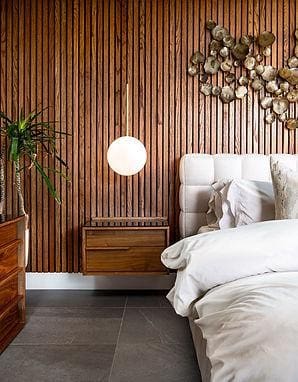
Walnut remains the definitive MCM wood for good reason. Its warm, dark grain has visual depth that reads at scale, holds a hand-rubbed oil finish without losing character, and develops patina in a way that reinforces the material’s authenticity over time. Book-matched millwork, where consecutive veneer leaves are opened symmetrically to create a mirrored grain pattern across a cabinet face or wall panel, signals a level of craft that is immediately legible to any buyer at this price point. The continuity of grain across a large surface reads as intentional and architectural. An off-the-shelf veneer panel, by contrast, often shows repetitive or misaligned grain, a thinner laminate layer, and a factory-applied finish that sits on the surface rather than within the wood. The visual difference is not subtle.
A penetrating oil finish, such as Danish oil or a tung oil blend, does not form a film on the surface. It enriches the grain from within, producing a warm, matte-to-satin result that feels tactile rather than coated. This approach supports the material honesty that is central to mid-century modern materials and holds up better in the long-term than lacquer-based alternatives in high-use residential environments.
Stone and Spatial Register
Stone selection in MCM is not simply a finish decision; it establishes the spatial tone of an entire room. Travertine, particularly in a honed or vein-cut orientation, introduces organic movement and warmth. Its natural pitting and variation soften the geometry of MCM furniture forms without competing with them. Honed limestone is denser and more monolithic, offering a cooler, flatter plane that recedes into the background and lets architectural structure read clearly. Polished concrete amplifies the industrial and geometric precision that runs through MCM’s structural logic. It reflects light, reinforces openness in large floor plates, and pairs well with walnut to create the warm-cool material balance the style depends on. Each of these surfaces interacts differently with the Arizona light that defines projects across Scottsdale and Paradise Valley, and the specification should account for how a material reads at both midday and in evening lighting conditions.
Metal Finish Discipline
In a style where every surface is exposed, finish variation across plumbing fixtures, cabinet hardware, and lighting reads as an oversight rather than a design decision. Specifying a single dominant metal finish, brushed brass or blackened steel, and maintaining that finish across all contact points creates visual coherence without requiring explanation. Brushed brass paired with walnut millwork is a historically grounded MCM combination; it works because the warmth of both materials reinforces each other. Introducing a second finish requires a clear rationale and deliberate placement; otherwise the inconsistency fragments the composition.
Textiles: Warmth Within Constraints
Textiles perform a specific structural role in MCM interiors. They introduce human-scale warmth against hard surfaces without adding visual noise. Wool, leather, and bouclé in solid or low-pattern weaves hold this balance. A tightly woven wool upholstery on a bench or sofa maintains the geometric clarity of the piece’s silhouette while adding tactile contrast to stone or concrete flooring. Leather develops patina and reads as a natural material in the same register as wood. Bouclé, used in controlled quantities, adds surface texture without pattern. The key discipline is scale and restraint: one or two textile weights per room, held to a consistent color field.
Glass as Architecture
Glass in MCM is not infill. Large fixed panes, clerestory bands, and interior partition glazing function as structural elements that extend space, connect interior to landscape, and define the quality of light in a room. The specification decisions that determine whether glass reads as architectural or incidental include frame proportion, sightline alignment, and glazing performance. Minimal or frameless detailing preserves the planar quality that makes MCM interiors feel continuous rather than subdivided. For desert-climate projects, low-E coatings and thermally broken frames are non-negotiable performance requirements; the specification of these elements should be coordinated directly with the architect and glazing contractor to ensure the detailing aligns with the design intent from the drawing set outward.
Mid-Century Modern Design and Long-Term Property Value
Mid-century modern has sustained genuine market relevance for more than 75 years, a track record that separates it categorically from design movements driven by short-cycle trends. Its continued strength through 2026 in the luxury residential sector is not a function of nostalgia; it reflects the enduring alignment between MCM’s core principles and the way high-performing homes are evaluated at acquisition. Well-designed MCM properties have consistently commanded premiums over comparable traditional homes, with expert analysis noting advantages in the range of 15 to 20 percent, attributed to open layouts, architectural coherence, and integration with contemporary living patterns. That premium is not automatic. It is earned through execution.
In Scottsdale and Paradise Valley, luxury buyers are not evaluating finish selections in isolation. They are reading a property for the quality of its decisions: how materials meet at transitions, whether millwork profiles are resolved, how light moves through a plan across the day. Authentic MCM execution, grounded in honest materiality and spatial discipline rather than surface-level styling, registers directly at the luxury price point. Poorly detailed imitations do not hold the same ground. The coherence of a well-specified interior, one where walnut millwork, stone surfaces, and structural glazing are selected and detailed as a system, communicates durability and design intelligence that buyers in this market recognize and respond to.
For spec home developers and builders working in the greater Phoenix luxury corridor, MCM-informed desert modern design is not a positioning strategy; it is a baseline expectation. Clean lines, natural material integration, and genuine indoor-outdoor connection are features that buyers in this market now treat as preconditions rather than differentiators. Properties that deliver a cohesive desert modern execution move more readily and support stronger pricing because they align with how affluent buyers in this region define livable luxury.
It is also worth addressing what furnishings represent in this context. Well-sourced vintage MCM pieces and custom millwork are not depreciating assets. Authenticated mid-century designer furniture retains collector value and frequently appreciates; custom built-ins and millwork executed in premium materials are understood by buyers as structural contributions to the property, not removable decoration. Both categories signal a level of investment and intention that strengthens the overall value proposition.
The broader market trajectory reinforces this positioning. The U.S. interior design market, currently valued at approximately USD 23.5 billion, is projected to reach USD 42 billion by 2035, with residential luxury segments accounting for a disproportionate share of that growth. Within that expansion, MCM’s alignment with buyer priorities including natural materials, functional planning, indoor-outdoor integration, and enduring material quality places it at the center of where premium residential demand is headed, not at its margins.
What the Execution Process Actually Requires
Mid-century modern is one of the most unforgiving styles to execute at a high level of precision. Where traditional or transitional interiors absorb minor deviations through layered moldings, rich textiles, or complex surface patterns, MCM offers no such cover. Its clean geometry, planar surfaces, and deliberate proportions operate as a system in which every element is in direct visual relationship with the next. A cabinet edge that does not align flush with a wall plane, a shelf height misread by a fraction relative to ceiling scale, or a material transition that lacks a resolved edge condition, these are not minor field adjustments. They are visible failures that disrupt the compositional calm the style depends on. Documentation precision is not a preference in MCM construction; it is the foundation of the entire outcome.
This is why the core deliverables of a rigorous interior design process carry disproportionate weight on an MCM project. Detailed millwork drawings, including elevations, sections, and joinery details, eliminate field interpretation by specifying exact dimensions, reveals, material thicknesses, and the precise relationship between casework and adjacent architecture. Finish schedules organize every surface by room, material, application method, and transition condition, ensuring that tonal consistency and material honesty are maintained across the full scope of the build. Lighting coordination documents, reflected ceiling plans, fixture schedules, and control diagrams, integrate architectural lighting with structural elements, millwork locations, and the natural daylighting strategies that are central to MCM’s spatial logic. Together, these documents reduce requests for information during construction, support accurate subcontractor bidding, and protect the design intent through every phase of execution.
At this scale of project, the relationship between designer, architect, and builder is not a sequence of handoffs. It is a concurrent, structured collaboration with clearly defined responsibilities and shared documentation. The architect resolves the envelope, structure, and building systems. The interior designer specifies finishes, millwork, furnishings, and spatial experience. The builder executes against a complete, coordinated document set. When these roles are integrated from early design development through construction administration, including joint drawing reviews, material mock-ups, and regular site coordination, the probability of cumulative errors drops significantly.
Homeowners and developers evaluating designers for a project of this complexity should weight process depth and specification rigor above portfolio aesthetics. The ability to produce comprehensive, trade-ready documentation, and to manage that documentation across a multidisciplinary team, is what separates a firm capable of executing MCM correctly from one capable only of referencing it visually. As project scope grows, this distinction compounds. Larger builds involve more interconnected systems, more trades, longer timelines, and higher exposure to scope drift. A structured, documentation-driven process does not become less necessary at scale; it becomes the primary mechanism for preserving design quality from concept through final installation.
Bringing Mid-Century Modern to a Luxury Residence the Right Way
Mid-century modern endures not because it cycles back into fashion, but because its foundational principles, material honesty, spatial clarity, and functional intention, describe exactly how well-resolved homes are meant to perform. These are not stylistic preferences. They are structural commitments that translate directly into livability, longevity, and lasting property value.
For homeowners in Scottsdale and Paradise Valley, the desert Southwest’s inherent compatibility with MCM is a genuine asset. The horizontal massing, expansive glazing, indoor-outdoor continuity, and grounded material palette that define MCM are the same qualities that make luxury desert residences feel site-specific rather than imported. That alignment should be leveraged, not treated as a limitation.
Execution quality remains the decisive variable. A resolved MCM interior is not the product of correct furniture selection alone; it is the result of a disciplined process that coordinates spatial framework, material specification, millwork detailing, and construction documentation from the beginning. Taste informs direction, but process determines outcome.
For any significant project, the most productive starting point is a conversation about spatial organization and material direction, well before furniture enters the discussion. JSF Design brings exactly that structure to every engagement: construction-level coordination, detailed specifications, and the material depth required to translate MCM’s principles into a residence that performs at the highest level.
Conclusion
Mid-century modern design endures because it is built on principles that transcend trends: organic form, functional simplicity, and a seamless connection between interior and exterior spaces. The movement’s signature materials, from warm teak and molded plywood to clean-lined upholstery, are tools for expressing those principles rather than shortcuts to a look.
Authentic execution requires understanding the “why” behind every choice, not just replicating the “what.” A successful space feels cohesive because each element earns its place.
Now it is time to apply what you have learned. Start by auditing one room in your home. Identify what serves a genuine purpose, what introduces organic warmth, and what can be removed entirely. Mid-century modern design rewards restraint and intention. Begin there, and the rest will follow naturally.



BEST THE EDIT
of
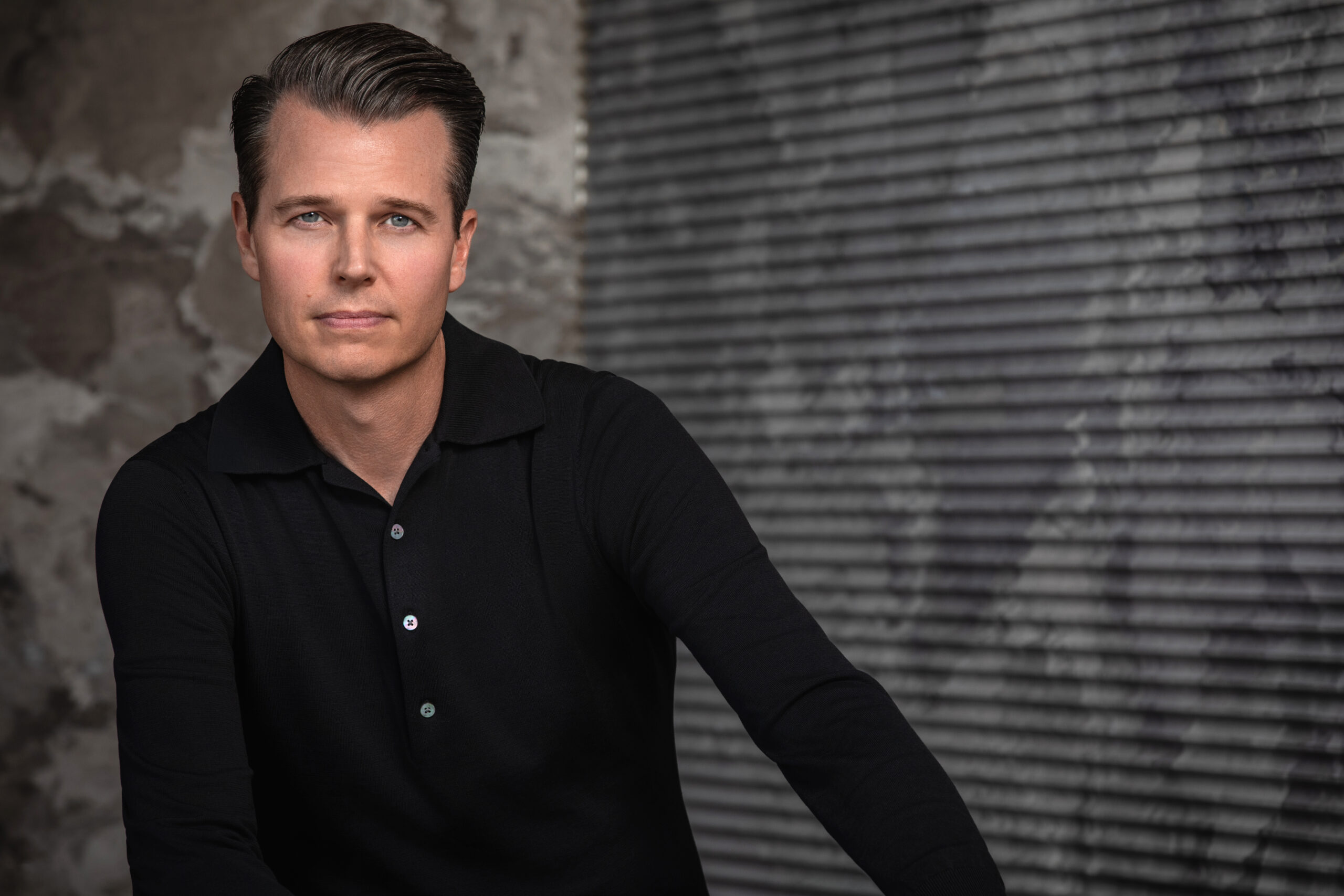
Material Moves: Inside Jeffrey Florentine’s Collaboration With Antolini Stone Some collaborations happen because of timing. Others happen because of shared philosophy. The partnership between Jeffrey Florentine of JSF Design and Antolini Stone feels very much like the latter — a collaboration rooted in a mutual belief that materials should shape architecture, not simply finish it. […]
Elevate Your Space
Let’s Bring Your Vision to Life
Design Goes Beyond Aesthetics...
It Shapes Experience.

+ Show / Hide Comments
Share to: