Uncategorized

Interior Decorator or Interior Designer: What the Distinction Actually Means

July 16, 2026

Welcome to The Edit — a curated glimpse into the world of JSF Design. I’m Jeffrey Stephen Florentine, Principal Designer and Founder. Here, we share the inspirations, stories, and details behind our most refined spaces. I invite you to explore what makes our work truly unique.

Currently
Trending

When hiring a professional to transform your living space, most people use the terms “interior decorator” and “interior designer” interchangeably. However, treating these two roles as identical could lead you to hire the wrong professional for your project, costing you both time and money.

The distinction between an interior decorator and an interior designer runs deeper than job titles. These are fundamentally different professions with separate educational requirements, areas of expertise, and legal scopes of practice. Understanding where one ends and the other begins is essential knowledge for anyone planning a renovation, remodel, or full-scale design project.

In this guide, you will get a clear breakdown of what separates these two professionals, what each one actually does, and how to determine which type of expert your specific project demands. Whether you are refreshing a single room with new furnishings or undertaking a structural overhaul of an entire floor plan, knowing who to hire from the start makes all the difference. By the end, you will have the clarity needed to make a confident, informed decision.

What an Interior Decorator Actually Does

An interior decorator’s scope is defined by what is visible, not what is structural. The work centers on aesthetic curation: selecting furniture, developing color palettes, sourcing accessories and textiles, and composing a cohesive surface-level presentation within a space that already exists. A decorator does not produce construction drawings, specify structural finishes, reconfigure floor plans, or coordinate with architects and builders during a build or remodel. As the distinction between these roles becomes more widely discussed in professional trade platforms, the core distinction remains consistent: decorators handle styling and final touches, while designers manage technical and spatial scope from the ground up.

The appropriate use cases for a decorator reflect this boundary honestly. Furnished-room refreshes, resale staging, accessory updates, and cosmetic changes that require no permits or trade coordination are all within range. The decorator’s starting point is the room as it stands. Layouts are fixed, finishes are installed, and the project need is purely aesthetic layering. Where a project involves repositioning a doorway, specifying tile for a wet area, or coordinating with a licensed contractor on any structural or MEP-related decision, the decorator’s competency does not extend there.

It is also worth noting that the title “interior decorator” is unregulated in most U.S. states, including Arizona. There is no licensing requirement, no governing board, and no standardized test tied to the title, meaning anyone can use it regardless of formal training or demonstrated process rigor. For homeowners evaluating who to bring onto a project, that distinction carries real weight.

Where decorators do deliver genuine value is in a specific set of conditions: move-in-ready furnished homes, rental properties requiring turnover-friendly aesthetics, and projects where the architecture is fully resolved and only the furnishing and styling layer remains. When a space is architecturally complete and the need is to bring warmth, composition, and personality into what already exists, a skilled decorator can perform that work effectively.

What a Full-Service Interior Designer Brings to a Project

Where an interior decorator operates on the surface layer, a full-service interior designer is engaged across every phase of a project, from the earliest planning conversations through final installation. The scope includes space planning, finish and material specification, custom millwork design, lighting coordination, furniture and textile procurement, and active on-site construction collaboration. These are not isolated services; they form an integrated system where each decision informs the next. Ceiling height affects lighting placement. Lighting placement informs material selection. Material transitions at doorways and floor plane changes require coordination with structural drawings before a single wall is framed.

A defining deliverable of full-service design is the specification package: a set of documents that translates design intent into precise, buildable instructions. These typically include finish schedules, millwork elevations, reflected ceiling plans, and submittal logs that architects, general contractors, and trade partners can reference without ambiguity. At JSF Design, this documentation-driven process is a core part of how the firm operates, producing construction drawings with sufficient detail to reduce field interpretation errors and protect the integrity of the design through every phase of execution.

Full-service designers enter a project during design development, not after construction is complete. Decisions about window placement, built-in configurations, material transitions, and ceiling detail are made in parallel with architectural work, not in response to it. This parallel engagement is what allows interior materiality to connect coherently with the architectural shell, whether that means carrying a limestone palette from an exterior facade into a great room fireplace surround, or coordinating a custom steel door with the interior metal finish schedule.

Procurement through a full-service firm also operates on a different level than retail sourcing. Trade-only vendors, custom millwork fabricators, and bespoke soft goods manufacturers are accessible through an established professional network, not a consumer showroom floor. Understanding what full-service designers actually do makes clear that this access produces materials, furnishings, and built elements that cannot be replicated through standard retail channels.

The designer functions as project manager as much as creative lead: coordinating trades, reviewing submittals, conducting site visits, and verifying that the built result aligns with documented intent at every stage.

Where the Distinction Becomes Consequential

On a single-room refresh or a furnishing update, the question of whether you are working with a decorator or a designer is largely academic. The scope is contained, the decisions are reversible, and the margin for error is low. But on new construction, a full-home remodel, or a large custom build, the distinction becomes structurally consequential in ways that affect cost, schedule, and outcome at every phase of the project.

The reason comes down to documentation. In a construction environment, design intent is only as reliable as the drawings and specifications used to communicate it. When finish selections, millwork dimensions, and material transitions are not documented with precision, contractors make their own calls. Those calls are made in the field, often under schedule pressure, and they are frequently difficult and expensive to reverse. A tile setter who has not received a setting bed height relative to adjacent flooring materials will make an assumption. A trim carpenter without detailed millwork elevations will interpret proportions. A rough-in plumber working from a conceptual floor plan rather than a fixture specification will place drains where they are structurally convenient, not where the design requires. Each of these moments compounds. What began as a documentation gap becomes a change order, a schedule delay, or a finish condition that falls short of the original intent.

The coordination demands on a multimillion-dollar custom residence are significant precisely because so many systems are interdependent. Plumbing rough-in locations depend on confirmed fixture specifications. Electrical layouts depend on a resolved lighting design. Tile setting beds depend on material thickness and transitions to adjacent floor planes. Structural blocking depends on knowing where cabinetry, hardware, and built-ins will eventually land. These decisions cannot be deferred until the decorating phase because, by then, the walls are closed and the slabs are poured.

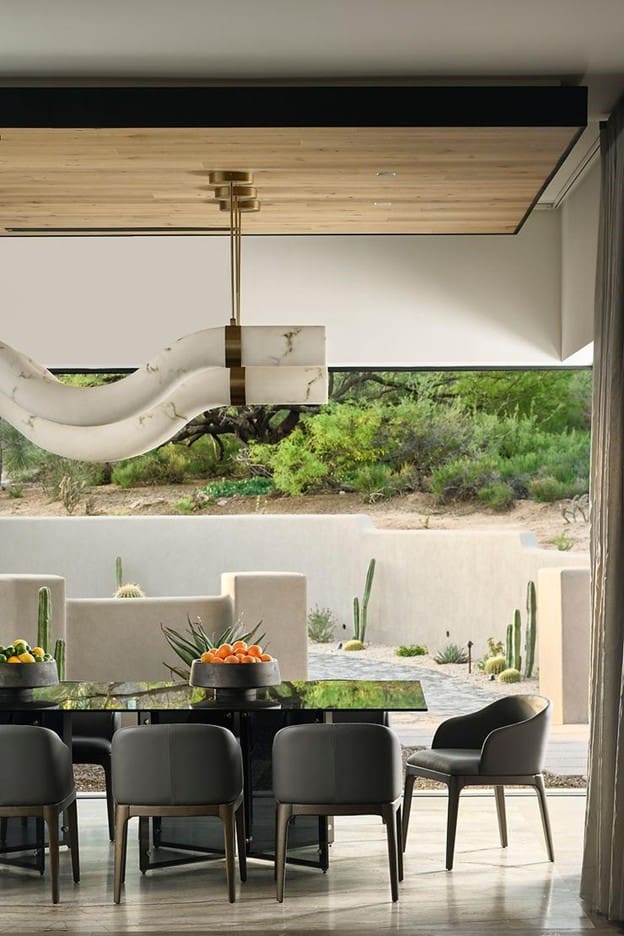
In the 2026 Scottsdale and Paradise Valley luxury market, this challenge is particularly pronounced. Homes in this segment are defined by custom steel pivot doors, textured plaster walls, travertine flooring, parquet inlays, and bespoke millwork. Each of these elements requires specification-level documentation: confirmed rough opening dimensions, structural header requirements, material lead times, setting bed tolerances, and installation sequencing. A mood board communicates an aesthetic direction; it does not tell a fabricator how to build or a contractor what to order.

As the difference between interior designers and decorators is examined in detail, in the $3M-plus luxury market, this distinction is not semantic. It defines whether a project is managed with precision or assembled through interpretation. Without construction drawings and specification books, even highly skilled contractors are working from inference rather than instruction, and that gap introduces compounding risk at every phase of the build.

The Specific Demands of Luxury Projects in Scottsdale and Paradise Valley

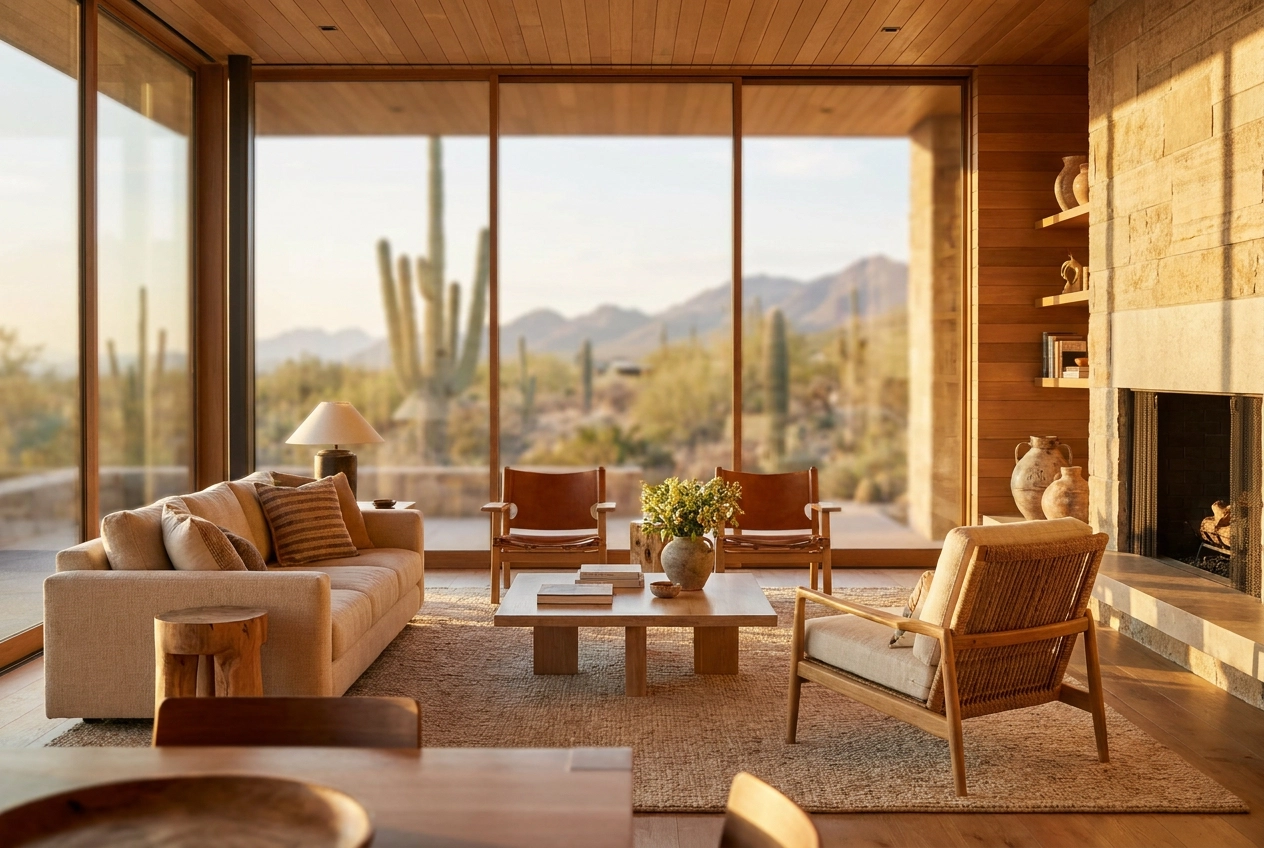
The dominant architectural language in Scottsdale, Paradise Valley, and Desert Mountain is not incidental to the interior design challenge; it is the challenge. Custom homes in these communities are defined by flat or low-sloped rooflines, smooth stucco volumes, and floor-to-ceiling glazing systems engineered to frame views of the Sonoran Desert as a deliberate compositional element. In this typology, the interior and exterior are not separate conditions to be resolved independently. Every finish selection, every material plane, and every spatial decision must read coherently against desert terrain, mountain ridgelines, and the quality of light that moves through these structures across the day and across seasons.

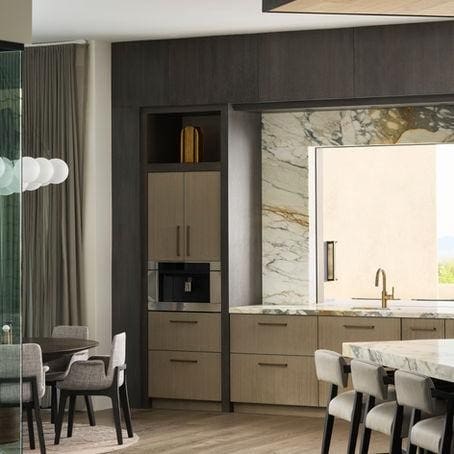
Material expectations at this tier are specific, and they carry real procurement and execution weight. Textured plaster walls, sandstone-toned limestone, Douglas fir and walnut millwork, travertine flooring, matte lacquer cabinetry, and warm metal accents in aged brass or blackened steel are not simply aesthetic preferences; they are materials with distinct lead times, specialty trade requirements, and installation tolerances. Travertine slabs must be matched across large floor planes. Custom plaster finishes require applicators with demonstrated experience on high-specification residential work. Walnut millwork packages must be detailed with precision before a single shop drawing is produced. Designers working at this level manage these variables as a core function of the role, not a secondary concern. Phoenix Home and Garden’s recognition of designers creating modern yet timeless spaces reflects exactly this standard: disciplined specification, not fashionable substitution.

The Phoenix metro’s climate introduces technical layers that designers from other regions frequently underestimate. Solar orientation, high-performance glazing specifications, thermal mass behavior, and the intensity of desert light at varying exposures must actively inform which finishes are selected and where they are placed. High-gloss surfaces can read poorly under intense western afternoon exposure. Materials specified for a north-facing gallery wall will behave differently on a south-facing volume adjacent to a glass curtainwall. These are not stylistic considerations; they are performance decisions with long-term consequences for how a space lives and ages.

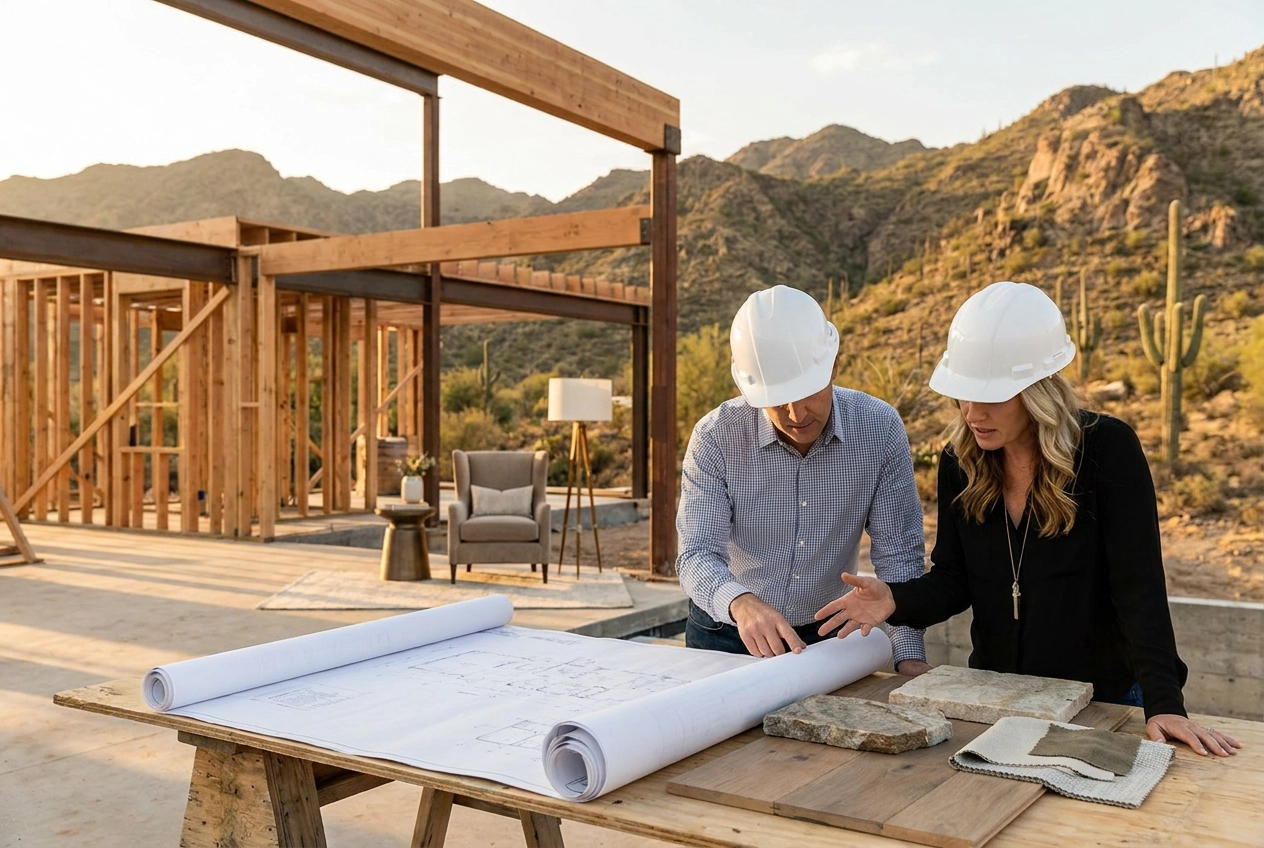
At the project coordination level, custom homes in Desert Mountain, Paradise Valley, and Scottsdale’s gated communities routinely involve architects, structural engineers, landscape architects, and multiple specialty contractors working in overlapping phases. The interior designer is not peripheral to that coordination structure; they are a primary communication node across all disciplines. Millwork drawings must align with the architect’s structural openings. Stone selections must relate to the landscape architect’s hardscape palette. Lighting plans must integrate with electrical load calculations before rough-in begins. When that coordination is documented clearly and distributed consistently, projects move with precision. When it is not, the result is change orders, schedule compression, and specification gaps that are expensive to correct in the field.

In a market where custom builds routinely run at $5 million and above, with full-home furnishing scopes that frequently exceed $500,000, the quality of interior design documentation is a direct determinant of construction outcomes and long-term property value. Buyers performing due diligence on a resale property in Paradise Valley or Desert Mountain can assess the quality of execution in material transitions, millwork tolerances, and finish consistency. Those details trace back to the rigor of the specification and drawing package that guided construction. A well-documented project protects the owner’s investment at every stage, from permit review through resale.

How to Evaluate Which Professional Your Project Actually Requires

The first question to answer is not “who do I want to work with?” but rather “what does this project actually demand?” If the scope involves structural changes, new construction, permit-required work, custom millwork design, or direct coordination with a general contractor, a full-service interior designer is not a preference; it is a project requirement. A decorator, regardless of talent or taste, is not credentialed or equipped to produce construction documentation, navigate building code compliance, or manage the technical handoffs that define a complex residential build. Treating that distinction as a formality is where projects stall, inspections fail, and costly misalignments between design intent and built reality occur.

Questions That Separate Depth of Practice from Surface-Level Aesthetics

When interviewing a design professional, the conversation should move quickly past portfolio imagery and into process. Ask directly: Do you produce specification books and construction drawings? How do you coordinate with the architect and general contractor throughout the project? What does your workflow look like from initial concept through final installation? Can you share documentation samples from past projects? These questions do not require technical expertise to ask; they simply require that you listen carefully to the answer. A firm with genuine process depth will answer with specificity. A firm without it will redirect toward aesthetics.

Red Flags Worth Noting

Several patterns signal a mismatch between what a project requires and what a professional can deliver. Be cautious of scoping conversations that remain vague about deliverables, processes that begin with furniture selection rather than a spatial analysis, and professionals whose documented output is limited to mood boards. The distinction between interior design and decorating is not merely academic; it reflects a fundamental difference in professional capacity. If a designer cannot clearly articulate how their decisions get communicated to the build team, that ambiguity will surface during construction.

A rigorous intake process should include a thorough site analysis, a programming conversation about how the client actually occupies the space, a defined scope-of-work agreement, and documented project milestones from concept through installation. The right firm brings not only aesthetic sensibility but a structured methodology that gives the client, the architect, and the contractor a reliable shared reference throughout every phase of the project.

Why Material Specification Requires Design Expertise, Not Just Good Taste

Selecting materials for a luxury custom home is a technical process, not a styling exercise. Every decision carries downstream consequences: lead times that must sequence with framing and rough-in schedules, substrate conditions that must be verified before installation begins, and performance variables that compound under Arizona’s particular climate demands. High UV exposure, sustained heat cycling above 110°F, and monsoon-season humidity swings create conditions that disqualify materials that perform well in more temperate markets. A designer working at this level is not simply choosing what looks right; they are determining what will hold up, install correctly, and maintain its integrity over the long term of a multimillion-dollar residence.

The technical specificity required becomes visible immediately at the material level. Parquet flooring, one of the defining floor treatments appearing across Paradise Valley new builds in 2026, requires a substrate that is flat, dry, and fully acclimated before installation can begin; skipping or shortcutting that process produces movement, gapping, and failure. Travertine specification demands decisions that go well beyond selecting a stone: honed versus brushed versus polished finish, filled versus unfilled voids, and thickness selection all vary depending on whether the application is a floor field, a wet-area wall, an exterior threshold, or a kitchen surround. Boucle textiles and custom upholstery introduce another layer of coordination entirely, requiring COM (customer’s own material) submissions to workrooms with documented yardage calculations, pattern repeat allowances, and compliance with the workroom’s specific COM requirements before a single yard is cut.

The warm material palettes currently defining the Scottsdale and Paradise Valley luxury market add a further dimension of complexity. Warm browns, sandstone neutrals, matte blackened steel, aged brass, dark walnut, and bone white plaster are not independent selections; they function as a system. Each finish reads differently depending on adjacency, light temperature, and surface reflectivity. What presents as a sophisticated warm neutral in a showroom can shift to something considerably less resolved under the intense, directional afternoon sun common to south-facing rooms in desert architecture.

This same principle applies directly to color strategy. Cloud Dancer (Pantone 2026 Color of the Year) is appearing in Paradise Valley and Scottsdale interiors as a plaster and ceiling backdrop tone, while Mocha Mousse (Pantone 2025) continues to anchor mid-tone palettes across the region. Neither performs in isolation. Cloud Dancer reads cooler or warmer depending on the stone, plaster texture, and light source around it. Mocha Mousse anchors a palette only when the leather, walnut grain, and aged brass specified alongside it are calibrated to the correct warmth and value contrast. Getting this right requires a designer who can document every finish selection in a format that leaves no interpretive gap for contractors in the field, because a well-constructed mood board and a precise finish schedule are not interchangeable documents.

Choosing the Right Partner for the Scope Your Project Demands

The distinction, at its core, is architectural versus aesthetic. A decorator curates what a space looks like; a designer builds the framework that determines how a space functions, how it is constructed, how it performs over time, and how it holds its value in a market where precision matters. For custom homes, full-scale remodels, and new construction across Scottsdale, Paradise Valley, and Desert Mountain, that distinction is not a semantic one. The scope at this tier demands a full-service interior designer with a documented, process-driven methodology, one who can produce construction drawings, author specification books, coordinate across trades, and be present on site when decisions require immediate resolution.

JSF Design’s approach is structured specifically for this level of complexity. Specification books, detailed construction documentation, and direct collaboration with architects and builders are not supplementary services; they are the foundation of how every project is delivered. That documentation-driven process is what keeps multi-trade projects aligned, reduces costly field changes, and ensures the design vision is executed with the precision that a high-end residence demands.

If you are planning a new build or significant remodel in the greater Scottsdale area, understanding luxury interior design costs early in the process is a productive first step. We invite you to reach out to JSF Design to discuss your scope, timeline, and whether our process is the right fit for your project.

Conclusion

Knowing the difference between an interior decorator and an interior designer is not just semantic; it is a practical decision that protects your budget, your timeline, and your results. Interior designers bring formal education, technical expertise, and the legal authority to handle structural and spatial planning. Interior decorators specialize in the aesthetic layer, selecting finishes, furnishings, and styling elements that bring a space to life. Each professional has genuine value, but only when matched to the right project.

Before you hire anyone, define your project scope clearly. If walls are moving or permits are needed, you need a designer. If the bones are solid and the space just needs a refresh, a decorator may be exactly right.

The best living spaces start with the right professional. Take what you learned here and hire with confidence.

+ Show / Hide Comments

Share to:

Leave a Reply

Your email address will not be published. Required fields are marked *

READ        LATEST

the

BEST      THE EDIT

of

Portrait of Jeffrey Florentine of JSF Design in front of textured stone surfaces from the Elementa collection created in collaboration with Antolini Stone.

Design Inspiration

Material Moves: Inside Jeffrey Florentine’s Collaboration With Antolini Stone Some collaborations happen because of timing. Others happen because of shared philosophy. The partnership between Jeffrey Florentine of JSF Design and Antolini Stone feels very much like the latter — a collaboration rooted in a mutual belief that materials should shape architecture, not simply finish it. […]

Desert Mountain New Build Desert Mountain Remodel Portfolio | Luxury Interior Design Scottsdale – JSF Design
Desert Mountain Remodel Luxury Scottsdale Interior Design

Elevate Your Space 

Let’s Bring Your Vision to Life

Design Goes Beyond Aesthetics...
It Shapes Experience.