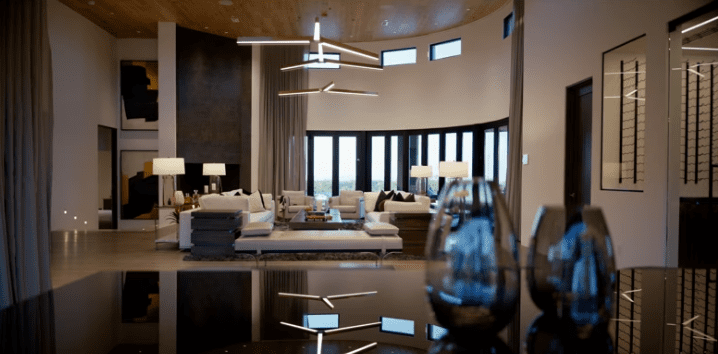
Imagine stepping into a brand new home, its structure flawless from foundation to roofline, only to find the interiors lack soul, functionality, or flow. This scenario unfolds far too often in new home construction projects where builders prioritize bones over beauty. Enter the new home construction interior designer, a pivotal professional who bridges the gap between raw architecture and livable luxury.
These experts wield profound influence, shaping not just aesthetics but also the home’s overall value, efficiency, and market appeal. In this analysis, we dissect their multifaceted impact: from integrating sustainable materials early in the build phase to optimizing spatial layouts that enhance daily living. We examine how their involvement curbs costly revisions, accelerates timelines, and elevates buyer satisfaction rates by up to 30 percent, according to industry benchmarks.
Whether you are a builder seeking competitive edges or a homeowner navigating custom builds, understanding this role equips you to demand more from your projects. Ahead, we explore real-world case studies, quantifiable benefits, and strategic tips to harness interior designers’ expertise from blueprint to move-in. Prepare to rethink new home construction as an integrated art and science.
Phoenix new home permits averaged 2,687 monthly in early 2025, translating to 5.5 permits per 10,000 population, a rate that sustains robust luxury development even as statewide single-family permits dipped 22 percent year-over-year in early 2026. This activity underpins demand for new home construction interior designers skilled in high-end residential projects. Arizona’s interior design sector mirrors this momentum with 3.0 percent annual growth through 2026, per IBISWorld projections, as affluent builders integrate precise material specifications and spatial planning from the outset. In enclaves like [Paradise Valley and Desert Mountain](https://jsfdesigninc.com/desert-home-interiors/), designers collaborate closely with architects and contractors to align interiors with architectural frameworks, producing detailed construction documents that ensure execution fidelity amid tight timelines. For details on Phoenix permitting trends, see Phoenix new home building permits analysis.
Paradise Valley median home values hit $3.47 million in March 2026, surging 13.6 percent year-over-year, while Phoenix metro prices reached $444,740 with 5.17 months of inventory, per Zillow and Phoenix Homes Report data. This environment accelerates demand for market-ready spec homes, where unresolved interiors risk prolonged market time. New construction sales in Scottsdale and Desert Mountain segments average $975,000, syncing with North America’s $77.8 billion luxury interior design market share, according to Business Research Insights. Affluent homeowners and spec builders in high-end areas like Silverleaf prioritize interiors that amplify property value through durable, high-performance materials and functional spatial layouts. These projects demand firms versed in full documentation sets, from millwork detailing to lighting coordination, to mitigate budget overruns and deliver livable sophistication. For Arizona-specific luxury trends, review luxury home design trends for 2026. JSF Design’s structured approach positions it as the essential partner, transforming market data into realized value for Phoenix-area stakeholders.
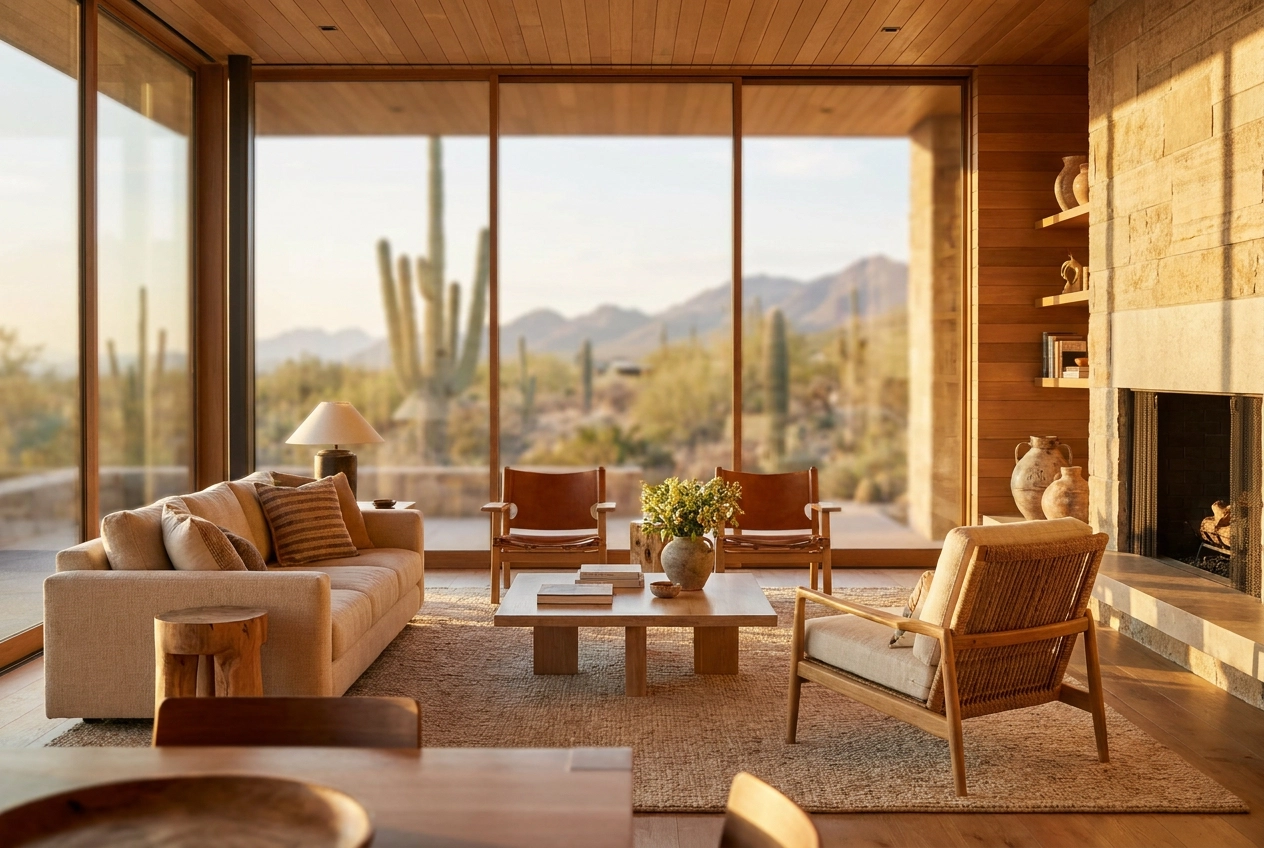
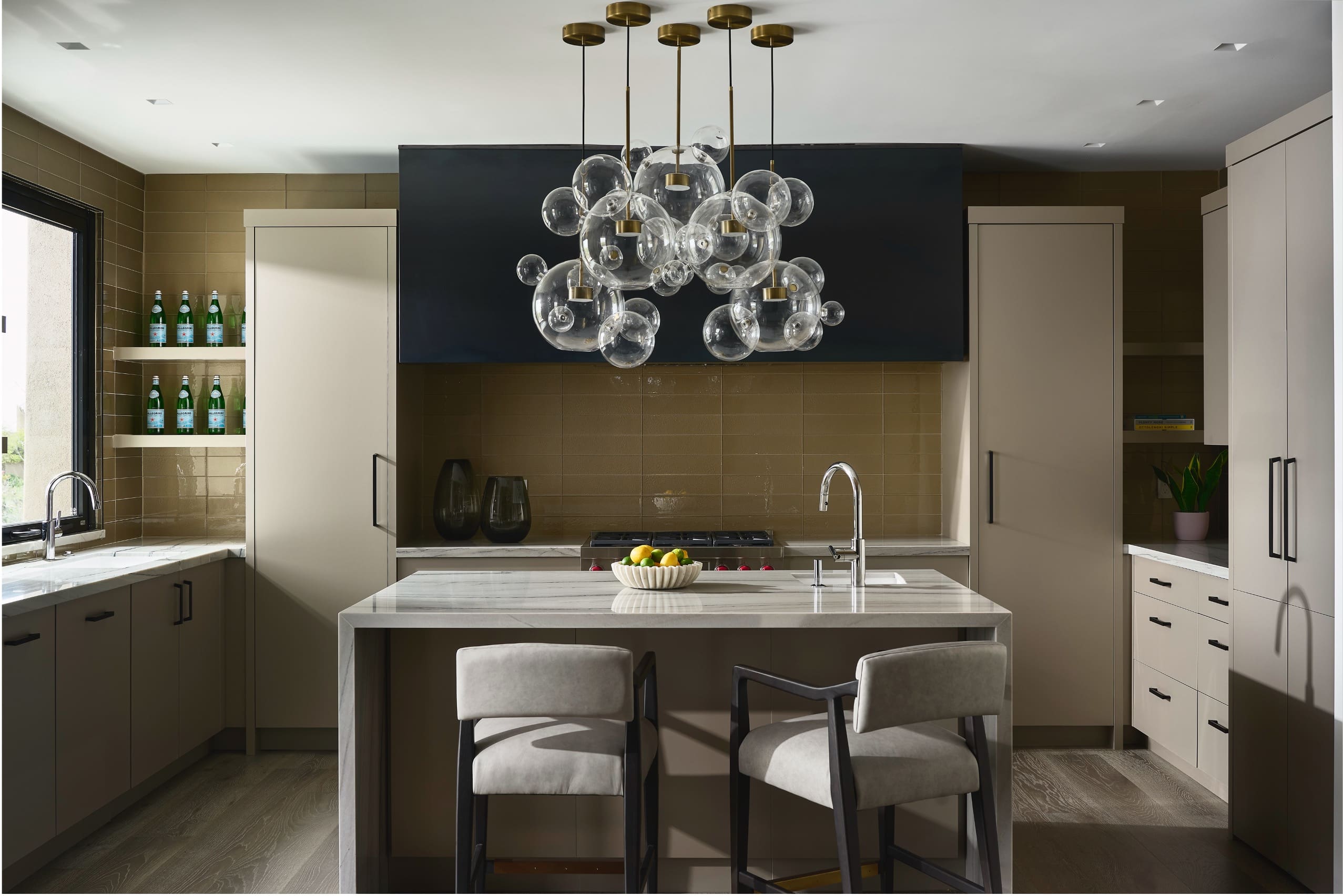
New home construction interior designers in the Phoenix area are specifying earthy palettes that supplant stark whites with soft browns, creamy neutrals, and warm wood tones. These selections, drawn from Houzz’s 2026 kitchen trends report, foster natural warmth suited to Paradise Valley estates and Desert Mountain properties. Houzz data indicates wood cabinets now edge out white at 29 percent versus 28 percent, while medium tones like rift-sawn oak or walnut provide depth without overwhelming desert views. In practice, designers pair creamy taupes with sage accents on cabinetry and stone surrounds, ensuring UV-resistant finishes withstand Arizona’s intense sunlight. This shift aligns with client demands for longevity; 62 percent of homeowners plan to remain in their homes over a decade, per Houzz surveys. JSF Design’s specification books detail exact color formulations and material pairings, enabling builders to execute these grounded schemes with precision during construction.
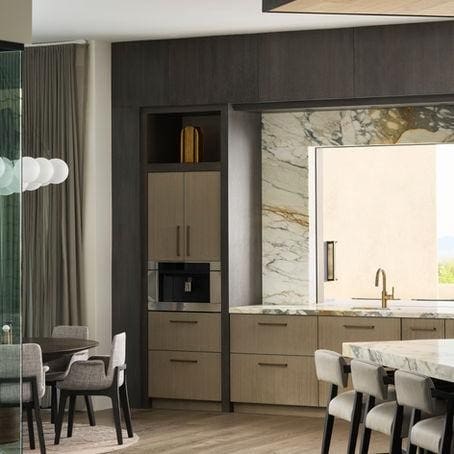
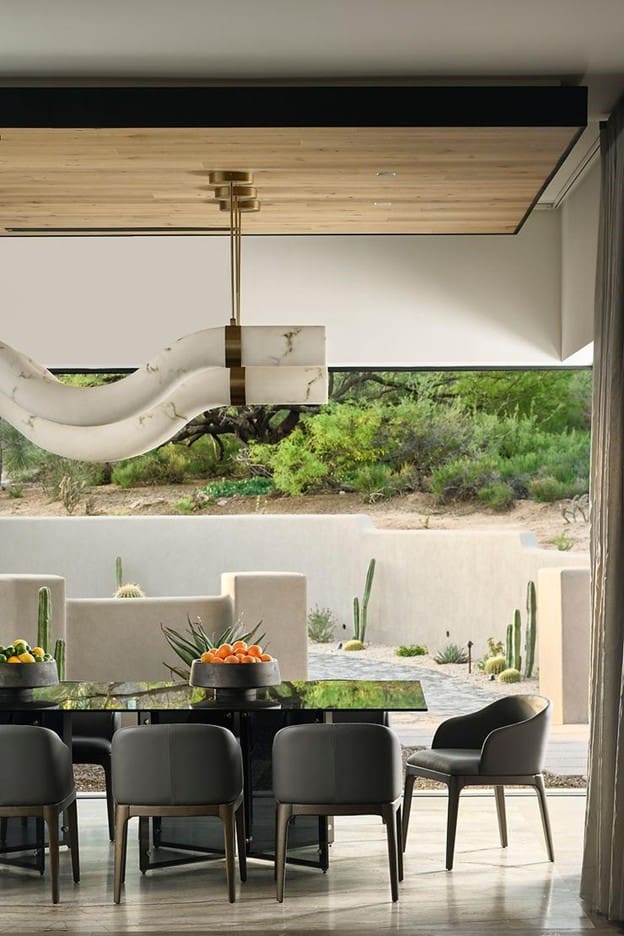
Layering stone slabs, textured fabrics, and vintage elements builds material richness essential for Arizona’s climate. Quartzite counters with subtle green veining, linen-upholstered built-ins, and reclaimed wood accents create tactile depth that breathes in high-heat environments. Local projects favor travertine floors and limewash plasters for thermal regulation, reducing reliance on constant HVAC amid 110-degree summers. Houzz notes a 38 percent surge in textured finish searches, emphasizing craftsmanship over novelty. Designers collaborate with architects early to integrate these via detailed shop drawings, mitigating on-site substitutions that compromise durability. In Scottsdale spec homes averaging $975,000 in sales, such selections enhance market value and resale appeal.
Upgraded mudrooms, work-in pantries, and indoor-outdoor transitions now incorporate smart tech for seamless living. Houzz reports 47 percent of projects add pantry storage, with 24 percent featuring beverage stations; in Phoenix, these zones include misting systems and zoned lighting for extended outdoor use. Pocket doors and retractable screens facilitate flows between air-conditioned interiors and shaded patios, critical for Desert Mountain lifestyles. Integration of touchless hardware and app-controlled vents supports aging-in-place features in 53 percent of builds. Builders benefit from designers’ coordinated schedules, aligning tech installs with framing timelines.
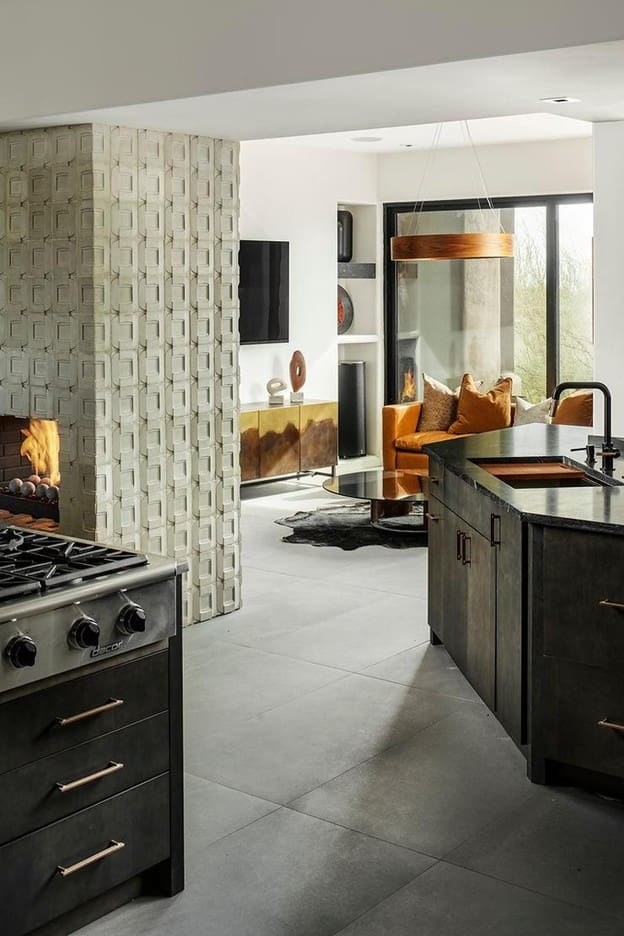
Custom millwork, paneling, and patterned floors deliver architectural weight without trend dependency. Picture-frame molding in rift-cut oak or checkerboard zellige tiles, as highlighted in Houzz’s 2026 predictions, suits Paradise Valley’s scale. Restrained application, one bold element per room, preserves spatial clarity. JSF Design’s construction drawings ensure trades execute fluted panels and arched details accurately, preserving the architect’s intent amid tight timelines. These choices elevate properties, with Paradise Valley median values at $3.47 million reflecting demand for resolved craftsmanship.
In new home construction, the interior designer’s involvement spans from initial concept through final installation, ensuring architectural intent translates into livable, high-value spaces. For projects in Scottsdale, Paradise Valley, and Desert Mountain, where median home values exceed $3.47 million and new construction sales average $975,000, this phased approach minimizes revisions, controls timelines, and aligns with builder schedules. JSF Design’s documentation-driven process, including detailed specification books and construction drawings, fosters clear collaboration among designers, architects, and trades, reducing on-site ambiguities by up to 30% in complex estates.
Early intervention in space planning refines floor plans to match client lifestyles, such as positioning kitchens adjacent to outdoor living areas for Phoenix’s indoor-outdoor orientation. Designers assess proportions, ceiling heights, and circulation, advocating adjustments like expanded mudrooms or flexible great rooms before framing commences. This pre-construction step prevents costly structural changes, saving $10,000 or more per alteration. In multi-generational homes common in Paradise Valley, widened doorways and zoned areas support privacy and accessibility. Learn more on pre-framing collaboration.
Material selections prioritize resilience against Phoenix’s UV index above 10 and 110°F summers, with rift-sawn oak cabinetry chosen for its straight-grain stability that resists warping from humidity fluctuations. Limestone counters, honed and sealed, offer thermal resistance and low maintenance when tested via UV exposure simulations. Schedules detail finishes like these alongside hardware, balancing longevity with material richness. This specificity ensures 20-30 year durability, enhancing resale value in spec homes.
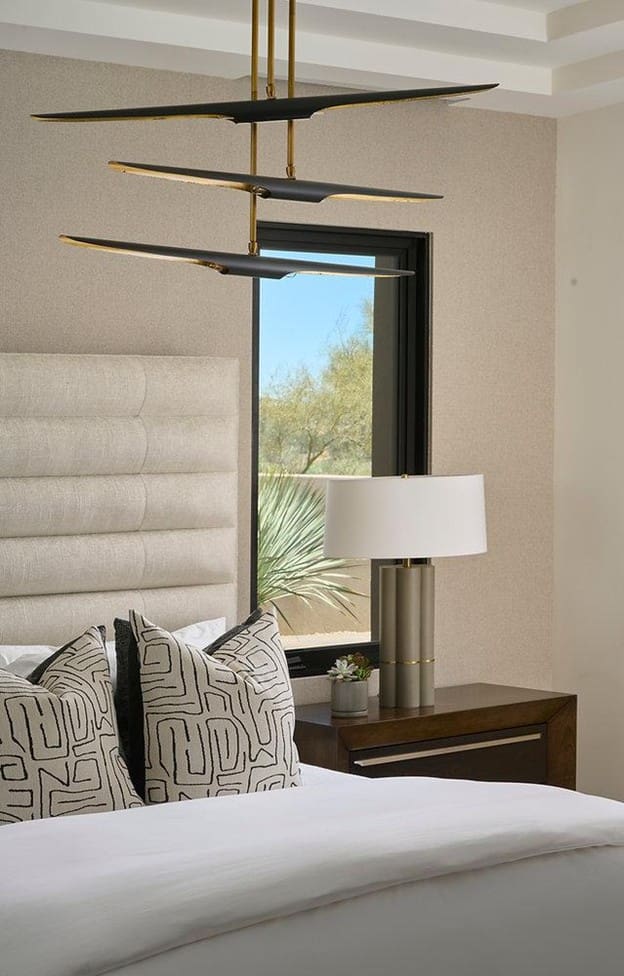
Detailed shop drawings for custom millwork, such as fluted paneling or integrated niches, integrate precisely with beams and HVAC systems. Lighting plans layer recessed ambient, cove accents, and task fixtures, complying with energy codes while supporting smart controls. Site verifications resolve clashes, like outlet placements for millwork-integrated tech.
Turnkey services procure cohesive furnishings, from performance textiles to custom rugs and accessories, enabling immediate occupancy. For spec developers, this delivers market-ready interiors, compressing timelines by pre-ordering pieces and managing logistics for unified schemes. Explore the interior designer’s full role.
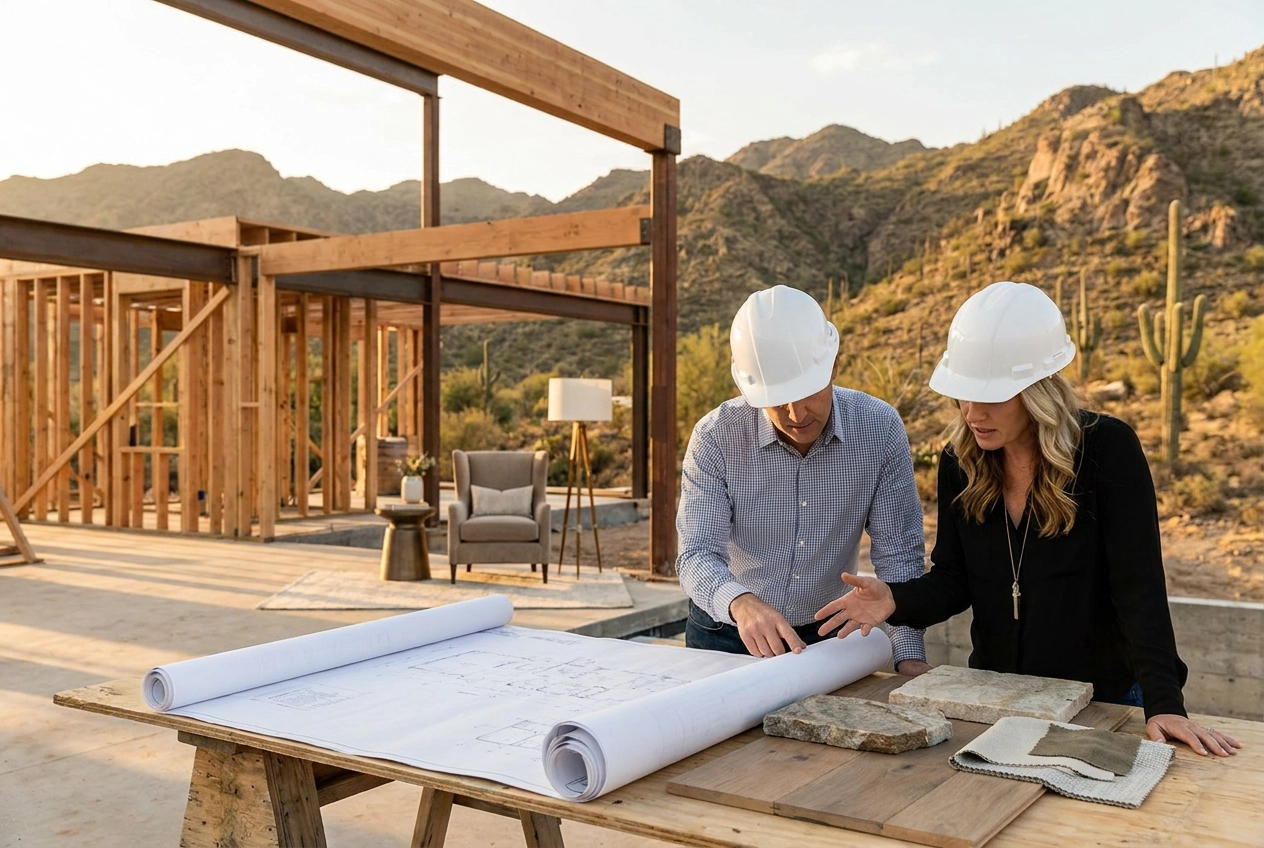
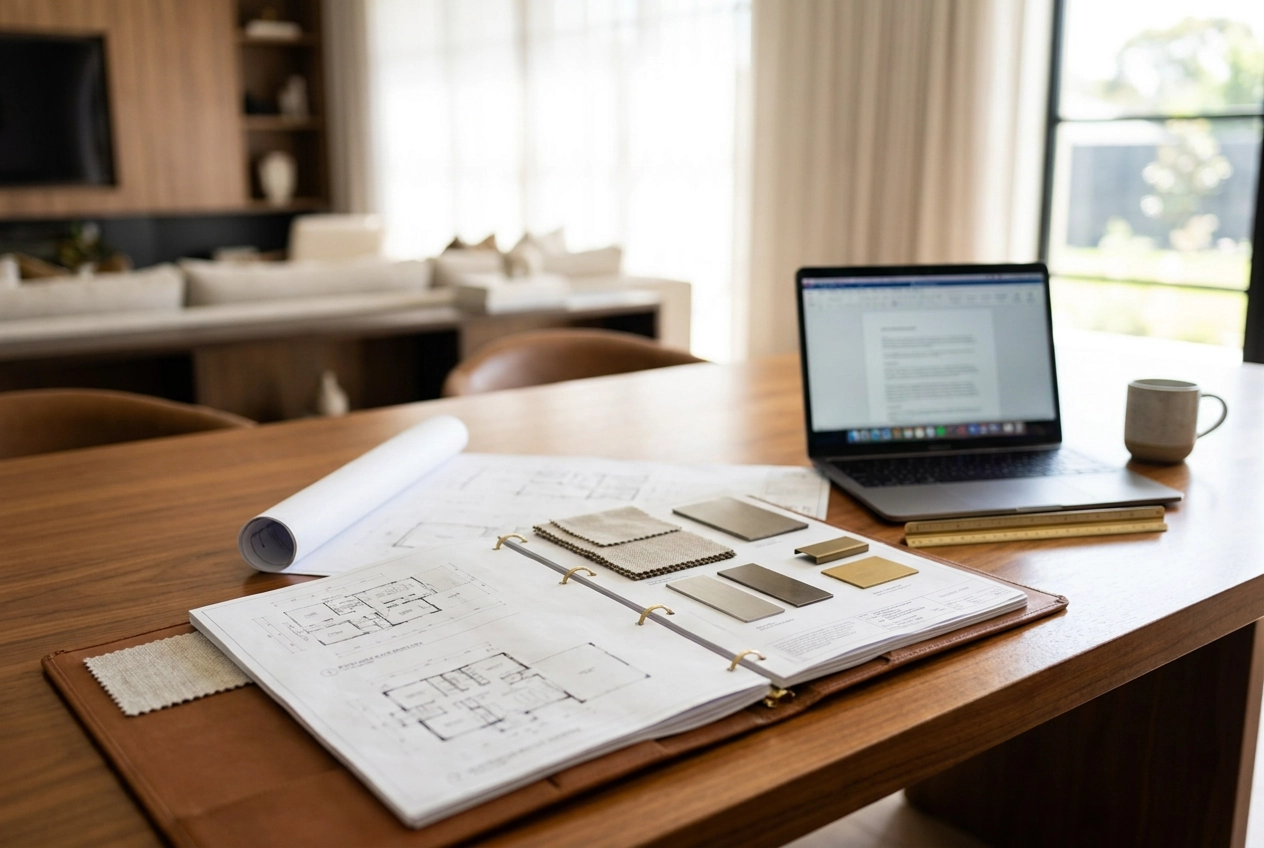
In new home construction, particularly for $3M+ luxury estates in Paradise Valley and Desert Mountain, structured specification books and construction drawings form the backbone of seamless execution. These comprehensive documents detail every element, from material cut sheets and millwork elevations to reflected ceiling plans for integrated lighting and FF&E schedules with precise quantities and sourcing notes. By clarifying responsibilities across electricians, plumbers, and finish carpenters, they minimize on-site ambiguities that typically trigger change orders, which can erode 5-15% of project margins and account for 85% of delays. Research from industry leaders indicates such tools reduce change orders by up to 30% through early clash detection via BIM software like Revit, preempting conflicts such as recessed lighting interfering with structural beams. For Scottsdale builders handling multi-trade coordination on 7,000+ sq ft homes, this precision ensures the design vision translates without costly rework. JSF Design’s documentation-driven process exemplifies this, producing digital portals that keep all parties aligned from framing to final punch list.
Weekly site meetings and walkthroughs are essential for addressing real-time adjustments in tight 12-18 month timelines common to Phoenix-area new builds. Designers collaborate with architects and builders to verify material installations, such as stone slab thresholds aligning with custom cabinetry, and resolve deviations like supply-induced substitutions. These sessions foster a shared accountability, with punch lists generated on-site using cloud-based platforms to track resolutions. Amid 2026 challenges like labor shortages and material volatility, this approach safeguards design intent, as evidenced by ASID’s 2026 Trends Outlook Report highlighting multidisciplinary teamwork as key to resilience. Actionable insight: Schedule milestone reviews at drywall, finishes, and pre-installation to cut revisions by streamlining feedback.
Budget alignment in high-end projects targets 10-15% of total costs for interiors in $3M+ homes, equating to $300K-$500K in Paradise Valley estates with median values at $3.47M. Phased selections prioritize fixed elements like flooring and casework early, incorporating 10-15% contingencies, while deferring furnishings to balance cash flow with durable investments. This strategy maximizes ROI through selections like performance-grade quartzite counters and smart-integrated millwork, projecting 10-15 year lifespans. Fortune Business Insights projects the global market reaching $152.33B in 2026, underscoring value-driven spending.
Scottsdale firms specializing in documentation act as pivotal coordinators, centralizing multi-trade precision for spec homes and custom estates. Their detailed spec books, as outlined in best practices from HH Designers, reduce RFIs and enable flawless execution, positioning them as indispensable partners in the greater Phoenix luxury market.
Phoenix-area permit backlogs, averaging 23 additional days across Arizona’s 106 jurisdictions with some exceeding 107 days, intensify timeline risks for luxury new builds. In Desert Mountain and Paradise Valley, where finishing phases overlap with custom millwork and stone fabrication, delays compound carrying costs on $2M-plus properties. New home construction interior designers address this through front-loaded processes, finalizing 90-100 percent of schematics, material specifications, and construction documents before permit submission. This strategy anticipates reviewer feedback, minimizes resubmissions seen in over 10 percent of luxury cases, and enables parallel procurement of long-lead items. JSF Design’s detailed specification books facilitate early Architectural Review Committee alignment, often reducing total timelines by 2-3 months as reported in recent analyses on Arizona permitting delays.
Sonoran Desert conditions, with UV indexes above 11 and temperatures surpassing 110°F, demand rigorous testing for interior materials. Standard fabrics degrade 70 percent within 1-2 years; designers specify UV-resistant options like those certified for 1,000+ hours of fade resistance, alongside low-maintenance stones such as honed travertine or sealed granite. Association for Contract Textiles protocols verify abrasion resistance exceeding 50,000 double rubs, while field simulations replicate five-year exposure. This ensures longevity in high-traffic areas, balancing material richness with practical performance.
Poor coordination triggers 15-30 percent overruns in luxury projects, driven by MEP conflicts and vague subcontractor specs. Detailed bid packages, spanning 50-100 pages per trade with elevations, tolerances, and RFI protocols, enforce accountability among architects, builders, and vendors. Building Information Modeling integration detects 85 percent of clashes pre-bid, slashing change orders by 20-40 percent according to industry benchmarks.
Spec developers in Desert Mountain’s 33 villages require repeatable frameworks for multi-property rollouts, adhering to theme-specific standards like contemporary glass walls or Santa Fe portals. Modular specification libraries and digital twins cut design time 30-50 percent, supporting medians near $2.8M amid tight inventory in Scottsdale luxury markets. JSF Design’s documentation-driven method delivers precision across portfolios, enhancing market readiness and long-term value.
Engage a new home construction interior designer during the schematic design phase to directly shape architectural outcomes and sidestep revisions that can escalate costs by 15-20% in luxury builds. Early involvement allows precise input on spatial planning, such as optimizing window placements for Scottsdale’s intense sunlight or integrating structural millwork for Paradise Valley estates valued at $3.47 million median. This proactive step aligns interiors with architecture from the outset.
Insist on comprehensive documentation packages, including detailed specification books and construction drawings, to ensure seamless builder handoffs. These resources minimize on-site ambiguities, protecting investments in high-end projects where Phoenix-area new home permits average 2,687 monthly. Firms employing this structured approach, like JSF Design, deliver clarity that accelerates timelines amid local permit backlogs.
Prioritize designers with deep local expertise in Paradise Valley and Scottsdale for selections responsive to desert climates, such as UV-resistant stone and breathable textiles. Schedule consultations early to incorporate 2026 trends like layered textured materials, as noted in New Home Source’s 2026 trends report, fostering cohesive results that boost resale appeal in markets averaging $975,000 for new luxury sales. Partnering with documentation-driven teams streamlines execution, enhancing long-term property value.
In essence, new home construction interior designers transform raw builds into exceptional living spaces by enhancing aesthetics, functionality, and flow. They boost property value, efficiency, and market appeal through early integration of sustainable materials and optimized layouts. Their expertise also minimizes costly revisions, shortens timelines, and lifts buyer satisfaction by up to 30 percent, delivering measurable returns.
By prioritizing these professionals from the outset, builders gain a competitive edge, while homeowners secure personalized havens that stand the test of time. The value is undeniable: higher ROI, happier occupants, and homes that truly inspire.
Ready to elevate your next project? Partner with a skilled interior designer today. Start the conversation now, and watch your vision become a reality that resonates for years to come.
BEST THE EDIT
of
Material Moves: Inside Jeffrey Florentine’s Collaboration With Antolini Stone Some collaborations happen because of timing. Others happen because of shared philosophy. The partnership between Jeffrey Florentine of JSF Design and Antolini Stone feels very much like the latter — a collaboration rooted in a mutual belief that materials should shape architecture, not simply finish it. […]
Elevate Your Space
Design Goes Beyond Aesthetics...
It Shapes Experience.
+ Show / Hide Comments
Share to: