Uncategorized

Full-Service Interior Design vs. Retail Furniture: What’s the Difference?

September 11, 2026

Welcome to The Edit — a curated glimpse into the world of JSF Design. I’m Jeffrey Stephen Florentine, Principal Designer and Founder. Here, we share the inspirations, stories, and details behind our most refined spaces. I invite you to explore what makes our work truly unique.

Currently
Trending

Walking into a beautifully designed room feels effortless, but achieving that result rarely is. Whether you are furnishing a new home or refreshing a tired space, the path you choose matters more than most people realize. Many homeowners assume that picking out furniture from a showroom and hiring an interior designer are simply two versions of the same thing. They are not.

Companies like EZ Living Interiors have helped bring this distinction into sharper focus by offering both product-driven retail experiences and more comprehensive design services. Understanding the difference between these two approaches can save you time, money, and a great deal of frustration.

In this post, we will break down exactly what separates full-service interior design from standard retail furniture shopping. You will learn what each option actually includes, what level of involvement and investment each requires, and most importantly, which approach suits your specific needs. By the end, you will have a clear, confident understanding of how to move forward with your next project, no guesswork required.

Why the Distinction Matters for High-End Residential Projects

For a homeowner investing in a significant new build or full-scale remodel in Paradise Valley or Desert Mountain, the question is rarely whether to furnish the space. The real question is whether a transactional purchase model can carry the weight of a capital-intensive project where every material decision compounds the next.

Retail furniture operates within a defined scope: product selection, delivery, and customer satisfaction at the point of sale. That model performs well within its parameters. What it cannot address is how a sofa’s depth reads against a recessed ceiling detail, how stone flooring transitions inform upholstery tone, or how millwork profiles need to be documented before a builder can price and execute them accurately. These are questions of spatial sequence, material cohesion, and construction coordination, and they require a fundamentally different level of engagement.

The financial stakes reinforce this distinction. When furniture selections proceed without reference to architectural drawings, finish schedules, or ceiling heights, the misalignment that results is rarely a minor adjustment. Replacing or relocating built-in elements, re-specifying custom pieces, or correcting proportion issues discovered during installation carries real cost, in both budget and schedule. As one professional sourcing perspective notes, understanding when to use trade-only sources, retail options, or custom fabrication is what separates a home that works from one that does not.

A full-service design firm carries accountability that extends from the first concept drawing through final installation, maintaining continuity across every decision point. That structured involvement is not a luxury addition to the process; for projects of this scale, it is the process.

What Retail Sourcing Actually Delivers

Retail furniture chains deliver a clear and defined service: product access, in-store guidance from sales staff, and logistics coordination through to delivery. That scope is genuinely useful within its own context, but it ends at the transaction. Once product leaves the showroom floor or fulfillment center, the retailer’s involvement concludes. There is no continued engagement with the project, no accountability for how selections perform within the actual space, and no mechanism for integrating purchases into a broader design vision.

The more consequential limitation is that selections are made without reference to the specific conditions of the project. A sofa chosen against a floor sample or digital rendering carries no assurance of scale compatibility with the room’s proportions, no consideration of how the upholstery reads under the project’s actual light conditions, and no cross-reference against the finish palette, millwork profiles, or material language already established by the architect and builder. The AI Room Visualiser tools now offered by some retail chains represent the industry’s response to this gap; they do not close it. Visualising a product in a photographed room is not the same as assessing suitability against construction documents.

For a homeowner or developer navigating a high-end residential project, retail sourcing places the full burden of coordination, proportion, and material compatibility on a non-designer. There is no specification record produced, no documentation that communicates product intent to contractors or trades, and no coordination with construction schedules. EZ Living Interiors holds strong customer satisfaction ratings, which reflects the quality of its retail experience. Those ratings measure transaction outcomes, not project outcomes. The distinction matters considerably when the project in question is a custom residence where every decision carries architectural and financial consequence.

What a Full-Service Interior Design Firm Actually Delivers

Where retail sourcing ends, full-service interior design begins. The distinction is not simply a matter of scope; it reflects a fundamentally different role in the project.

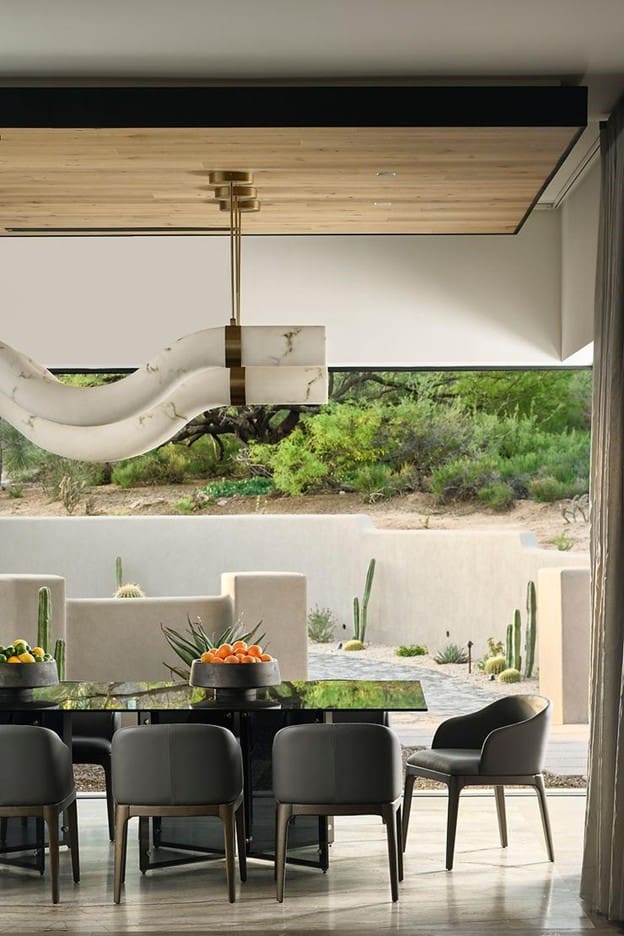
Space planning at the professional level starts well before any product is selected. A full-service firm addresses room programming, traffic circulation, proportion, and the structural relationship between architectural elements and furnishings as a unified problem. How a great room connects to an outdoor living zone, how a primary suite sequences from entry to bath, how ceiling height and window placement affect furniture scale: these are resolved on paper, with intention, before a single purchase order is placed.

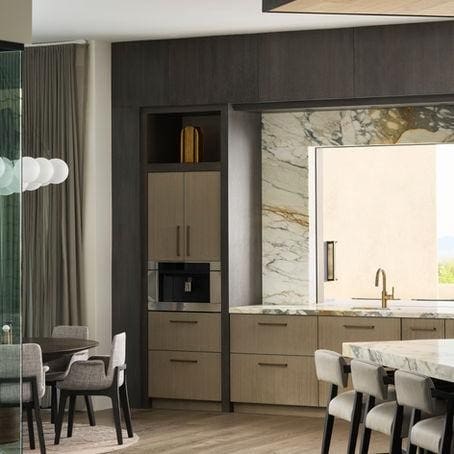
Material specification follows from that spatial foundation. Finishes, millwork profiles, flooring, wall treatments, and textiles are selected as a coordinated system across the whole home, not assembled room by room. Consistency at this scale requires holding the full material palette in view simultaneously, understanding how a stone selected for the kitchen island reads against the flooring in the adjacent dining space, or how a custom cabinet finish translates across multiple rooms without becoming repetitive.

Documentation is where that resolved thinking becomes executable. Detailed specification books and construction drawings communicate design intent to architects, general contractors, and subcontractors with the precision that complex residential projects require. As ASID research consistently supports, clear documentation reduces costly field decisions and late-stage substitutions. According to Interior Design’s 2026 Top 100 Giants, the top 200 design firms collectively reached $7 billion in combined fees in 2025, a benchmark that reflects the infrastructure and process depth the profession has built around exactly this kind of delivery.

Procurement at the full-service level means managing custom lead times, quality verification, and installation sequencing as an integrated workflow, not a series of independent transactions. And throughout construction, on-site collaboration ensures that built conditions reflect the documented intent. Deviations identified at framing or rough-in are resolved at a fraction of the cost of corrections made at final walkthrough.

The Role of Documentation in Delivering a Resolved Interior

The difference between a resolved interior and a well-intentioned one often comes down to what exists on paper. A full-service firm produces comprehensive specification books that capture every material, finish, fixture, and custom element in a format builders and trades can act on directly. Stone profiles, hardware finishes, grout widths, paint sheens, plumbing trim packages, and custom cabinetry configurations are all documented with precision, leaving no room for assumption on the job site. This single reference replaces fragmented verbal communication with a structured, auditable record that keeps every member of the project team aligned from permit set through final punch list.

Detailed construction drawings carry that documentation one level further. Millwork elevations, built-in casework details, reflected ceiling plans, and architectural trim profiles translate design intent into buildable instructions that a finish carpenter or cabinetmaker can execute without interpretation. When these drawings are absent, even skilled tradespeople are left to fill in gaps, and those gaps compound across a project. Protecting the design vision and protecting the budget are not separate objectives; thorough construction documentation serves both simultaneously.

A documented process also functions as the primary tool for change order management. Every selection that has been approved in writing creates a baseline against which any proposed revision can be measured, priced, and formally accepted or declined. This prevents scope creep from eroding both the design and the contingency, and it removes the friction that typically arises between design teams and construction teams when the original intent is unclear.

For spec home developers and luxury builders in Scottsdale and Paradise Valley, this level of documentation carries direct market value. A complete specification package allows every design decision, from the stone fabricator to the custom hardware source, to be communicated to prospective buyers with authority. Retail sourcing produces none of this. Without a specification record, the project has no coherent design rationale that can be articulated, adjusted, or built upon, leaving both the current build and any future work without a professional foundation to reference.

Material Richness, Artisanal Sourcing, and the Curated Procurement Difference

The current shift toward artisanal, handcrafted materials is one of the more demanding directions the residential market has taken in recent years, and it exposes a fundamental limitation of retail sourcing. Mass-production channels are optimised for consistency and volume; they are structurally unsuited to delivering the visible grain, natural variation, and tactile depth that define material-rich interiors. Pieces selected for their imperfections, their handwoven texture, or their species-specific character require a procurement process built around specification, not browsing. The 2026 design landscape identifies wood tones, architectural millwork, sculptural silhouettes, and tactile finishes as the defining material categories precisely because these are the categories that reward careful sourcing and punish careless selection.

A full-service firm with established trade relationships operates with access that the general public cannot replicate. Custom millwork fabricators, limited-production furniture makers, and handcrafted textile studios work within the trade by design; their output is intended for specified projects, not retail shelves. When walnut cabinetry, a commission-woven linen panel, and a hand-finished leather accent are drawn from the same coordinated material logic, the result reads as resolved rather than assembled.

The question of dark wood specification illustrates this clearly. Walnut across cabinetry, furniture, and architectural millwork must be evaluated for tone consistency, grain direction, and finish compatibility as a single system. No retail catalogue coordinates across those categories. Curated procurement does, because every decision is measured against spatial proportion, material palette, and architectural language simultaneously.

This is also a conversation about longevity. Materials sourced and specified at this level are chosen to develop character over decades, not to be refreshed in the next renovation cycle. The forever home philosophy gaining traction in 2026 is not simply a lifestyle preference; it reflects a considered investment position. For clients building or remodeling in Scottsdale or Paradise Valley, that investment deserves procurement that operates at the same standard as the property itself.

Timeless Design Over Trend Cycles: A Full-Service Perspective

Consumer-facing design media is structurally oriented toward turnover. Platforms cataloguing 20-plus named trends per annual cycle are not publishing design guidance; they are generating content that stimulates purchasing decisions. The business model depends on the previous season feeling dated. A full-service firm operates under an entirely different set of incentives: its interest is aligned with the client’s long-term investment, which means producing interiors that hold spatial integrity, material quality, and architectural coherence regardless of what any given trend cycle produces.

The question a firm like JSF Design asks is not what is popular right now, but what is the right material, proportion, and detail for this specific space and the way this client lives in it. That distinction shapes every decision, from room sequencing and millwork profiles to stone selection and lighting placement. It is a question retail sourcing cannot answer, because retail sourcing has no knowledge of the space, the architecture, or the client.

The ASID 2026 Trends Outlook identifies multi-purpose, flexible space planning as one of the most structurally durable residential priorities of the current cycle, driven by real shifts in how households work and live. But flexible space planning is first a question of room programming and spatial logic, how a room is proportioned, sequenced, and oriented within the larger plan. Furniture selection follows that logic; it does not replace it.

Clients who arrive at a full-service firm after attempting retail-sourced interiors tend to describe the same experience: individual pieces they responded to, assembled into rooms that do not feel resolved. The problem is rarely the pieces themselves. It is the absence of a spatial framework that gives those pieces coherence, scale, and purpose within the room they occupy.

Who Benefits Most from a Full-Service Design Engagement

Full-service interior design engagement delivers its clearest return when the project scope genuinely demands it. Not every client requires this level of coordination, but several client profiles consistently benefit from the structured, documentation-driven approach that a firm like JSF Design provides.

Homeowners building or fully renovating in Scottsdale, Paradise Valley, and Desert Mountain are the most natural fit. At this scale, every decision intersects with another: ceiling heights affect lighting placement, material selections affect lead times, and millwork profiles must be drawn before a contractor can bid. Piecemeal decision-making introduces misalignment between trades that is expensive to correct mid-construction. A coordinated, full-service interior design process ensures that architectural detailing, material specification, and furnishing selections are resolved in sequence and documented clearly before work begins.

Spec developers and luxury builders require interiors that communicate market positioning immediately, to buyers, to brokers, and to cameras. In a corridor where custom builds routinely represent seven-figure investments, interior coherence is a pricing variable. Documented specifications and coordinated procurement ensure the finished product reads with the clarity the property demands.

Real estate professionals and clients coordinating custom millwork or multi-trade scopes share a common requirement: a single design authority managing specifications across every party involved. When architectural detailing and interior design must align, ambiguity in the drawings is the primary source of cost overruns and execution failures. A resolved set of specifications removes that risk.

The Investment Case for Full-Service Interior Design

Full-service interior design is a distinct professional service with a defined scope, process, and accountability structure that retail sourcing cannot replicate. The comparison is not a matter of budget or preference; it is a structural one. What full-service interior designers actually deliver encompasses space planning, material specification, contractor coordination, procurement management, and installation oversight. That scope functions as project infrastructure, not a premium shopping experience.

For significant residential projects, the cost of an uncoordinated interior consistently exceeds the cost of professional design. Rework, material conflicts, and sequencing errors are not rare outcomes on self-managed builds; they are predictable ones. Professional design engagement can save clients an estimated 30 to 35 percent over self-directed efforts, and well-executed interiors have demonstrated resale value increases of up to 20 percent. The governing principle is straightforward: the right design partner costs less than doing it twice.

JSF Design’s documentation-driven process is specifically built to eliminate ambiguity at every stage of construction. Detailed specification books and coordinated drawings protect the design vision from initial concept through final installation, giving architects, builders, and trades a single, authoritative reference point.

For homeowners and developers in Scottsdale and the greater Phoenix market, the right starting point is a direct conversation about project scope and design intent. Understanding what a full-service engagement looks like in practice is the clearest path to a resolved, intentional interior.

Conclusion

Choosing between full-service interior design and retail furniture shopping is not a matter of one being better than the other. It comes down to your goals, your timeline, and the level of support you need. Retail furniture works beautifully for confident shoppers who have a clear vision and enjoy the process. Full-service design delivers the most value when a project is complex, time-sensitive, or simply feels overwhelming to tackle alone.

The right choice saves you money in the long run by reducing costly mistakes and wasted purchases.

Now that you understand the difference, the next step is yours. Assess your project, be honest about what you need, and choose the path that aligns with both your lifestyle and your vision. Whether you shop, collaborate, or do both, a space you truly love is absolutely within reach.

+ Show / Hide Comments

Share to:

Leave a Reply

Your email address will not be published. Required fields are marked *

READ        LATEST

the

BEST      THE EDIT

of

Portrait of Jeffrey Florentine of JSF Design in front of textured stone surfaces from the Elementa collection created in collaboration with Antolini Stone.

Design Inspiration

Material Moves: Inside Jeffrey Florentine’s Collaboration With Antolini Stone Some collaborations happen because of timing. Others happen because of shared philosophy. The partnership between Jeffrey Florentine of JSF Design and Antolini Stone feels very much like the latter — a collaboration rooted in a mutual belief that materials should shape architecture, not simply finish it. […]

Desert Mountain New Build Desert Mountain Remodel Portfolio | Luxury Interior Design Scottsdale – JSF Design
Desert Mountain Remodel Luxury Scottsdale Interior Design

Elevate Your Space 

Let’s Bring Your Vision to Life

Design Goes Beyond Aesthetics...
It Shapes Experience.