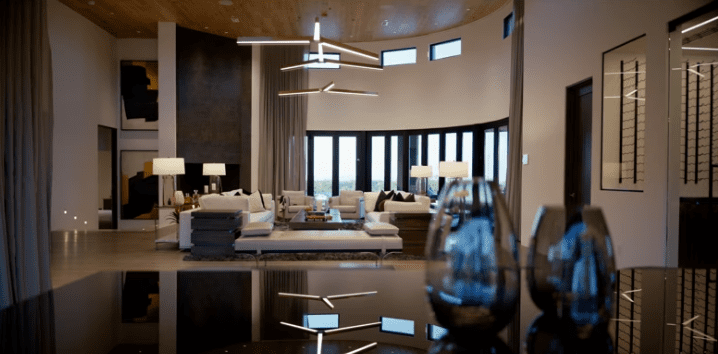
In the rarified air of Paradise Valley, where jagged saguaro silhouettes frame endless horizons, the luxury mountain home emerges as the pinnacle of elevated living. These residences demand more than mere opulence; they require interiors of surgical precision, where every texture, line, and light source aligns with the raw power of the surrounding peaks. For affluent homeowners and design professionals alike, achieving this harmony transcends aesthetics. It demands a forensic understanding of environmental forces, from altitude-driven acoustics to the relentless Arizona sun’s thermal demands.
This analysis dissects the core principles of precision interiors tailored for Paradise Valley’s luxury mountain homes. We examine material synergies that withstand high-desert extremes while exuding timeless elegance, spatial configurations that amplify panoramic views without compromising intimacy, and bespoke lighting strategies that sculpt drama from dawn to dusk. Drawing on case studies of landmark properties and proprietary design metrics, you will uncover actionable insights into value engineering, sustainability integration, and the subtle art of personalization. Whether refining an existing retreat or conceptualizing a legacy estate, these revelations equip you to command interiors that not only endure but define mountain luxury.
Paradise Valley’s luxury residential market exemplifies resilience in early 2026, with median sale prices spanning $5.2 million to $6.2 million across key reporting periods. Data from leading local analyses confirm this range, reflecting fluctuations driven by low transaction volumes where individual trophy sales exert significant influence. Year-to-date through early March, over 10 properties surpassed $10 million in closings, signaling sustained appetite for ultra-high-end assets amid national mortgage rates near 6 percent. This activity underscores a market where discerning buyers prioritize architectural distinction and site-specific attributes over transient economic pressures. For developers and homeowners, these figures highlight the necessity of precise positioning through detailed specifications that align interiors with exterior vistas.
In Desert Mountain, the 8,000-acre gated community in North Scottsdale, resales and new builds command averages from $2 million to $5 million plus, buoyed by consistent demand from lifestyle-oriented purchasers. Q1 metrics show medians around $2.85 million to $2.98 million, with limited inventory of 137 active listings fostering steady absorption. This enclave’s appeal lies in its integration of golf estates, trails, and custom homes optimized for Sonoran Desert living, where spatial planning must accommodate expansive views and resilient materials. Builders targeting this segment benefit from collaborative processes that produce unambiguous construction documents, ensuring execution matches market expectations.
Market indicators further reveal a competitive balance: sale-to-list ratios at 94 to 96 percent, paired with days on market from 38 to 81 days, denote an inventory-rich landscape with 170 to 346 luxury listings. Elevated supply provides negotiation leverage yet favors well-documented properties that expedite closings. All-cash transactions for $20 million-plus estates, including three within a 10-day span in early March, affirm buyer resolve despite financing headwinds. For more on Paradise Valley trends, see the Radic Group luxury market outlook.
These dynamics culminate in a premium for luxury mountain homes boasting commanding views of Camelback and Mummy Mountains. Scarcity of such lots drives pricing differentiation, compelling designers and architects to collaborate on view-maximizing layouts, large glazing systems, and material palettes that enhance rather than obstruct sightlines. Firms like JSF Design, through rigorous specification books, deliver the clarity needed to realize these high-stakes visions with precision. Paradise Valley real estate report.
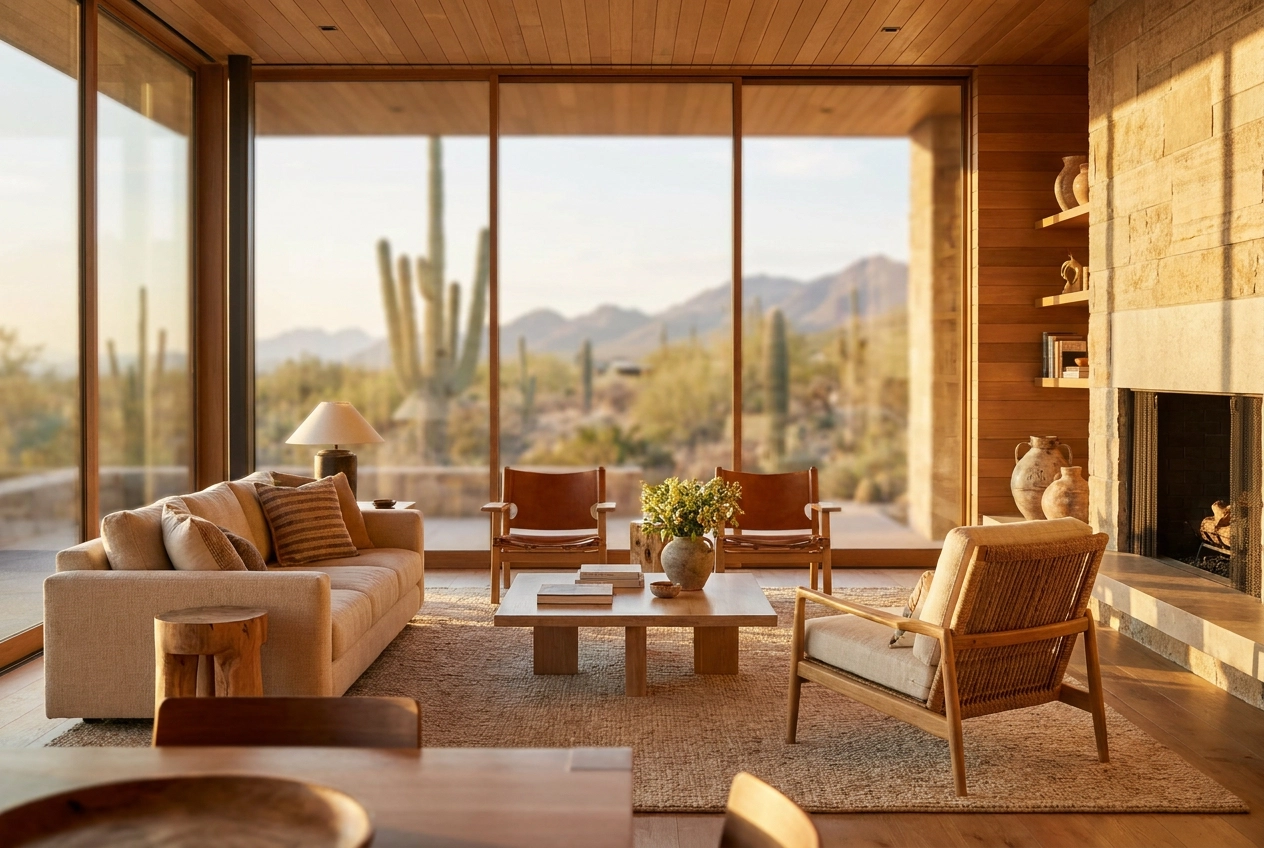
In luxury mountain homes throughout Paradise Valley and Desert Mountain, strategic spatial planning elevates panoramic Sonoran Desert vistas into defining architectural assets, directly influencing property values in a market where median sales exceed $5.2 million to $6.2 million. Primary living areas, such as great rooms and kitchens, alongside principal bedrooms, must be positioned southward or southeastward to frame iconic peaks like Camelback Mountain through expansive glazing systems. Floor-to-ceiling panels, often spanning 30 feet, employ triple-paned low-E glass with argon fills to achieve solar heat gain coefficients below 0.25, balancing light diffusion with thermal performance in climates where summer temperatures surpass 115°F. This orientation not only captures formations like Camelback’s “Praying Monk” as integral focal points but also boosts resale premiums by 20 to 40 percent, per recent Arizona luxury analyses. JSF Design integrates these sightlines during initial space planning, producing detailed drawings that ensure structural compatibility from schematic phases.
Clerestory windows at 14 to 18 feet above vaulted ceilings introduce indirect northern light, mitigating glare while preserving unobstructed low-level mountain views. Paired with retractable multi-slide glass walls, these elements dissolve indoor-outdoor boundaries, facilitating natural ventilation that reduces air conditioning demands by 15 to 30 percent. Roof overhangs calibrated to block over 90 percent of high-angle summer sun complement low-SHGC glazing, essential for arid durability. In Paradise Valley projects, this approach extends effective living areas without compromising energy efficiency, with construction timelines streamlined to 12 to 14 months through precise specifications.
Layered sequences compress entry foyers before releasing into voluminous great rooms, directing axial movement toward framed vistas and maintaining architectural continuity. Multi-level volumes create visual tension, eliminating superfluous corridors to prioritize continuous sightlines to Mummy Mountain or Camelback horizons. This method, rooted in experiential architecture, builds anticipation and reinforces spatial hierarchy, with JSF Design’s documentation books clarifying transitions for builders.
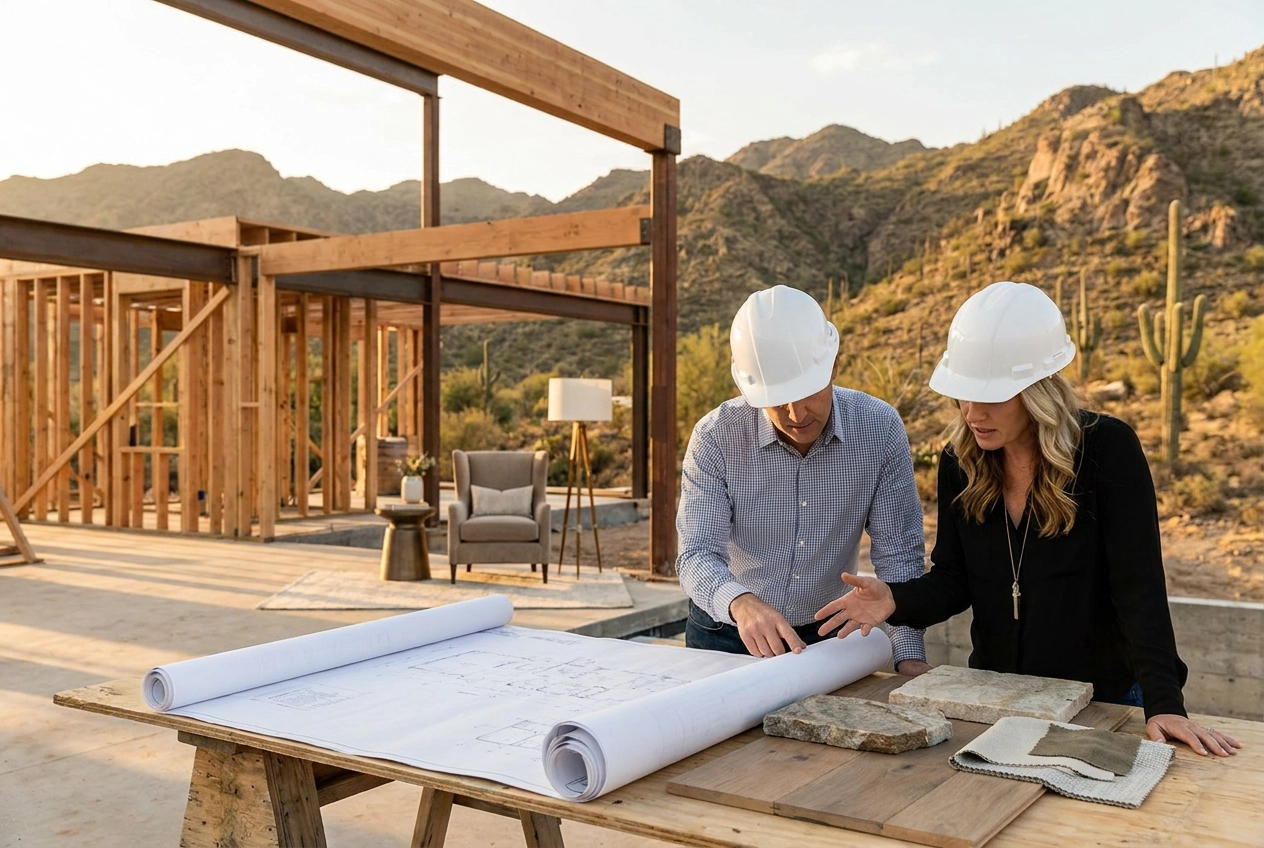
Collaboration with architects commences in schematic design to align cantilevers and steel framing with precise sightlines, such as Camelback’s profile. These structural moves support uninterrupted glazing over voids, minimizing on-site revisions and upholding timelines. JSF Design’s detailed construction drawings facilitate this integration, ensuring material selections like UV-resistant terrazzo floors endure site-specific exposures.
Shaded loggias, often exceeding 2,000 square feet, serve as thermal buffers with misters, fans, and retractable screens, extending usability amid 40°F diurnal swings. Stepped patios integrate outdoor kitchens, framed by native palms for solar filtering and 30 percent heat gain reduction via stucco massing. For spec developers in Desert Mountain, these zones enhance market readiness, with JSF Design coordinating procurement for cohesive execution. This comprehensive planning, informed by 2026 Arizona luxury design trends and Paradise Valley market data, delivers enduring value through disciplined collaboration.
In luxury mountain homes across Paradise Valley and Desert Mountain, material specifications must prioritize climate resilience to counter the Sonoran Desert’s extreme diurnal temperature swings, intense UV exposure, and pervasive dust. Local stone selections, such as travertine quarried from Arizona sources and rammed earth fabricated on-site, deliver exceptional thermal mass. These materials absorb daytime heat exceeding 100°F and radiate it slowly at night, stabilizing interior temperatures by 10-15°C without over-relying on HVAC systems, as demonstrated in high-desert projects like those detailed in ArchDaily’s analysis of U.S. desert residences. Their striated textures and earthy hues integrate seamlessly with surrounding mountain architecture, enhancing biophilic connections while minimizing transport emissions. JSF Design’s detailed specification books ensure precise coordination with architects and builders, documenting ratios for rammed earth stabilization and travertine honing to achieve uniform performance during construction.
Cementitious terrazzo or porcelain variants resist UV degradation far better than epoxy alternatives, maintaining color integrity in sun-flooded great rooms and valley-view patios. Textured plasters, including through-pigmented limewash or clay formulations like those from American Clay, further bolster resilience by regulating humidity and preventing chalking or fading under prolonged exposure. These finishes, hand-troweled for subtle depth, align with 2026 trends in breathable, low-VOC surfaces that support wellness-oriented interiors. In Paradise Valley projects, they transition fluidly from interior walls to outdoor ramadas, reducing maintenance cycles by 20-30% over painted alternatives.
Reclaimed wood accents, sourced from antique oak or barn beams in a market valued at $61.92 billion globally, introduce patina-rich warmth without compromising longevity; these endure 50-100 years in arid conditions. Paired with neutral palettes of sand, terracotta, and stone gray, they evoke desert canyons, fostering coziness during cool mountain evenings. This combination boosts property values by 10-20% in elevated communities like Desert Mountain, per resale data, through timeless appeal and lower upkeep.
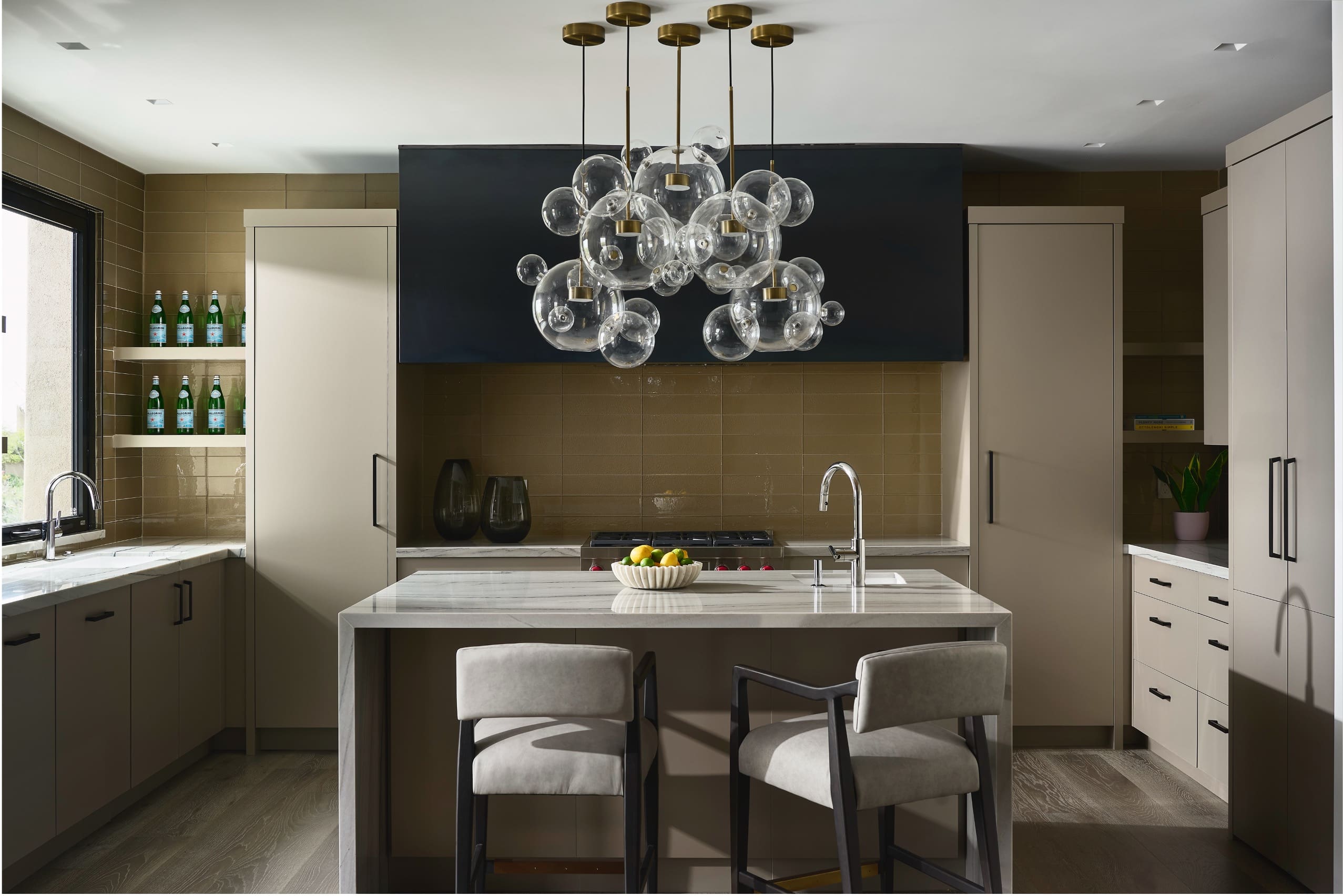
Low-maintenance, high-performance finishes such as matte bronze metals and engineered stone veneers ($6-12 per square foot) further safeguard investments, aligning with rigorous timelines in spec home developments. Custom millwork in white oak, fitted with weather-resistant blackened steel hardware, reinforces heavy-use zones like kitchens overlooking Mummy Mountain. JSF Design’s construction drawings specify tolerances and integration details, enabling builders to execute seamless joinery that withstands daily rigors while preserving unobstructed vistas. This collaborative precision minimizes field errors, ensuring durability matches the multimillion-dollar market’s expectations, where median Paradise Valley sales exceed $5.2 million.
In luxury mountain homes across Paradise Valley and Desert Mountain, biophilic design principles integrate natural elements to foster wellness, aligning with the global wellness real estate market valued at $548 billion in 2026 and growing at 15.2% annually. These strategies draw on evidence-based benefits, such as nature views reducing cortisol levels by 13.4-15.8% and enhancing cognitive function, critical for high-altitude Sonoran Desert living with intense UV exposure. JSF Design employs detailed specification books to document water features and native plantings, ensuring precise execution by architects and builders.
Strategic incorporation of water features, such as linear rills or infinity edges using recycled graywater systems, paired with drought-tolerant natives like agave attenuata and dasylirion wheeleri, evokes desert oasis qualities. These low-profile installations preserve viewshed connectivity to Camelback or Mummy Mountain, maintaining unobstructed panoramas while boosting biodiversity and reducing ambient noise by up to 20%. In collaboration with landscape architects, JSF specifies permeable hardscapes like decomposed granite to minimize visual disruption, supporting client-driven scalability for spec homes in Desert Mountain’s gated enclaves.
Dedicated wellness zones, including infrared saunas clad in local travertine and yoga pavilions with retractable glass walls, prioritize direct mountain sightlines for restorative immersion. Floor-to-ceiling glazing orients to peaks, leveraging biophilic views that shorten recovery times, as studies show nature exposure cuts sick days by 11 annually. JSF’s construction drawings detail acoustic insulation and heated flooring for year-round use, balancing architectural openness with functionality.
Layering organic textures, reclaimed mesquite paneling over limewash plasters, diffuses natural light through clerestory windows to align circadian rhythms amid high-altitude sunlight variability. This promotes serotonin regulation, reducing mental fatigue per Attention Restoration Theory. Material selections absorb excess UV, ensuring durability in Phoenix’s climate swings.
Acoustic control tempers expansive volumes with materiality: wool-felted stone walls and water rills dampen echoes, creating serene retreats without compromising vista flow. For affluent clients and spec developers, JSF tailors these to lifestyles, from daily meditation to entertaining, enhancing market appeal in Paradise Valley’s $5.2-6.2 million median sales segment. This documentation-driven precision minimizes on-site revisions, delivering timeless value. For deeper insights, see 2026 wellness real estate trends and modern luxury mountain home designs.
In luxury mountain homes within Desert Mountain and Paradise Valley, JSF Design’s structured documentation process ensures precision from concept to completion, addressing the unique demands of rugged terrains and expansive Sonoran vistas. Comprehensive specification books serve as the cornerstone, cataloging every finish, millwork detail, and lighting element with manufacturer data, material samples, and installation protocols. For instance, these documents specify UV-resistant terrazzo flooring, custom curved hardwood cabinetry with exact joinery tolerances, and layered LED systems calibrated for clerestory daylight emulation in wellness zones. This eliminates on-site ambiguities, where misaligned millwork or mismatched stone veining could otherwise cascade into delays. In a recent Desert Mountain project, such binders reduced material substitution requests by 40 percent, streamlining trade workflows amid the community’s strict Architectural Review Committee standards.
JSF Design generates detailed construction drawings, including topographic sections, elevation views, and 3D BIM models tailored to complex mountain-site builds. These facilitate real-time coordination among architects, builders, and trades, incorporating site-specific data like slope gradients and view corridors essential for framing Mummy Mountain panoramas. Digital tools enable iterative reviews, ensuring structural elements like cantilevered decks align with foundation plans on rocky substrates. For 2026 mountain home design trends, drawings now integrate AI-driven clash detection, minimizing field adjustments in remote North Scottsdale locations.
Project timelines in Desert Mountain span 12 to 24 months, factoring ARC approvals and phased permitting; JSF establishes contingencies of 10 to 15 percent for procurement of specialty items like imported rammed earth plasters amid 3.4 to 5 percent material inflation. On-site verifications, including mockups and laser-verified alignments, confirm view-maximizing details such as oversized glazing orientations against terrain shifts. Soil tests and full-scale flooring layouts preempt grading issues, preserving ecological buffers.
This methodology slashes change orders, which average 5 to 10 percent of budgets or $60,000 to $120,000 on $1.2 million builds, per industry benchmarks. By safeguarding schedules and delivering turnkey precision, properties achieve superior marketability, commanding premiums in Paradise Valley’s $5.2 to $6.2 million median market with 94 to 96 percent sale-to-list ratios. JSF’s approach not only upholds architectural intent but elevates long-term asset value for discerning owners and developers.
In a recent Paradise Valley remodel, JSF Design transformed a Mummy Mountain-view residence by reconfiguring spatial volumes to prioritize unobstructed panoramas while layering materials such as large-format travertine slabs and rammed earth accents against steel-framed openings. This approach addressed the site’s steep topography, ensuring structural stability and visual continuity from entry sequences to outdoor terraces. Collaboration with the architect refined load-bearing adjustments, while detailed specification books guided builders through phased execution, mitigating timeline delays common in hillside projects. The result maximized natural light via clerestory integrations, enhancing durability against diurnal temperature shifts.
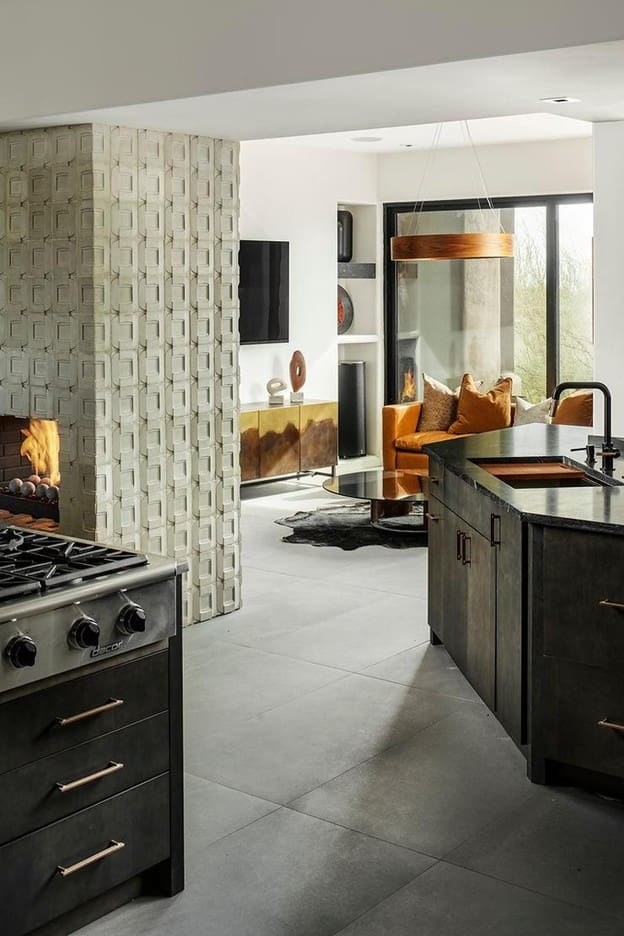
A Desert Mountain project exemplified JSF Design’s material rigor, where custom walnut cabinetry interfaced with honed quartzite counters and floor-to-ceiling stone veneers to forge seamless indoor-outdoor transitions. These selections, specified for UV resistance and thermal mass, extended exterior basalt cladding inward, unifying kitchen and pool pavilions. On-site coordination with builders ensured precise joinery tolerances, preventing common execution gaps in expansive glazing systems. This methodology supports developer timelines, delivering resilient assemblies suited to high-desert exposure.
Turnkey furnishing completed both projects, procuring bespoke seating and textiles calibrated to architectural scales for immediate occupancy. This aligns with spec home demands, where Paradise Valley luxury market reports note median days on market at 38 to 81 amid rising inventory.
Such detailed planning translates architectural intent into livable sophistication, as JSF Design’s documentation minimizes field ambiguities. Outcomes include enhanced appraisals, with sale-to-list ratios reaching 94 to 96 percent, and rapid closings in segments averaging $5.2 million to $6.2 million. These projects underscore the firm’s role in elevating property value through intentional execution.
Incorporate interior designers like JSF Design Inc. from schematic phases to synchronize architect, builder, and trade visions through detailed CAD drawings, BIM models, and specification books. This approach reduces change orders by 15-20 percent, common in multimillion-dollar builds spanning 12-18 months. LiDAR scans and 3D renderings clarify spatial adjacencies and MEP integrations, ensuring precision amid Paradise Valley’s stringent zoning.
Test materials on-site for UV index over 12, thermal mass exceeding R-2 per inch, and monsoon durability, favoring rammed earth from local soils and Arizona travertine. Large-format porcelain slabs with under 0.5 percent water absorption optimize view corridors to Camelback Mountain while staying 20 degrees Fahrenheit cooler. Mockups confirm low-VOC compliance and glare reduction via matte finishes.
Reserve 15-20 percent of budgets for bespoke millwork, brass hardware, and layered textures, justifying premiums in Paradise Valley’s $5.2-6.2 million median market with 94-96 percent sale-to-list ratios. Serialized schedules track overruns, as custom niches elevate resale by 10-15 percent per Desert Mountain market reports.
Phase projects over 12-18 months: programming, mockups, administration, addressing 8,000-acre site’s elevation logistics and HOA stone facade rules. Weekly site walks handle staging on rugged lots, integrating resort pools with golf views.
JSF Design’s spec books detail tolerances, shop drawings, and performance metrics, streamlining execution for Desert Mountain custom estates. This maximizes value in a market with 10-plus $10 million sales year-to-date.
In the demanding terrain of Paradise Valley luxury mountain homes, precision interiors forge a seamless bond between opulent living and rugged nature. Key takeaways include material synergies that defy high-desert extremes while radiating timeless elegance, spatial designs that maximize panoramic vistas alongside intimate retreats, bespoke lighting that harnesses dawn-to-dusk drama, and a holistic grasp of environmental forces like altitude acoustics and solar intensity.
This forensic blueprint delivers unparalleled value: residences that endure, inspire, and elevate daily life amid jagged peaks and endless horizons.
Elevate your mountain sanctuary today. Partner with expert designers specializing in Paradise Valley precision to craft interiors as formidable as the landscape itself. Your pinnacle of elevated living awaits; seize it now.
BEST THE EDIT
of
High-end residential interior design is about more than creating beautiful spaces. The most successful homes feel intentional, layered, and deeply connected to the way people live. Thoughtful spatial planning, timeless materials, and carefully integrated details work together to create environments that feel refined without being overdesigned. This guide explores the principles shaping luxury residential interiors […]
Elevate Your Space
Design Goes Beyond Aesthetics...
It Shapes Experience.
+ Show / Hide Comments
Share to: