



The world of high-end residential design is shifting, and if you are planning a custom home build or major renovation, now is the time to pay attention. The interior design trends emerging for 2026 are not simply aesthetic updates; they represent a fundamental rethinking of how luxury spaces function, feel, and endure over time.
For homeowners and design enthusiasts who already understand the basics, this moment offers something more valuable than surface-level inspiration. It offers strategic insight. Knowing which directions the industry is moving allows you to make informed decisions about materials, layouts, and finishes that will feel both current and timeless years from now.
In this post, we break down the most significant interior design trends shaping luxury custom homes in 2026. From the resurgence of artisan craftsmanship to the seamless integration of smart home technology within organic aesthetics, each trend on this list carries real implications for how you might approach your next project. Whether you are working with an architect, an interior designer, or managing your vision independently, these insights will help you build smarter and more beautifully.
Warm Earthy Palettes and the Return of Natural Materials
The cool, gray-dominant palettes that defined the last decade of luxury residential design are giving way to something more grounded and materially considered. Across high-end projects in Scottsdale, Paradise Valley, and Desert Mountain, designers are specifying ochre, warm taupe, deep terracotta, and rich warm neutrals in the tradition of Pantone’s Mocha Mousse, a deep cacao-inspired tone that continues to influence residential color directions well into 2026. These are not cosmetic updates; they represent a fundamental recalibration toward palettes that perform visually over time rather than dating quickly.
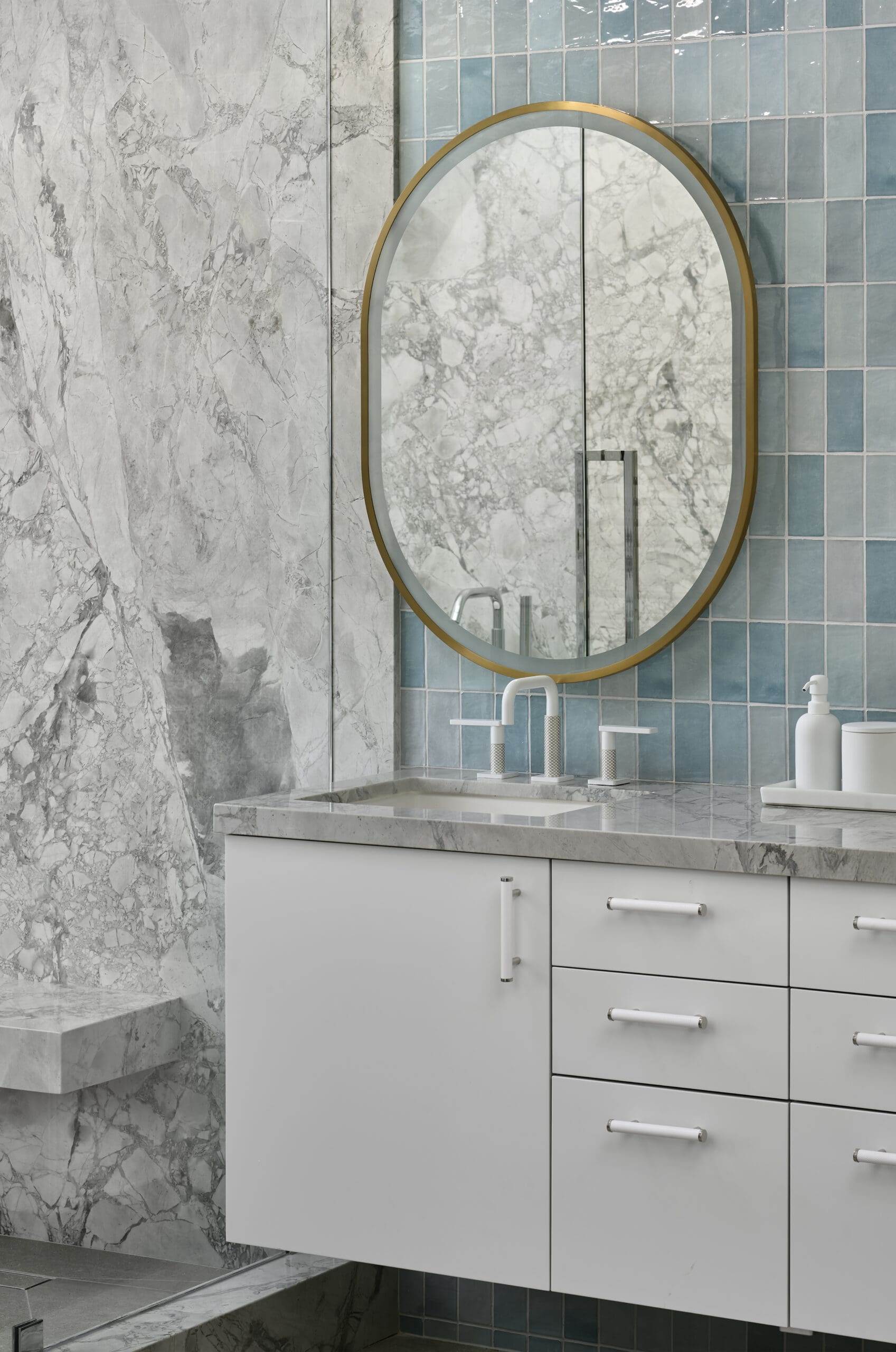
Material selection is driving this shift as much as color. Honed stone, hand-applied plaster walls, and raw or wire-brushed wood finishes are being specified for their tactile depth and long-term performance rather than their surface appearance alone. These materials patina with use, hold up under heavy occupancy, and resist the visual fatigue that polished or highly processed finishes often develop within a few years of installation.
In the Arizona desert context, this direction carries particular weight. Natural materials that reference the surrounding landscape, travertine, limestone, stucco, and richly grained wood, perform better under intense UV exposure and thermal cycling than synthetic alternatives. They age gracefully rather than degrading, making them a sound investment in high-value custom builds. Affluent clients in Paradise Valley and Desert Mountain are also increasingly requesting documentation of material provenance, favoring responsibly sourced and regionally relevant finishes that align with both their values and the architectural character of the site.
The primary execution challenge in this palette direction is cohesion across large floor plans. A 6,000-square-foot home with multiple finish transitions requires precise material specification and careful coordination between architectural selections and interior finish packages. Without detailed documentation tying each material to its location, scale, and adjacencies, even a well-conceived palette can fracture across construction phases.
Texture and Architectural Detailing as Primary Design Statements
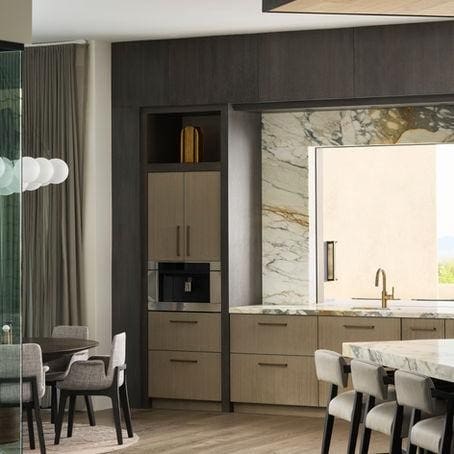
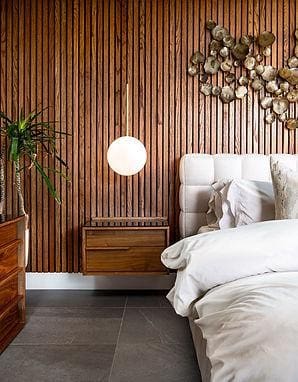
Where palette and material set the foundation, texture and architectural detailing define the character of a space. Fluted and reeded millwork has shifted from accent feature to primary design language in high-end residential work, appearing across cabinetry faces, wall paneling, range hood enclosures, and integrated storage elements. The appeal is precise: those linear grooves introduce rhythm and light-catching dimensionality that flat panels simply cannot achieve. When specified in stained white oak, hand-applied plaster, or even honed stone, the profile reads as bespoke craftsmanship rather than applied decoration.
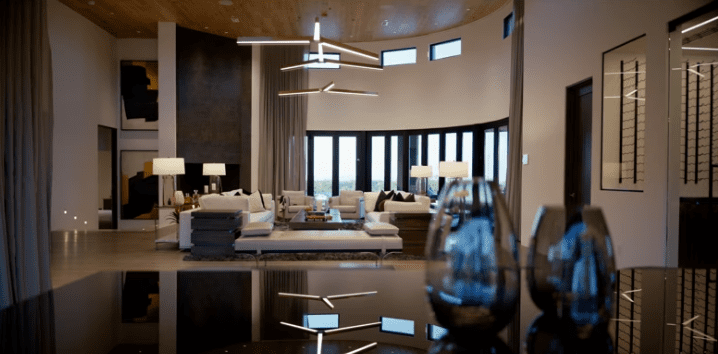
Ceiling design deserves equal attention. The fifth wall remains one of the most underutilized surfaces in residential interiors, yet it carries significant capacity to define scale, mood, and spatial hierarchy. Coffered ceilings, plaster relief work, integrated cove lighting, and wood beam applications are being specified at notably higher rates in luxury new construction and full-home remodels. In the right context, a well-resolved ceiling treatment does more for a room’s sense of architectural weight than almost any other single decision.
Surface specificity is equally consequential. The choice between honed versus polished stone, wire-brushed versus smooth wood, or matte versus satin lacquer determines whether a material feels considered or generic. These distinctions reward close attention during specification and suffer most when left ambiguous in construction documents.
That ambiguity carries real cost. Unclear millwork profiles and underspecified finish callouts are among the most common sources of rework during construction, driving budget overruns and schedule delays on projects where precision matters most. Detailed specification books and coordinated construction drawings address this directly. Achieving results at this level also requires early alignment between designer, architect, and millwork fabricator, well before site work begins, so that profiles, tolerances, and material transitions are resolved on paper rather than in the field.
The Move Away from Stark Minimalism Toward Layered, Collected Spaces
The overly spare, everything-matching aesthetic that defined high-end residential design for much of the past decade is giving way to something more compositionally demanding and personally resonant. Homeowners and designers alike are moving toward interiors that feel considered and accumulated rather than assembled from a single, coordinated palette. This shift is not about abandoning discipline; it reflects a more sophisticated design literacy that values material depth, layering, and spatial narrative.
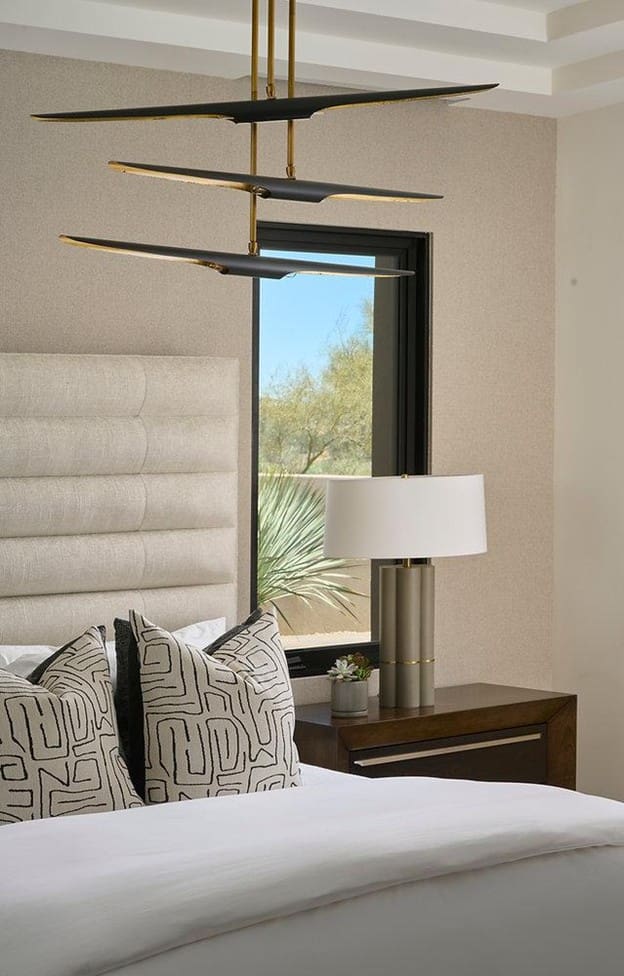
Layered interiors draw on varied wood tones, mixed metals, and a deliberate pairing of vintage or heirloom pieces alongside custom furnishings. Pairing white oak flooring with walnut millwork, or positioning a mid-century light fixture within an otherwise contemporary room, creates visual tension that reads as intentional rather than inconsistent. These decisions require strong compositional judgment and a clear understanding of material hierarchy. Formula-driven selection simply cannot produce this kind of resolved result.
The practical challenge is significant: a space that feels collected without feeling cluttered depends entirely on spatial planning, tonal relationships, and an understanding of how scale, finish, and form interact. According to designers working at the forefront of this shift, the goal is grounded, tactile environments where natural wood, plaster, stone, and textured textiles work in concert rather than competing for attention.
Vintage and artisan elements are increasingly present in high-end custom homes, particularly in furniture and lighting selections that interrupt the uniformity common to new construction. A hand-forged pendant, a reclaimed wood console, or a piece of custom upholstery in an artisan textile can establish a focal point that anchors an entire room. Vogue’s 2026 design coverage reinforces this direction, describing antiques and accumulated pieces as both sustainable choices and storytelling tools within refined residential environments.
For luxury homeowners, the implication is direct: as design language moves away from reductive formulas, the value of a skilled designer increases rather than diminishes. Achieving harmony across mixed materials, varied provenance, and layered texture is a professional discipline, not a decorating shortcut.
Biophilic Design and Indoor-Outdoor Connectivity in Desert Luxury Homes
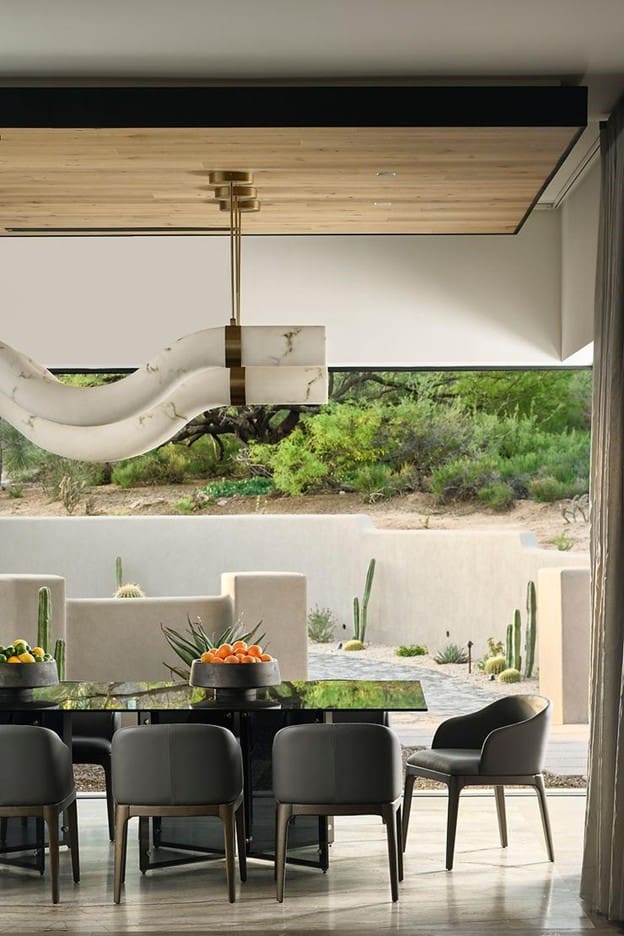
In the Scottsdale and Paradise Valley context, [biophilic design](https://imidesignstudio.com/designing-for-the-soul-the-philosophy-of-biophilic-design-in-luxury-interiors/) is not a styling choice. It is a spatial and structural philosophy. At the luxury level, it means positioning clerestory windows to track the arc of desert light, specifying limestone flooring that visually echoes the Sonoran terrain, and framing sightlines toward Camelback or Mummy Mountain as deliberate compositional decisions. Tactile materials, including hand-finished plasters, leathered stone, and woven natural textiles, reinforce the sensory connection to the landscape. The result is not decoration; it is orientation.
Indoor-outdoor connectivity is among the most technically demanding aspects of custom home design in Desert Mountain and Paradise Valley. Retractable glass wall systems spanning 25 feet or more, covered ramadas with integrated misting and fire features, and continuous travertine or limestone flooring across interior and exterior zones all require coordinated material specifications that account for durability, thermal expansion, and visual continuity. When these transitions are not resolved at the documentation stage, the result is material misalignment, failed finishes, and costly corrections during construction.
Climate-responsive design is non-negotiable in a region where temperatures routinely exceed 110 degrees Fahrenheit and UV exposure is extreme. Material selections must address thermal mass, fade resistance, and finish durability. High-performance low-E glazing, deep overhangs, and thermally modified wood are practical necessities, not aesthetic additions. Interior and exterior palettes must be calibrated together, so the visual relationship reads as unified rather than disconnected.
Wellness-oriented spatial planning, including daylighting strategies, acoustic zoning, and access to outdoor air, is most effective when embedded from the earliest design phase. Recovery spaces, sensory gardens, and circadian lighting systems require coordination across architecture, mechanical, and interior design disciplines. Adding these systems after schematic design is resolved adds cost and compromise. When integrated from the start, they become structural features rather than retrofits.
Defined, Purposeful Rooms Are Replacing the Open Floor Plan
The unconstrained open floor plan is being reconsidered in favor of defined, acoustically separated, and functionally specific rooms. What once signaled modernity and social openness now frequently produces spaces that feel impersonal, acoustically compromised, and poorly suited to how households actually function. A 2023 survey found Americans nearly evenly split between open and more defined layouts, and that division has only sharpened as remote and hybrid work patterns have become permanent fixtures of daily life for many affluent clients.
Dedicated spaces reflect real program requirements: home offices designed for extended focus, libraries with proper acoustic separation, media rooms calibrated for controlled light and sound, and morning rooms that offer a quiet transition between private and social life. These are not lifestyle indulgences; they are functional infrastructure. As buyer preferences continue shifting toward defined, purposeful layouts, the program brief for a high-end custom home in Paradise Valley or Desert Mountain increasingly reads more like a curated collection of rooms than a single continuous volume.
Spatial planning at this level requires serious study of adjacency, circulation hierarchy, and the boundary between private and social zones. These decisions have structural and experiential consequences that cannot be easily corrected after framing. Early interior design involvement, prior to permit drawings being finalized, allows those relationships to be tested and resolved before they are built into the walls.
Defined rooms also offer something an open plan cannot: the opportunity to give each space a distinct material identity. A library can carry dark-stained walnut millwork and low, layered lighting. A media room can be fully upholstered with a ceiling drop and recessed perimeter. A kitchen designed with its own architectural presence reads differently than one that dissolves into an adjacent living area. That variety and progression through the home is part of what makes a well-designed residence feel genuinely resolved rather than simply finished.
Organic Forms and Curved Detailing in Furniture and Architecture
Curved and sculptural furniture forms are reshaping the compositional logic of luxury residential interiors. Rounded sofas, organic stone coffee tables, arched cabinetry openings, and sculptural seating have replaced the rigid, rectilinear arrangements that defined high-end residential design throughout the previous decade. The shift is not purely aesthetic; softer forms improve spatial flow, create more conversational arrangements, and bring a sense of ease to rooms that might otherwise read as formal or static.
At the architectural scale, this direction is being built into new construction from the ground up. Arched doorways, barrel-vaulted ceilings, and rounded built-in niches are appearing in custom homes across Paradise Valley and Scottsdale as intentional structural decisions, not afterthoughts applied at the finish stage. When curves are designed into the architecture early, they establish a spatial rhythm that carries through the entire project.
The challenge at the custom level is fabrication complexity. Curved millwork, upholstered forms with non-standard profiles, and radiused stone require more precise drawings and significantly closer coordination between the designer, fabricator, and contractor. Ambiguity in these specifications leads to costly errors; detailed documentation is not optional on this type of work.
Material selection determines how a curved form actually reads in space. A rounded sofa in bouclé communicates warmth and texture; the same silhouette in smooth leather reads as more refined and structured. Those distinctions must be resolved at the specification stage, not on the job site.
The most effective application of organic detailing is restrained. Its visual authority comes from contrast with surrounding architectural geometry. A single arched niche against a flat plaster wall carries far more presence than curves deployed throughout every surface of a room.
Natural and Sustainable Materials as Long-Term Design Investments
The specification of natural materials in luxury residential projects has shifted from a purely aesthetic decision to a calculated long-term investment. Stone, hardwood, hand-applied plaster, unlacquered metals, and clay tile are being selected not because they photograph well, but because they perform over decades without losing integrity. These materials develop character with use rather than simply wearing out, which matters significantly in high-value homes where durability directly supports resale potential.
Sustainable sourcing and material transparency have become meaningful considerations for luxury clients building or renovating in the Paradise Valley and Desert Mountain markets. Affluent homeowners are asking where materials originate, how they are harvested or processed, and whether their selections align with longer-term environmental accountability. This is less about certification boxes and more about informed decision-making at the specification level, where provenance and quality are interconnected.
In the Arizona desert climate, material performance is a genuine constraint that shapes every specification decision. Exterior stone must withstand significant thermal cycling between daytime heat and cooler nights. Interior hardwood requires careful acclimation to prevent warping or cracking in low-humidity conditions. Finish selections, from plaster to tile grout, must account for maintenance realities and long-term appearance under intense UV exposure.
At the hardware and fixture level, unlacquered brass, aged bronze, and blackened steel are displacing highly polished chrome in well-considered interiors. These finishes develop a patina that signals material authenticity, and they hold their visual coherence far longer than their polished counterparts across the full timeline of a project.
Rigorous documentation underpins all of this. At the luxury level, finish samples, full-scale mock-ups, and detailed material boards are not optional steps; they are the tools that align client expectations with construction reality and prevent costly corrections mid-build.
Trends as Context, Not Direction
The most consequential design decisions in a luxury custom home are not driven by what is trending in a given year. They are driven by how a client actually lives, how the architecture sequences and organizes space, and which materials will perform with integrity over time in a specific climate and context. Trends provide useful cultural signals, but they do not replace the foundational work of understanding a project on its own terms.
The design directions most prominent in 2026, including natural materials, layered texture, biophilic connectivity, and spatially defined rooms, are not new inventions. They represent a broader recognition that spatial quality grounded in materiality and human scale has always outlasted cyclical aesthetic preferences. These directions resonate precisely because they align with how well-resolved spaces have always been made: with honesty about materials, clarity of purpose, and attention to how people inhabit a room over time.
For affluent homeowners planning new construction or a full remodel, the practical implication is straightforward: invest in a design process rigorous enough to translate these principles into built outcomes. Mood boards and concept presentations are starting points, not endpoints. Execution depends on detailed documentation, coordinated specifications, and a firm capable of maintaining design intent through every phase of construction.
For developers and spec builders working in the Scottsdale and Paradise Valley segments, the standard for market-ready luxury interiors has risen. Buyers in these markets respond to material specificity, spatial intentionality, and finishes that demonstrate considered decision-making. That level of resolution requires a full-service design firm with the process infrastructure to support it.
JSF Design’s specification-driven approach is built precisely for this. Clear construction documentation, coordinated finish schedules, and precise millwork drawings ensure that design intent translates accurately from concept through completion, giving every trade a reliable reference at every phase.
Key Takeaways for Homeowners, Developers, and Builders
The design directions defining 2026 are not surface-level shifts. They reflect a broader recalibration toward warmth, materiality, texture, and spatial intention, and they reward projects where those qualities are specified precisely and built with care. For homeowners, developers, and builders operating in the Scottsdale, Paradise Valley, and Desert Mountain markets, these directions translate into four practical conclusions.
Natural materials and architectural detailing are durable investments, not seasonal choices. Stone, hardwood, hand-applied plaster, and custom millwork hold their integrity across decades and strengthen resale relevance in high-value markets.
Biophilic connectivity and defined spatial sequencing must be resolved during schematic design, not addressed after framing. Late-stage design involvement consistently produces compromise; early integration produces precision.
For complex luxury projects, the most direct path from design vision to built reality runs through a full-service firm that produces detailed documentation. Specification books and construction drawings eliminate ambiguity, align trades, and protect the integrity of every decision made from concept through close-out.

BEST THE EDIT
of
Material Moves: Inside Jeffrey Florentine’s Collaboration With Antolini Stone Some collaborations happen because of timing. Others happen because of shared philosophy. The partnership between Jeffrey Florentine of JSF Design and Antolini Stone feels very much like the latter — a collaboration rooted in a mutual belief that materials should shape architecture, not simply finish it. […]
Elevate Your Space
Let’s Bring Your Vision to Life
Design Goes Beyond Aesthetics...
It Shapes Experience.

+ Show / Hide Comments
Share to: