



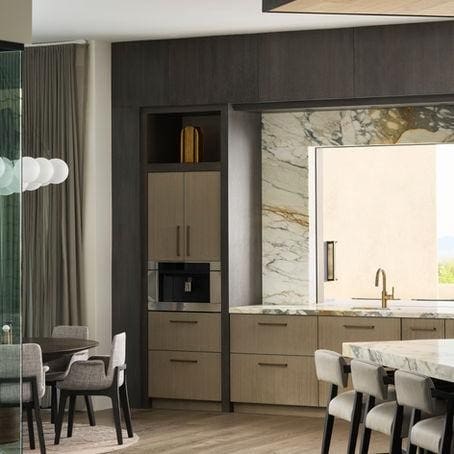
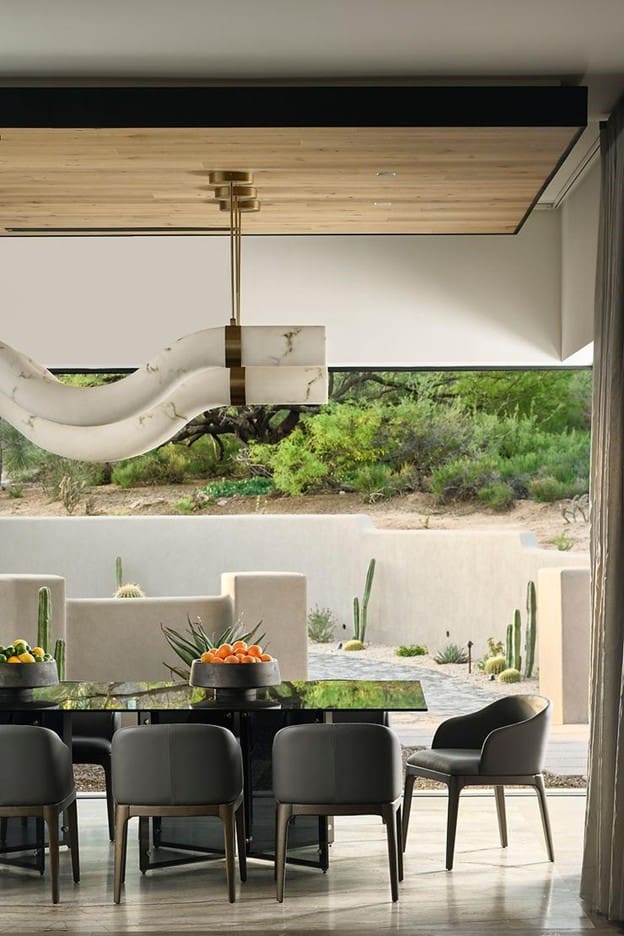
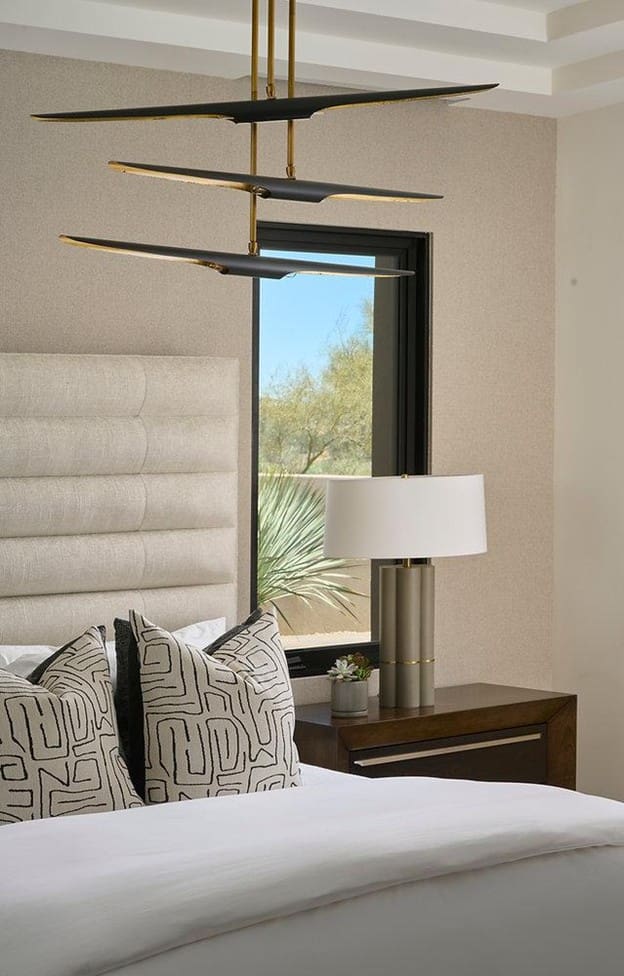
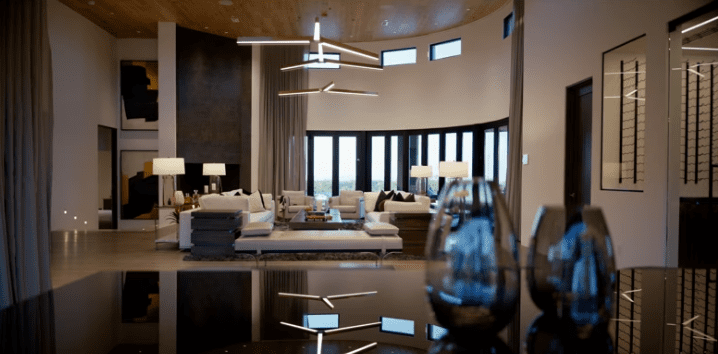
There is something undeniably revealing about stepping inside a home that has been thoughtfully designed to coexist with one of nature’s most dramatic backdrops. A luxury home tour desert mountain setting offers far more than breathtaking views and premium finishes. It exposes the design philosophies, material choices, and spatial decisions that define how architecture can respond to an extreme yet stunning environment.
These homes are laboratories of innovation. Designers must solve real challenges, including intense heat, rugged terrain, limited water resources, and blinding sunlight, while simultaneously delivering the comfort and elegance that discerning homeowners expect. The results are often some of the most sophisticated residential designs in the world.
In this analysis, we will break down exactly what these tours reveal about modern luxury design principles. From passive cooling strategies to the seamless integration of indoor and outdoor living, you will walk away with a deeper understanding of how the best architects and interior designers turn environmental constraints into powerful creative assets. Whether you are a design enthusiast or a prospective homeowner, these insights will change how you see luxury living entirely.
What Desert Mountain Homes Are Actually Built Around
Desert Mountain’s physical scale shapes every decision that follows. Spanning more than 8,000 acres of high Sonoran Desert terrain with elevations ranging from approximately 2,400 to 4,500 feet, the community presents conditions that cannot be designed around after the fact. Room orientation and view corridor placement are structural planning decisions embedded in the architectural framework from the earliest stages of a project. A home positioned to capture sightlines toward the McDowell Mountains or Pinnacle Peak requires that its interior logic extends that orientation through every spatial layer, from the entry sequence to the primary living volume to how secondary spaces are organized around the core.
Ceiling height and window placement in this environment carry performance implications that rival any aesthetic consideration. In a high-UV desert climate with intense solar exposure for the majority of the year, the size, placement, and glazing specification of every opening directly affects heat gain, glare management, and passive cooling capacity. Deep overhangs and horizontal rooflines are not stylistic preferences; they are thermal management tools. When an interior designer engages with a Desert Mountain project without understanding these architectural decisions first, the result is often a finish package that works against the building rather than with it.
The community’s architectural evolution adds another layer of complexity. Earlier homes built through the 1980s and 1990s leaned on Southwestern and territorial forms, with smaller window openings and compartmentalized floor plans that were well-suited to managing the climate through mass and enclosure. Contemporary builds have shifted toward open floor plans with expansive glazing and dissolved indoor-outdoor boundaries. That shift changes how interiors must be resolved. Open volumes require material continuity, deliberate furniture scaling, and layered texture strategies to maintain cohesion and intimacy across large, light-saturated spaces.
Site-specific design demands that an interior designer understand the architectural and orientation logic of a project before specifying a single material or finish. The solar path, prevailing views, and structural rhythm of the building all inform which surfaces absorb light, which recede, and how spatial transitions should be handled. Homes that bypass this analysis in favor of chasing a visual language, regardless of how refined the individual finishes may be, tend to feel disconnected from their surroundings. The land at Desert Mountain is too specific, and too demanding, to be treated as a neutral backdrop.
The Interior Details That Define Value at This Price Point
At the price points typical of Desert Mountain, where listings regularly transact between $4 million and well beyond $10 million, the difference between a well-executed home and a well-photographed one comes down to a specific set of interior decisions. These are not aesthetic preferences; they are performance and coherence indicators that experienced buyers, designers, and builders can read within the first walkthrough.
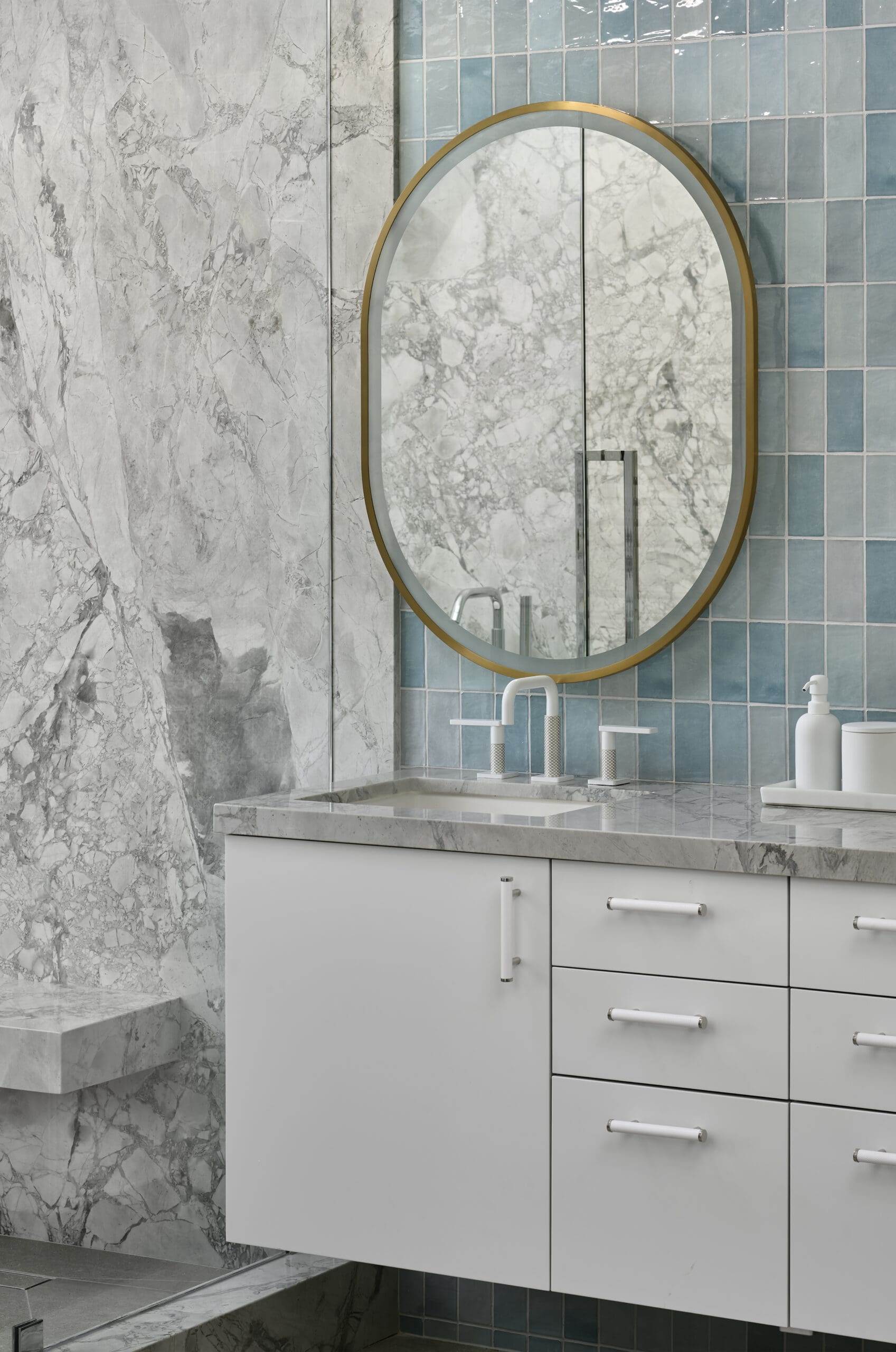
Material selection is the foundation. In a climate defined by extreme UV exposure, low humidity, and significant diurnal temperature swings, finish choices are not interchangeable. Honed and leathered stone surfaces resist the stress of thermal expansion and contraction more reliably than polished counterparts, which tend to show micro-fracturing, water spotting, and glare-related wear over time. White oak and wire-brushed hardwoods similarly outperform species with tighter, less stable grain structures; in Scottsdale’s desert environment, checking and gapping are documented failure modes for woods poorly suited to low-humidity conditions. Choosing materials with proven performance in arid climates reflects design literacy, not just preference.
Wall systems reveal long-term thinking. Integral-color plaster, where pigment is carried throughout the material rather than applied at the surface, holds transitions, corners, and seams with far greater reliability than painted drywall or topcoat finishes. In dry climates, applied finishes are prone to differential movement, particularly at junctions and seams, producing visible cracking and discoloration over time. A properly installed plaster system is not a luxury upgrade in this context; it is the more technically sound solution for a home intended to hold its value.
Millwork tells you whether the interior was designed or assembled. Custom built-ins, integrated shelving, and hood surrounds executed with consistent reveal lines, precise joinery, and hardware that recedes into the composition signal a coherent interior vision. Catalog cabinetry with applied trim reads immediately as a shortcut, regardless of the fixture budget surrounding it.
Lighting requires system-level thinking. High-specification fixtures paired with poorly located apertures, absent dimmer zones, or outdoor fixtures that produce flat glare rather than layered atmosphere are a recurring problem in Desert Mountain homes at this tier. Fixture quality and placement are separate decisions that must be resolved together.
Indoor-outdoor integration is structural, not decorative. Flush thresholds, covered outdoor rooms built with thermal mass, and a material palette that reads consistently from interior to exterior distinguish homes that actually function in the desert from those that photograph well. According to current Desert Mountain market data, homes averaging nearly 4,800 square feet at a median price per square foot approaching $743 are competing in a market where execution quality is a direct value driver, not a secondary consideration.
What the Home Tour Does Not Show You
Walking a Desert Mountain Luxury Home Tour on a Saturday afternoon offers a curated view of finished interiors: the stone selections, the millwork profiles, the lighting placements. What it cannot communicate is the process that determined whether those finishes were executed with precision or merely approximated in the field. Two homes with identical material palettes can produce radically different results depending on whether those materials were specified with full manufacturer references, dimensioned transitions, and coordinated installation sequences, or simply listed on a loose finish schedule handed to a general contractor.
The distinction matters considerably at the price points typical of Desert Mountain. On a build in the $6 million to $12 million range, the project involves structural engineers, MEP trades, millwork fabricators, stone installers, and finish carpenters, all working from documents that either align or conflict. When a designer produces comprehensive specification books and detailed construction drawings, material intersections are resolved on paper before they become field problems. Transitions between flooring planes, wall cladding terminations, and custom cabinetry integrations arrive with defined solutions. Without that documentation depth, those decisions default to whoever is on site that day, and the results tend to reflect it.
The value of sustained design involvement through construction extends beyond document quality. When a designer remains actively embedded during the build, rather than completing front-end selections and stepping away, the spatial logic of the original design is far more likely to survive the inevitable pressures of scheduling and trade coordination. Compromises introduced mid-construction, whether in ceiling heights, material substitutions, or spatial adjacencies, are identified and resolved against the design intent rather than accepted as field accommodations.
This layer of process does not photograph. It does not appear on an information sheet at the guard gate. But it surfaces over time in how tightly a home holds together, how clearly it supports future renovation, and how it performs relative to comparable properties on the Desert Mountain real estate market. The homes that age well and renovate cleanly are almost always the ones where the design process extended well past the finish selection phase.
Design Considerations for Buyers Planning to Renovate or Customize
A significant portion of Desert Mountain buyers enter the market with a renovation mandate already in mind. Whether the goal is repositioning a primary suite toward a mountain view corridor, opening a compartmentalized kitchen into a contemporary living plan, or formalizing an underutilized patio into a covered outdoor room, the intent to customize is common at this price point. What separates successful outcomes from costly surprises is a clear-eyed assessment of existing conditions before the transaction closes.
Not every property warrants the same level of intervention. Homes with sound underlying spatial logic, proportional room sequences, and quality structural finishes, such as hand-set stone, solid wood framing, or well-detailed millwork, are strong candidates for selective updating. Targeted improvements can modernize these properties while preserving what already works. Homes that present fundamental planning problems, whether poor circulation, misaligned volumes, or material systems that clash rather than layer, typically require a more comprehensive scope to arrive at a cohesive result. Attempting to layer contemporary finishes over a spatially compromised plan rarely resolves the underlying issue.
The most common renovation entry points in Desert Mountain reflect how buyers actually intend to live in these properties. Primary suite repositioning, particularly to capture view corridors that an original floor plan may have underutilized, remains a high-priority scope item. Kitchen reconfiguration trends in Scottsdale luxury homes consistently point toward open plans that integrate casual dining, entertaining, and living, supported by custom cabinetry, substantial islands, and butler’s pantry adjacency. Covered outdoor room additions, designed to formalize the transition between interior and exterior rather than simply extend it, represent a third category where investment translates directly into livable square footage and long-term property positioning.
Engaging a designer during due diligence, prior to closing, changes the quality of the purchase decision itself. A thorough pre-close review can surface structural constraints, mechanical capacity limitations, and material compatibility issues that directly affect renovation scope and budget. That information belongs in the negotiation, not in a post-close discovery conversation. Early design involvement in Desert Mountain renovation projects also allows procurement to begin moving on custom millwork, stone, and specialty finishes as soon as contracts are executed. On projects where lead times routinely run 16 to 24 weeks, the difference between starting that process at contract signing versus after closing can compress the overall project timeline by months.
Desert Mountain Market Context: What the Numbers Tell Designers
The numbers behind Desert Mountain’s residential market are not just real estate data points; they are direct inputs for every design decision made at this level. Average list prices currently sit around $4.2 million, with luxury estates routinely transacting between $5 million and $30 million or more. At that scale, no interior specification is decorative in isolation. Each material selection, finish detail, and spatial resolution carries measurable consequence against comparable inventory.
The median price per square foot of approximately $743 makes this relationship concrete. A 5,000-square-foot home in this community represents a significant capital position, and buyers conducting due diligence will evaluate finishes relative to that number. Under-specified interiors, those assembled with speed or generic procurement rather than deliberate material logic, are priced directly against fully resolved ones. The gap becomes visible not just aesthetically but in negotiation and appraisal.
With homes averaging approximately 102 days on market as of early 2026, up from 84 days the prior year, the competitive dynamics have shifted. Rising inventory gives buyers more options and more time to compare. In that environment, interior coherence and presentation quality are no longer secondary considerations; they are primary differentiators. Recent Desert Mountain sales data confirms that homes selling closer to list price tend to reflect stronger overall specification and move-in readiness.
Buyers at this price point are not making decisions based on a Saturday afternoon tour or a listing photograph. They are evaluating durability, long-term livability, and whether a home’s interior logic holds up across years of daily use. Design grounded in documented process and material specificity answers those questions in ways that speed-assembled interiors cannot. As Scottsdale’s broader luxury market context for 2026 makes clear, this distinction is becoming more visible as inventory rises and buyers exercise greater selectivity.
What to Take Away From the Tour
The Desert Mountain Luxury Home Tour offers something more useful than a visual survey of finished spaces. It is a structured opportunity to develop real discernment, to see what intentional, coordinated residential design looks like at scale and to recognize, by comparison, where process gaps show up in the built result. The homes that remain with you after the tour are rarely the ones with the most dramatic finishes. They are the ones where every decision reads as considered: the material transitions, the spatial proportions, the way light moves through a room at a specific hour. That level of resolution does not happen by chance. It comes from deliberate decisions, precisely documented, and executed through genuine coordination between designer, architect, and builder.
For anyone planning new construction or a substantial renovation in Desert Mountain, that process structure is not a secondary consideration. It is as determinative of the outcome as any finish selection. JSF Design works with homeowners, developers, and builders throughout Desert Mountain and the greater Scottsdale area on new construction, full-home remodels, and spec interiors, bringing the documentation rigor and collaborative framework that complex, high-value projects require. If you are planning a build, evaluating a property that will need significant design investment, or scoping a renovation, contact JSF Design to discuss your project scope and process in detail.
Conclusion
Desert mountain luxury homes are more than stunning retreats; they are masterclasses in purposeful design. These tours consistently reveal four transformative lessons: great architecture solves real environmental challenges, material choices must honor the surrounding landscape, indoor and outdoor living should flow without interruption, and true luxury means comfort that feels effortless despite demanding conditions.
Every design decision you observed, from passive cooling structures to carefully sourced natural stone, reflects a deeper commitment to building with intention rather than against nature.
Now it is your turn to apply these insights. Whether you are planning a custom build, renovating an existing space, or simply refining your design perspective, let these principles guide your thinking. Schedule a tour of a desert mountain property near you or consult with an architect who specializes in climate-responsive design. The desert has much to teach, and the best homes are already listening.

BEST THE EDIT
of

Material Moves: Inside Jeffrey Florentine’s Collaboration With Antolini Stone Some collaborations happen because of timing. Others happen because of shared philosophy. The partnership between Jeffrey Florentine of JSF Design and Antolini Stone feels very much like the latter — a collaboration rooted in a mutual belief that materials should shape architecture, not simply finish it. […]
Elevate Your Space
Let’s Bring Your Vision to Life
Design Goes Beyond Aesthetics...
It Shapes Experience.

+ Show / Hide Comments
Share to: