



There is a distinct difference between a home that simply looks expensive and one that carries the unmistakable presence of true luxury. If you have ever walked into a villa and felt immediately captivated without being able to explain exactly why, you already understand that feeling on an instinctive level. But what actually creates it?
Luxury villa design interior is far more than a collection of high-end furniture and premium materials. It is a carefully considered language of space, proportion, texture, and detail that works together to create an experience rather than just an aesthetic. Every element, from the flow of natural light to the weight of a door handle, contributes to something that feels both intentional and effortless.
In this guide, we break down the defining characteristics that separate a truly luxurious villa interior from one that merely attempts to imitate it. Whether you are planning a renovation, working with a designer, or simply deepening your understanding of interior design principles, these insights will give you a clearer framework for recognizing and achieving genuine luxury in any villa space.
Spatial Logic and the Architecture of Flow
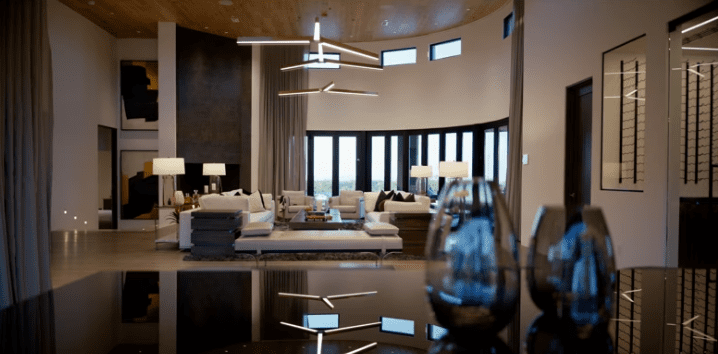
Before a single material is selected or a finish palette is considered, the most consequential design decisions in a luxury villa are spatial. The sequence of arrival, the proportion of volumes, the compression of an entry corridor before it releases into a double-height great room with unobstructed desert views: these are the moments that define how a home is experienced, not decorated. A well-resolved floor plan orchestrates movement, light, and scale in a way that feels inevitable rather than incidental.
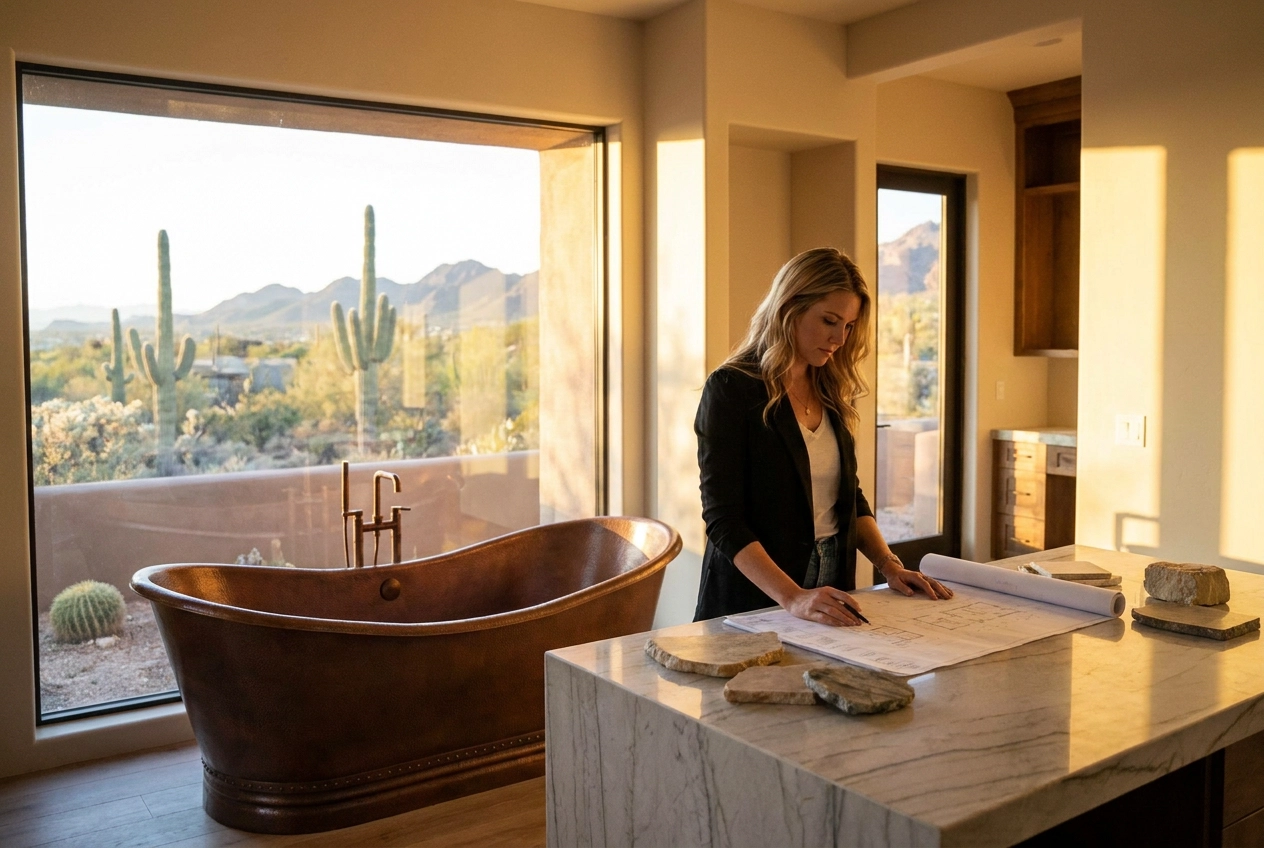
In the Sonoran Desert, solar orientation is not a passive consideration. It is a primary planning driver. Estates in Paradise Valley and Desert Mountain are positioned on sites where summer sun angles, morning glare, and mountain view corridors must be resolved simultaneously in the earliest schematic drawings. An east-west elongated footprint captures beneficial winter light while limiting unwanted solar exposure on the home’s short ends. View corridors to boulder formations or city lights are framed with precision, not left to chance. Luxury villa design guides consistently identify site-responsive planning as the foundation of spaces that perform as well as they photograph.
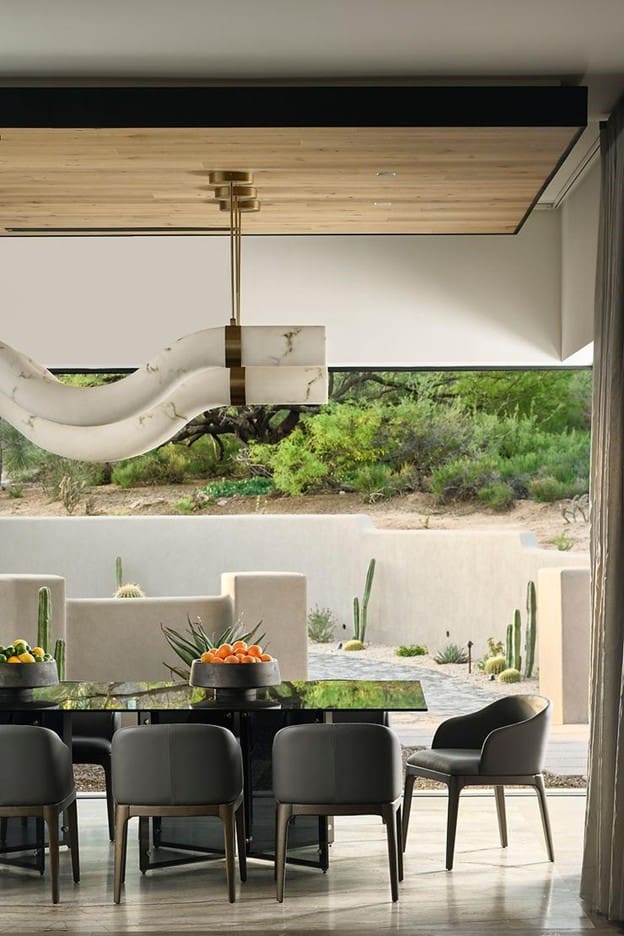
Genuine indoor-outdoor continuity requires far more than specifying a large sliding glass system. It demands that floor elevations align, that ceiling soffits extend outward to covered loggias without interruption, that the same large-format stone tile transitions seamlessly from interior to exterior, and that shade structures are engineered to work in concert with the glazing system rather than as an afterthought. The result is a spatial boundary that dissolves on command rather than one that simply offers a view.
The designer who engages at the architectural level, before structural drawings are issued, protects the project from the most expensive category of revision: the change that requires re-engineering. Opening dimensions, ceiling heights, column placement, and HVAC routing all respond to interior spatial logic. When that logic is documented clearly and communicated early, as JSF Design does through detailed specification packages, the builder and structural engineer are working from a resolved vision rather than interpreting assumptions.
Finally, there is a meaningful distinction between a floor plan that reads well on screen and one that supports how clients actually live. Thoughtful floor plan flow prioritizes logical zone adjacencies, efficient circulation without dead-ends, and kitchen-to-loggia connections that reflect real entertaining patterns. Drama and function are not opposing values, but achieving both requires a designer who asks the right questions before drawing the first line.
Material Hierarchy: How Premium Finishes Are Selected and Sequenced
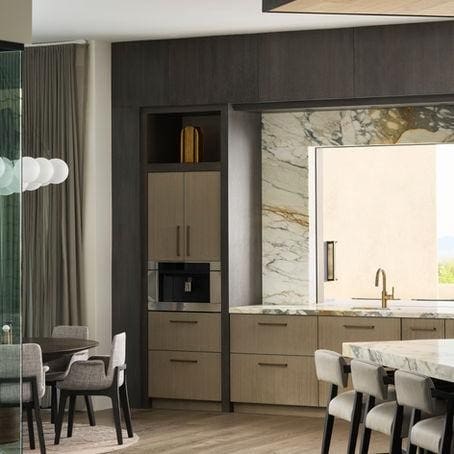
Material selection in a luxury villa is never arbitrary. Every finish decision carries budget weight, visual consequence, and long-term performance implications, which is why experienced designers approach material selection as a hierarchy rather than a collection. The principle is straightforward: the highest concentration of budget and visual presence belongs at the surfaces that define a room’s character. Primary flooring, feature walls, kitchen islands, and primary bath planes receive the most premium specification. Supporting elements, including cabinetry, millwork, and hardware, then layer in complementary textures and tones that reinforce rather than compete with those anchors. When sequencing decisions across stone, wood, and metal are made without this framework, spaces read as fragmented, with materials that feel unrelated rather than composed.
Stone Selection: Matching Material to Application
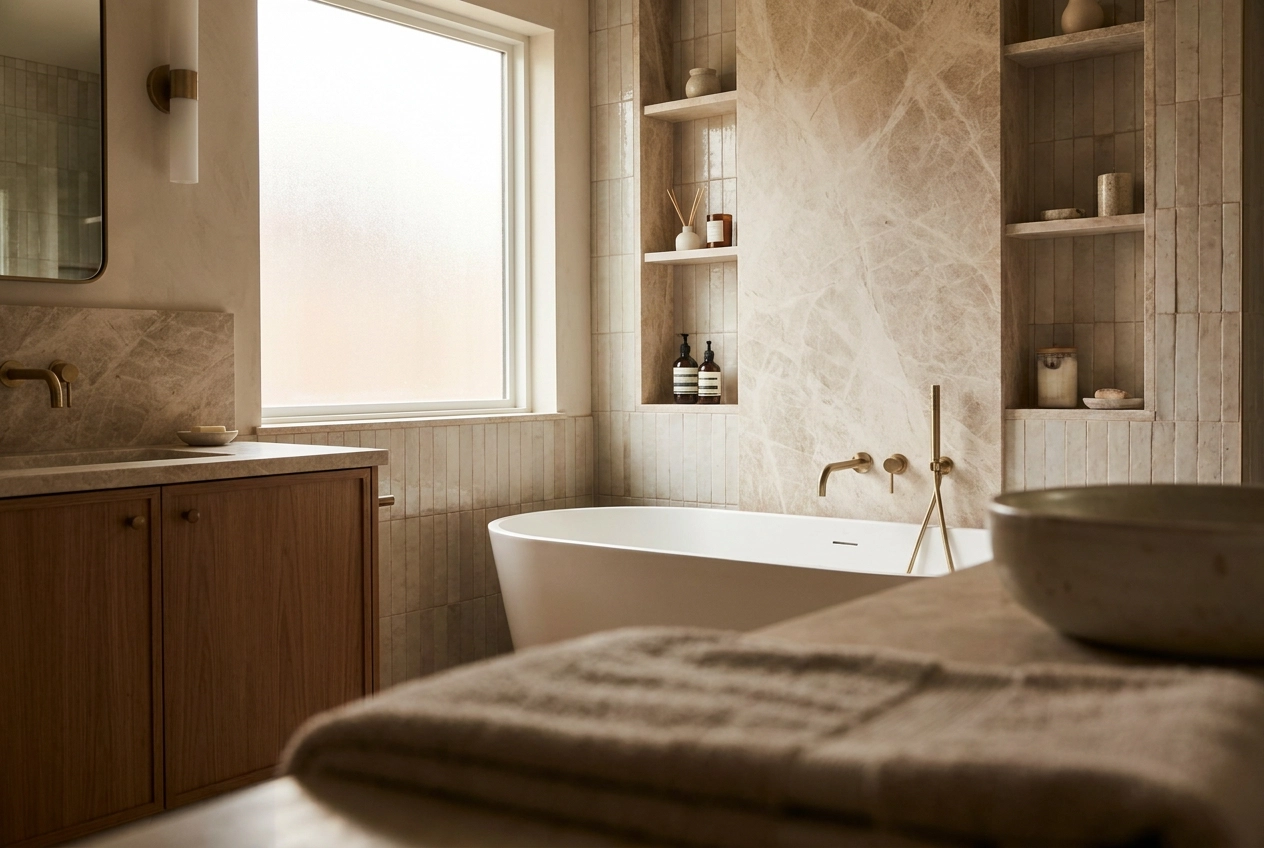
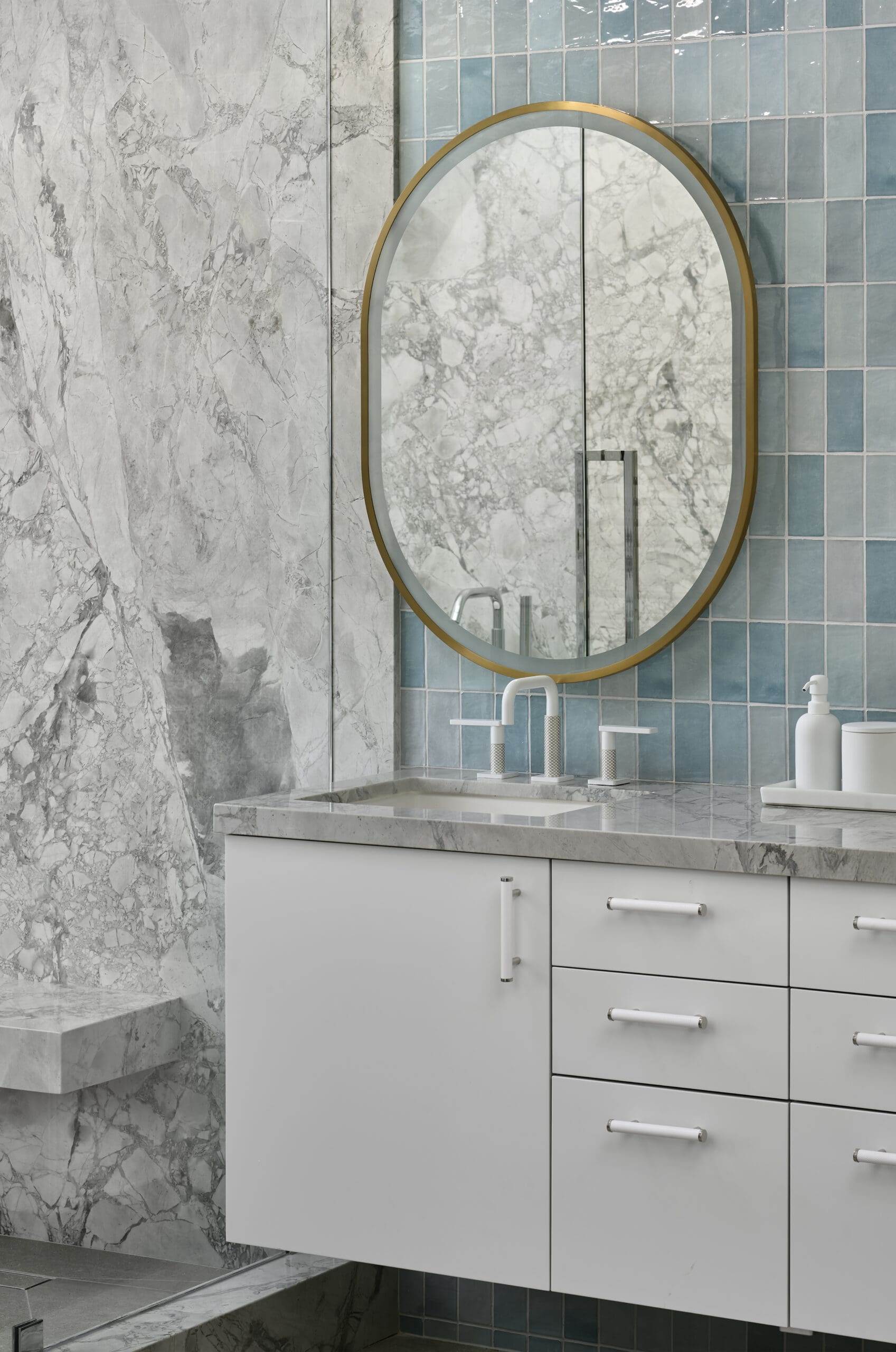
Travertine, limestone, and marble are frequently specified in luxury villa design interior projects, but they are not interchangeable. Travertine’s characteristic voids, warm ivory-to-walnut tones, and directional veining make it well-suited to large-format flooring and spa environments; filled-and-honed versions perform in wet zones, while unfilled applications add textural depth to dry feature walls. Limestone offers a softer, more uniform warmth with subtle veining, suiting matte-finished walls and vanities in lower-traffic areas where its porosity is managed through proper sealing. Marble delivers bolder veining and a wider range of polish levels, functioning as a visual anchor in kitchens, primary baths, or fireplace surrounds when the client’s lifestyle supports its maintenance requirements. In each case, the finish option, honed versus polished versus brushed, must be matched to both the application and the way the client lives.
Wood Species and Arizona Light Conditions
White oak and walnut behave differently in the Arizona climate, and specification must account for both UV intensity and humidity cycling between dry winters and monsoon season. White oak, particularly in rift-sawn or quarter-sawn form, offers dimensional stability and accepts a range of finishes well. Cerused treatments, which draw pigment into the open grain, create a tactile, textured quality that reads refined under desert light. Walnut’s richer tones can deepen attractively with age but benefit from UV-protective topcoats or placement away from direct southern and western exposures to prevent uneven fading. These are not decorative decisions alone; they are performance specifications that protect the investment.
Metals as Coordinating Anchors
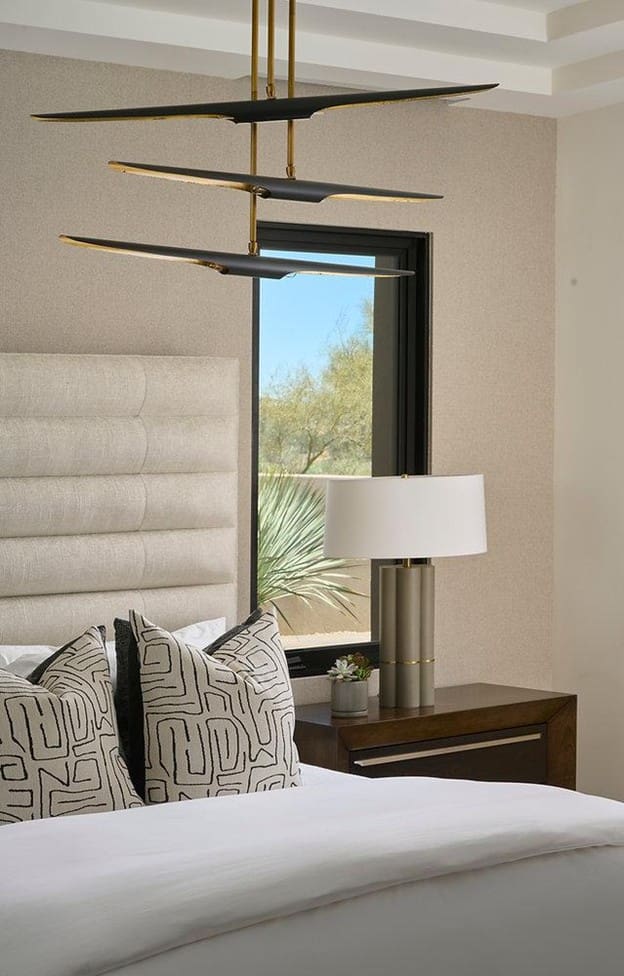
Aged and unlacquered metals function as palette anchors, not afterthoughts. Unlacquered brass develops a living patina through oxidation and use, evolving over time in a way that adds depth to plumbing fixtures, cabinet pulls, and lighting. Blackened steel provides matte contrast, while true bronze offers durability and a reddish warmth that ages consistently across applications. Critically, hardware specification must coordinate across plumbing, cabinetry, and lighting to maintain finish continuity. A single specification document that defines finish standards across all trades prevents the palette from drifting during construction, when field substitutions are most likely to occur.
The Role of Documentation in Protecting the Palette
A detailed specification book serves as the definitive reference for every material and finish decision made throughout the project. It captures not only product sources and color codes, but finish options, application zones, performance criteria, and installation methods. When a contractor or trade partner receives this level of documentation, the margin for unauthorized substitution narrows considerably. Swapping a honed travertine for an unspecified limestone, or replacing unlacquered brass with a lacquered alternative, may seem minor in the field but can erode the tonal logic of a palette built over months of consideration. This is precisely where JSF Design’s structured, documentation-driven process creates tangible value: the design vision is protected not just in concept, but through every phase of execution.
Custom Millwork as a Structural Design Element
Custom millwork occupies a fundamentally different role than decorative carpentry, and the distinction matters enormously in high-end residential construction. Architectural millwork is shop-fabricated, specification-driven, and integral to how a room is organized spatially. Decorative carpentry, by contrast, is field-applied trim work: baseboards, simple casings, and catalog-sourced profiles installed after the architectural framework is in place. Conflating the two consistently produces the same result: millwork that reads as decoration rather than architecture, with misaligned proportions, poor systems integration, and finish-level details that lack the resolution the surrounding environment demands.
At its most effective, millwork functions as the proportional grid of a room. Panel-and-reveal systems divide wall surfaces into modular relationships that establish visual rhythm and scale without relying on furniture or art to carry that weight. Reveals, the intentional shadow lines created between panel faces and frames, add depth and movement while accommodating material expansion. Integrated storage, whether a library wall, a concealed butler’s pantry run, or a media cabinet with flush-faced doors, becomes part of that grid rather than an addition to it. The result is a room whose logic is coherent before a single piece of furniture is placed.
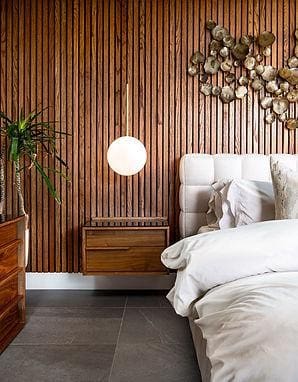
Textural articulation through fluted and reeded millwork profiles has become a defining characteristic of highly resolved interiors precisely because it replaces the need for layered decorative objects. Vertical fluting on cabinetry or fireplace surrounds creates shadow play and tactile interest; material inlays in contrasting wood tones or metal introduce subtle contrast without visual noise. These profiles work with warm hardwoods, plaster, and stone to produce spaces that feel considered and quiet.
Process discipline is what separates resolved millwork from costly field problems. All millwork must be fully detailed in construction drawings before fabrication begins. That means coordinating lighting coves, recessed LED strips, electrical rough-in locations, outlet placement, and furniture clearances directly within the millwork drawings. Late changes, whether to a panel layout or a hardware specification, trigger rework at the mill shop, material waste, and schedule delays that compound quickly on a custom project. Producing comprehensive millwork drawings that are coordinated with MEP trades and reviewed by the builder before fabrication is not a procedural formality; it is how the design vision survives contact with construction.
Indoor-Outdoor Continuity in Desert Villa Design
In the Sonoran Desert, indoor-outdoor continuity is not a stylistic preference; it is a design discipline shaped by climate. Summer temperatures in Scottsdale and Paradise Valley regularly exceed 115°F, monsoon storms arrive with little warning, and diurnal temperature swings of 15°C or more occur within a single day. These conditions demand a fundamentally different approach to threshold design, material selection, and spatial sequencing. Covered transitions, deep overhangs, and thermally considered materials are not optional amenities; they are the structural framework that makes year-round outdoor living functional. Every decision about how interior space connects to the exterior must account for solar intensity, UV degradation, and the abrupt moisture events that characterize monsoon season.
Material continuity is the most direct expression of that discipline. When a travertine floor carries uninterrupted from an interior great room across a flush threshold to a covered loggia and pool deck, the result is spatial cohesion that reads immediately, even before furniture is placed. Travertine and limestone remain preferred species in this climate because they run measurably cooler underfoot than denser stone alternatives and accept the sealing required for outdoor exposure without sacrificing finish quality. Threshold detailing, including door pocket systems that eliminate the frame from sightlines when open, continuous ceiling plane treatments, and aligned site walls, reinforces the visual logic that these are not separate environments.
The covered loggia and pool surround should be programmed from the earliest design phases, with the same specificity applied to an interior living room. Defined zones for dining, seating, fire features, and an outdoor kitchen are not landscape add-ons. They are extensions of the interior program, and their success depends on the same layered lighting, appropriate furnishing scale, and material quality established inside the home.
Maintaining that quality across the full property requires direct coordination between the interior designer, landscape architect, and builder. The interior designer’s role extends to vetting exterior paver selections, cladding profiles, and structural finish colors for visual alignment with interior palettes. That coordination is most effective when it begins during design development, not during construction when changes carry cost and schedule consequences.
Arizona-specific material performance deserves precise attention. Powder-coated aluminum outperforms raw steel in sustained UV and heat exposure, and solar building design principles in Arizona reinforce specifying thermally broken framing systems for any glazing system that spans large openings. Outdoor textiles should be solution-dyed acrylics or performance weaves rated explicitly for covered desert use; standard indoor fabrics will fail within a single season of sun and monsoon humidity. These specifications belong in the construction documentation, not left to a landscape contractor’s discretion late in the project timeline.
Lighting Design as an Architectural Layer
Decorative fixtures do important work in a luxury villa interior, but they are not a lighting plan. A chandelier in the entry hall or a sculptural pendant over the kitchen island serves as punctuation, a formal object chosen for proportion, material presence, and visual authority. What it cannot do is control the atmosphere of a room. That requires a coordinated lighting system, one that establishes volume, temperature, and spatial depth before a single decorative fixture is ever specified. The distinction is foundational: decorative lighting produces moments; a resolved lighting plan controls the entire experiential arc of a space.
Executing that plan requires separating the work into three distinct layers, each addressed independently in both the design documents and the engineering drawings. Ambient lighting provides the foundational wash, typically delivered through dimmable recessed downlights, cove sources, or indirect ceiling elements that avoid harsh single-point overhead fixtures. Task lighting addresses functional precision at countertops, vanities, and reading positions, where fixture selection must balance utility with material integrity. Accent lighting creates the depth and contrast that give a room its editorial quality, wall washers drawing attention to stone texture, picture lights defining art, and grazers revealing the surface character of plaster or wood. Each layer must be independently dimmable and documented on separate circuits to allow for programmed scenes that shift the room’s atmosphere across different times of day.
The structural implications of this approach are significant and often underestimated. Cove lighting integrated into ceiling reveals, shadow gaps in millwork profiles, and recessed channel placements all require built-in conditions that must be resolved before structural and finish drawings are issued. A cove detail that appears in the interior design documents but is not coordinated with the ceiling framing drawings before rough-in will either be lost or require costly field corrections. This is precisely where lighting decisions must precede, not follow, the construction documentation phase.
That sequencing depends on close collaboration between the interior designer, a dedicated lighting designer, and the electrical engineer. The interior designer establishes the material palette and spatial intent; the lighting designer translates that into a layered fixture plan with specified color temperatures, beam angles, and control logic; the electrical engineer ensures the circuitry, load calculations, and rough-in locations are constructable and code-compliant. When those three disciplines are coordinating in parallel rather than in sequence, the lighting plan survives the rough-in phase intact rather than being compromised by value engineering or field substitutions.
Specification choices at the fixture level carry equal weight. Color temperature alone can reinforce or undermine an entire material palette. Warm sources in the 2700K to 3000K range allow travertine to read with depth, bring warmth to walnut millwork, and give plaster walls a sculptural quality. Cooler temperatures flatten those same surfaces and introduce a clinical tension that works against the intended atmosphere. Beam angle determines whether accent lighting reveals texture or simply washes it out. Fixture scale must be calibrated to room volume; an undersized pendant in a double-height space reads as timid, while an oversized fixture in a proportionally modest room dominates rather than completes. Lighting specification, developed after material selection is finalized, ensures that every source is working in service of the finishes it illuminates rather than in conflict with them.
Personalization, Bespoke Furnishing, and Considered Procurement
Furniture procurement is where a luxury interior either coheres or falls apart. The difference between a resolved installation and a staged one is rarely the architecture; it is the sourcing process behind every piece that occupies the space. A design firm’s procurement capability reflects its trade access, vendor relationships, and editorial discipline. Working through the trade means access to showrooms, artisans, and manufacturers that are not available to the general market, along with the judgment to select pieces that serve the architecture rather than compete with it. That curatorial restraint, knowing what to commission, what to source, and what to leave out, is what separates a cohesive interior from an assembled one.
Custom upholstery and trade-sourced case goods form the foundation of any well-resolved installation. Seating proportions, cushion depth, arm height, and fabric selection are all calibrated to the specific room, the client’s physical preferences, and the material context established by the finishes around them. Off-the-shelf product has a legitimate role in supporting positions, certain lighting, decorative objects, and accent pieces where customization adds no meaningful value. But the foundational elements, the sofas, the primary lounge chairs, the dining seating, warrant the investment in custom or trade-only sourcing to ensure the installation holds together at the level the architecture demands.
Vintage and antique integration introduces something new production cannot manufacture: provenance. A mid-century bronze side table, a hand-knotted tribal rug from the early twentieth century, or a piece of antique European stone carry material depth and visual specificity that read differently in a room. They interrupt the uniformity that can make even well-sourced new interiors feel wholesale. According to a 2025 survey of nearly 470 global designers, 36 percent of items sourced per project were vintage or antique, the highest proportion recorded in recent years, with 85 percent of respondents incorporating vintage pieces regularly. In desert villa environments defined by stone, plaster, and hardwood, these objects provide the layering that grounds the space.
Textiles perform equally critical work. Area rugs, drapery, upholstered wall panels, and cushion fabrics are the primary tools for introducing warmth and acoustic softness into hard-material environments. In a villa where floors are travertine or wide-plank hardwood and walls are plaster or stone veneer, untreated surfaces create reflective acoustics and a visual austerity that reads as cold rather than refined. Layered textiles absorb sound, add tactile variation, and introduce the depth of color and pattern that hard materials alone cannot provide.
Lead times for custom and trade pieces frequently run 16 to 24 weeks, and hand-knotted rugs or European imports can extend well beyond that. Procurement must be initiated early in the design development phase, not after construction is complete. Luxury home design trends for 2026 reinforce that personalization and bespoke sourcing are now baseline expectations for high-end clients, which means the sourcing calendar must be built into the project schedule from the first milestone. A detailed FF&E matrix with lead-time tracking, ordered in sequence from longest to shortest, is the operational tool that prevents a completed home from sitting unfurnished while custom pieces are still in production.
Wellness Amenities and Smart Home Integration
Wellness programming has become a core component of the luxury villa design brief, and it demands the same early-phase rigor as any other major program element. Spa bathrooms, dedicated fitness and recovery suites, infrared saunas, steam rooms, and thermal contrast spaces such as cold plunge adjacencies require committed square footage, specific structural provisions, and extensive MEP coordination long before finishes are selected. A sauna needs enhanced ventilation and precise electrical load planning. A steam shower requires waterproofing assemblies and drainage that must be designed into the slab or subfloor. A cold plunge positioned near an outdoor terrace in a Paradise Valley home involves both plumbing rough-in and acoustic separation from adjacent living spaces. These are not decisions that can be deferred; they are resolved at the program level or they create expensive problems later.
Smart home infrastructure follows the same logic. Lighting control, climate zoning, automated shading, security, and audio-visual systems are foundational to how a luxury villa functions, and they must be treated as infrastructure rather than features added after construction is complete. Retrofitting a distributed audio system or centralized lighting control into a finished home means opening walls, disrupting tile work, and incurring costs that far exceed what proper rough-in planning would have required. Budgets for integrated smart systems in homes of this scale routinely range from $100,000 to $750,000 or more, and that investment performs best when the conduit, mounting provisions, and power infrastructure are coordinated before drywall closes.
This is precisely why the design team cannot step back after drawings are issued. Rough-in coordination for smart systems requires active involvement throughout the construction phase, with the interior designer engaged alongside the technology integrator to confirm device locations, control zones, and system integration points before finishes are installed. A shading system that does not communicate with the lighting and HVAC zones is a missed coordination point that could have been resolved on-site with the right team present.
Wellness-oriented design decisions also carry documentation implications that run across the full set of interior drawings. Natural light optimization for recovery and movement spaces requires window placement and shading specifications that appear in both the architectural and interior documents. Material selection for wellness environments should account for off-gassing standards, with low-VOC finishes, natural stone, and solid wood specified in lieu of synthetic composites wherever possible. Acoustic planning for spa suites and home gyms involves sound-absorbing assemblies, partition ratings, and flooring specifications that must be detailed in interior elevations and coordinated with the structural team. According to current spa design trends, the most resolved luxury wellness spaces integrate light, material, and acoustic strategies holistically from concept through construction documentation.
The distinction between a seamlessly integrated smart home and a maintenance-heavy overlay comes down entirely to how early those systems entered the design conversation. When infrastructure is pre-planned, controls operate intuitively, devices are concealed, and the technology recedes into the background. When it is layered on after the fact, the result is visible hardware, competing interfaces, and systems that require constant intervention. In a home designed to this level of finish quality, the technology should be the last thing an owner notices.
The Design-to-Construction Gap and Why Process Matters
The most common failure mode in large-scale luxury residential projects is not a design problem. It is a documentation problem. When design intent is communicated through concept boards and schematic drawings but never resolved into fully coordinated, construction-ready specifications, the gap between vision and execution widens with every trade that enters the field. Contractors interpret. Subcontractors substitute. Finishes get approximated. Ceiling layouts get rerouted around structure that was never accounted for in the interior drawings. Each individual field decision may seem minor, but they compound across a project and the result is a finished home that reflects the construction process rather than the design intent.
Detailed specification books and coordinated construction drawings exist precisely to close that gap. When every finish, fixture, hardware selection, and millwork dimension is documented with specificity, trades receive answers before questions arise. Incomplete or vague documentation forces builders into reactive problem-solving under schedule pressure, which is the most expensive way to make design decisions. Thorough documentation reduces RFIs, limits ambiguity between trades, and produces a finished product that reflects the original resolved design rather than a series of site-adapted approximations.
The relationship between interior designer, architect, and general contractor functions most effectively as a coordination structure, not a chain of command. Each discipline holds expertise the others depend on. The architect defines the building envelope and structural logic. The interior designer resolves spatial experience, material sequencing, and finish coordination. The general contractor translates both into a buildable, schedulable sequence. When these roles operate in silos, gaps appear at every handoff. When they operate as an integrated team from early design phases forward, constructability concerns surface before they become change orders.
Front-loading decisions in the documentation phase is also a direct cost-control strategy. Decisions made under construction pressure, and at contractor markup, cost significantly more than decisions resolved during design. On projects in markets like Paradise Valley and Desert Mountain, where custom specifications, community review processes, and client expectations leave no margin for ambiguity, process rigor is not a competitive advantage. It is the baseline requirement for delivering at the level the project demands.
Bringing It Together: Design as a Resolved System
A well-executed luxury villa interior is not defined by any single standout element. It is defined by the precision of every relationship, how spatial sequence connects to material selection, how material selection informs lighting strategy, and how lighting strategy ultimately shapes the experience of furnishing and finish. When these disciplines are treated as integrated from the outset rather than layered on sequentially, the result is a home that holds its integrity across every room, every condition, and every year of use.
The projects that endure are the ones where spatial logic, material hierarchy, and construction documentation were developed in parallel, each informing the other. That integration is not incidental. It is the product of a structured process, one that produces detailed specifications, coordinated drawings, and unambiguous communication across every trade involved in execution.
For homeowners, developers, and builders planning significant residential projects in Scottsdale, Paradise Valley, or Desert Mountain, the process is as consequential as the vision. The design itself is the starting point. How that design is developed, documented, and delivered is what determines whether it is built with precision or compromised in translation.
If you are beginning the planning process for a new build or full-home remodel, JSF Design is available to discuss how a fully integrated, documentation-driven approach can support your project from concept through construction.
Conclusion
True luxury villa design is never accidental. It is the result of deliberate choices made across every layer of a space, from the architectural proportions down to the finest material details. As we have explored, authentic luxury is defined by spatial harmony, the quality and character of materials, an intuitive flow between areas, and an atmosphere that feels personal rather than performative.
These principles do not belong exclusively to grand budgets. They belong to a mindset, one that prioritizes intention over excess and experience over appearance.
If you are ready to elevate your villa interior beyond surface-level aesthetics, start by evaluating your space through this lens. Work with designers who understand these foundations, not just trends. When every element serves a purpose and tells a coherent story, luxury becomes something you feel the moment you step through the door.



BEST THE EDIT
of

Material Moves: Inside Jeffrey Florentine’s Collaboration With Antolini Stone Some collaborations happen because of timing. Others happen because of shared philosophy. The partnership between Jeffrey Florentine of JSF Design and Antolini Stone feels very much like the latter — a collaboration rooted in a mutual belief that materials should shape architecture, not simply finish it. […]
Elevate Your Space
Let’s Bring Your Vision to Life
Design Goes Beyond Aesthetics...
It Shapes Experience.

+ Show / Hide Comments
Share to: