Uncategorized

New Home Construction Interior Design: A Process Guide

June 22, 2026

Welcome to The Edit — a curated glimpse into the world of JSF Design. I’m Jeffrey Stephen Florentine, Principal Designer and Founder. Here, we share the inspirations, stories, and details behind our most refined spaces. I invite you to explore what makes our work truly unique.

Currently
Trending

Building a new home from the ground up gives you a rare and powerful opportunity: the chance to shape every interior detail before a single wall goes up. Yet many homeowners find themselves overwhelmed when it comes to translating their vision into a cohesive, functional living space. That is where a structured approach to new home construction interior design makes all the difference.

This guide is designed for homeowners and design enthusiasts who already understand the basics and are ready to move deeper into the process. You will learn how to align your design decisions with construction timelines, collaborate effectively with builders and designers, and avoid the costly mistakes that often stem from poor planning. From selecting materials during the pre-construction phase to making finish selections that tie a home together, each stage of the process builds on the last.

Whether you are working with a custom builder or a production home company, having a clear interior design roadmap ensures your choices are intentional, budget-conscious, and visually unified. Let us walk through the process, step by step.

Why New Construction Interior Design Differs from a Remodel

Designing a new home from the ground up and renovating an existing one are fundamentally different professional undertakings, and conflating the two leads to costly misalignments between design intent and built reality. The distinction begins with the starting condition. In a remodel, the existing architecture acts as both a constraint and a guide: load-bearing walls, window openings, mechanical chases, and ceiling heights are already fixed, and design decisions are made in response to those conditions. In new construction, none of those guardrails exist. Every spatial relationship, every rough-in location, every structural decision is an open question at the outset, which means the designer must bring an unusually high degree of intentionality to the process before a single wall is framed.

That openness compounds quickly. Ceiling height decisions made at the architectural stage will later determine whether a statement light fixture reads correctly in a room, whether HVAC equipment can be concealed within a soffit without compressing a corridor, and whether a full-height millwork wall is proportionally resolved or awkward. Window placement affects furniture layouts, natural light distribution, and the viability of certain wall finishes. Mechanical routing establishes where recessed lighting can and cannot be positioned, and whether plumbing fixtures will land where the design requires. Each of these decisions locks in the parameters for every specification that follows, so an error at the structural phase does not stay contained. It travels forward through every subsequent finish selection.

This is precisely why specification precision carries greater consequence in new construction than in renovation work. In a remodel, minor discrepancies can be absorbed by the character of existing conditions: a tile pattern adjusted around an existing threshold, a lighting position shifted to avoid an unforeseen beam. In a new build, there is no existing context to absorb those adjustments. A misaligned outlet in a newly framed wall reads as a deficiency, not a quirk. A chandelier rough-in positioned two inches off-center in a symmetrical ceiling plane requires rework at real cost.

The solution is documentation. Without existing conditions to reference, the entire design team operates from drawings, schedules, and specifications. JSF Design’s structured, documentation-driven process directly addresses this demand. By producing detailed specification books, finish schedules, and coordinated construction drawings before work begins, the firm creates a shared reference that architects, builders, and trades can execute against with precision. This approach reduces ambiguity during construction, minimizes costly change orders, and ensures the design intent established in the planning phase is the one that gets built. For high-end residential projects in markets like Paradise Valley and Desert Mountain, where material selections and custom detailing represent significant investment, that level of documentation is not optional. It is the standard.

When to Bring an Interior Designer into a New Build

The most consequential decision in new home construction interior design is not which materials to select; it is when to engage your designer. Bringing an interior designer into the process after structural decisions are locked is one of the most common and costly mistakes made on high-end residential projects. By that point, mechanical systems are roughed in, ceiling heights are committed, and the spatial framework that will govern every finish, fixture, and furnishing choice is already fixed. What follows is a cycle of change orders, compromised details, and spatial workarounds that no amount of skilled specification can fully resolve.

The financial consequences are direct. Change orders on custom residential projects routinely carry contractor markups of 15 to 25 percent above base cost, and late-stage revisions to electrical rough-ins, plumbing locations, or framed openings compound quickly. A misplaced recessed fixture above an island, an outlet positioned where a built-in was always intended, or a ceiling height that cannot accommodate the coffered detail in the design program: each of these represents a decision that cost nothing to correct at the drawing stage and thousands to address mid-construction.

The ideal entry points are well established among experienced project teams. Designer engagement during the pre-permit or schematic design phase allows for meaningful input on room proportions, ceiling conditions, and spatial sequencing before the architect advances to construction documents. During design development, the designer and architect work in parallel, not in sequence. The architect resolves structure, envelope, and code compliance; the designer brings furniture-scaled spatial logic, lighting strategy, millwork integration, and material hierarchy. These two bodies of expertise inform each other continuously, and that parallel process is what distinguishes a resolved interior from one that was retrofitted.

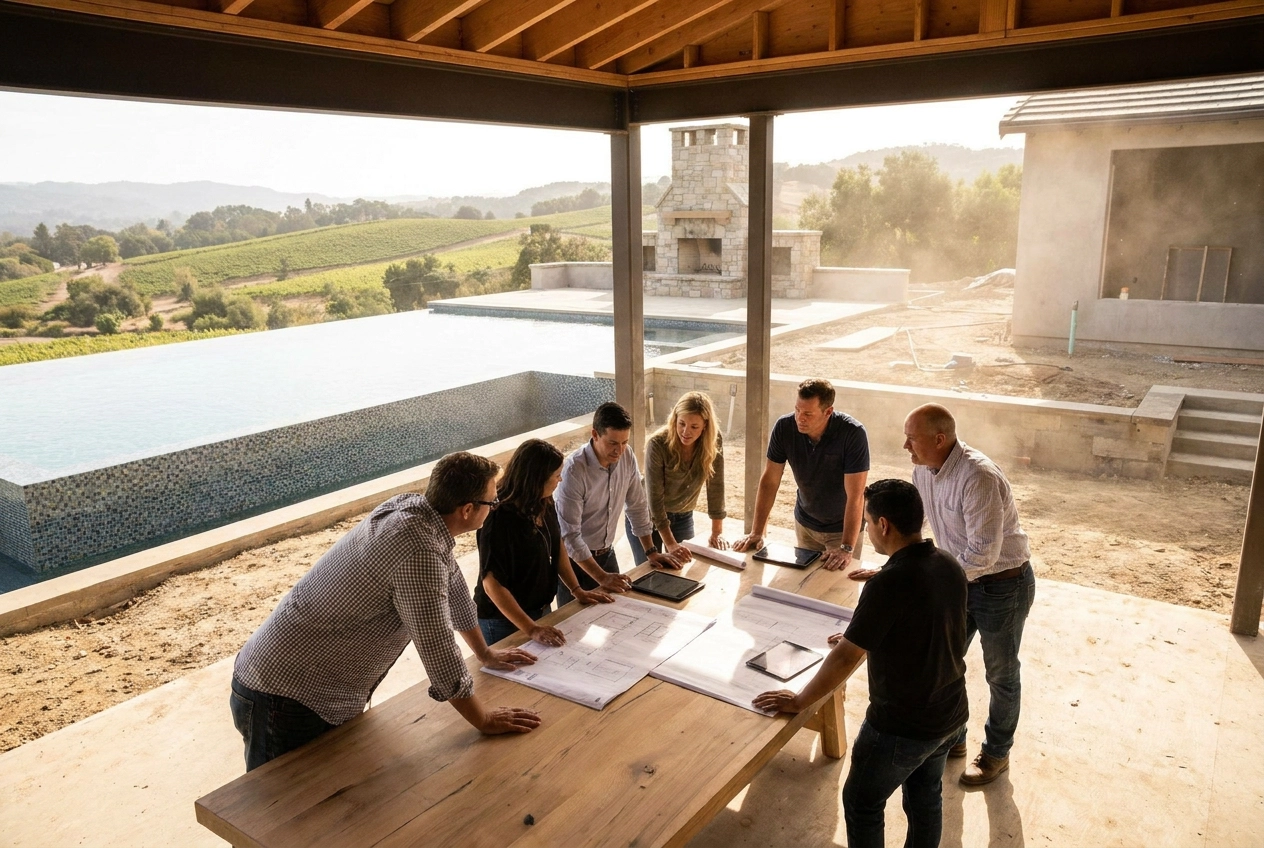
In practice, early collaboration means joint floor plan reviews where furniture layouts are tested against room dimensions before walls are framed, ceiling heights are evaluated for visual proportion and fixture clearance, and rough-in locations for electrical, plumbing, and data are coordinated against the actual design intent. At JSF Design, this phase is documented through detailed specification packages and construction drawings that give the entire project team, architect, builder, and all relevant trades, a shared reference point that eliminates ambiguity on site.

Treating interior design as a finishing layer rather than a parallel discipline within the construction process produces compounding consequences that extend well beyond budget. Rooms feel disproportionate once furnished. Storage is insufficient because built-ins were never coordinated with the framing. Lighting is ineffective because the electrical plan was drawn without a lighting design. These are not aesthetic shortcomings; they are functional failures that affect how a home performs and how it holds its value over time. The earlier the designer is seated at the table, the more completely those outcomes can be avoided.

What an Interior Designer Actually Delivers in New Construction

A qualified interior designer brings two distinct categories of work to a new construction project: decorative direction and technical specification. Both are essential, and understanding the difference clarifies why professional documentation is not administrative overhead but the very mechanism through which design vision becomes built reality.

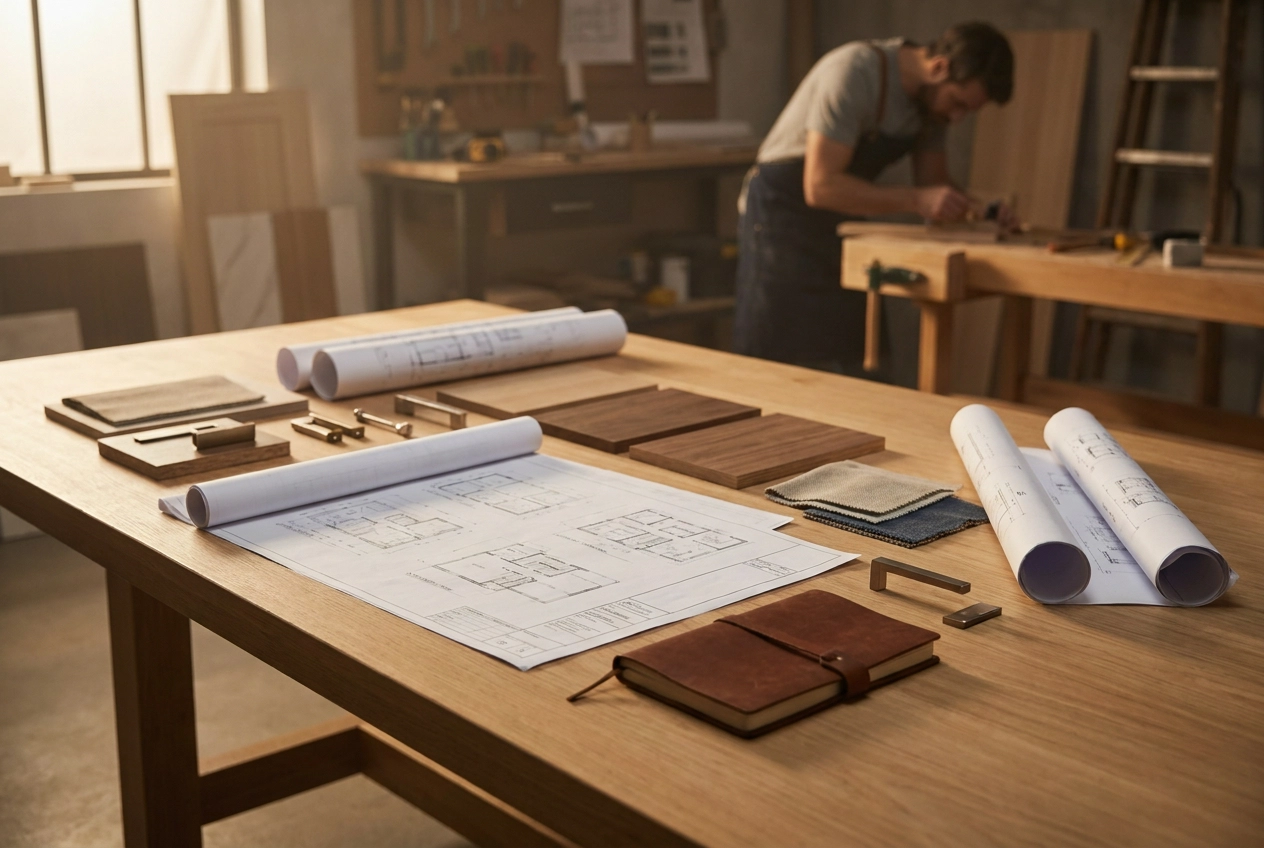
Specification books form the backbone of this process. A well-constructed spec book details every material, product, and finish selected for the project, including stone species and slab origin, wood species and grain orientation, tile dimensions and layout patterns, fixture models with exact SKUs, hardware finishes, paint colors with manufacturer codes, and installation methods for each. It functions as the contractual and operational reference for the general contractor, all subcontractors, and every trade on site. Without this level of specificity, builders default to allowances and approximations, which routinely produce substitutions that undermine the design, introduce cost overruns, and generate disputes that slow construction. A thorough spec book eliminates that ambiguity and gives the client a documented standard against which all work can be measured and held accountable.

Construction drawings produced by the interior designer translate those specifications into spatial and dimensional reality. Reflected ceiling plans map every ceiling condition, including coffers, soffits, and beam placements, alongside lighting fixture locations and their relationship to furniture positioning below. Millwork elevations provide fabricators with precise dimensional drawings of every custom cabinet, built-in, and architectural detail, specifying materials, profiles, hardware placement, and interior configurations. Finish schedules organize all surface selections room by room, creating a cross-referenced document that prevents material conflicts and ensures cohesion across the full home. Lighting coordination documents align fixture specifications with electrical rough-in requirements, switching logic, and control system integration, all before a single wire is pulled. As the construction document process for interior designers illustrates, these drawings function alongside the architect’s structural and MEP documents to form a complete, buildable instruction set.

The distinction between decorative direction and technical specification matters enormously in new construction. Decorative direction addresses the visual and experiential qualities of a space: material relationships, tonal hierarchy, proportion, and atmosphere. Technical specification translates those qualities into precise, buildable data. A new build requires both working in tandem because architectural decisions, rough-in locations, structural blocking for millwork, and ceiling framing are all locked in during early construction phases. Purely aesthetic input delivered after framing is already a compromise.

The quality of documentation is directly proportional to the fidelity of on-site execution. Vague drawings invite interpretation; incomplete specs invite substitution. When interior designers engage fully in construction documentation, the result is fewer change orders, fewer RFIs, and a finished project that reflects the design as resolved on paper rather than a diluted version negotiated on the job site. For complex custom homes in markets like Paradise Valley and Desert Mountain, where material lead times are long and custom fabrication windows are unforgiving, that documentation discipline is not a differentiator. It is a requirement.

Key Design Decisions in New Construction and the Order They Should Happen

New construction interior design follows a precise sequence, and that order is not arbitrary. Each decision category creates constraints for the next, which means working out of sequence introduces conflicts that are either expensive to resolve or simply impossible to correct without tearing out finished work.

Space planning comes first, always. Before any material is selected, the spatial program must be resolved: room proportions, ceiling heights, circulation paths, and the adjacency relationships between spaces. How the kitchen connects to the main living area, where the primary suite sits relative to outdoor access, how traffic moves through a home without crossing functional zones; these decisions shape everything that follows. In high-end builds across Paradise Valley and Desert Mountain, spatial planning also addresses sightlines, furniture zoning, and indoor-outdoor transitions, all of which must be established before rough-in begins. Moving walls or reconfiguring adjacencies after framing is a structural and budgetary problem, not a design revision.

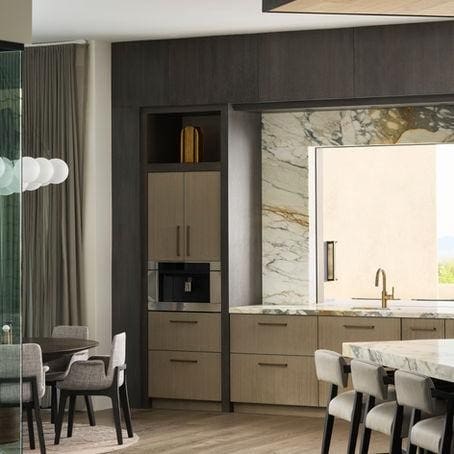
Architectural finishes are specified in a deliberate sequence tied to permanence. Flooring comes first because it establishes the visual and textural foundation for every room and dictates transitions, underlayment depths, and material relationships across the entire plan. Stone selections, including countertops, slab applications, and tile, follow and must be viewed as full slabs in person, coordinated with flooring tones, and confirmed against cabinetry profiles and edge details. Cabinetry and millwork specifications are issued next, with lead times that often run 10 to 14 weeks for custom work. Specifying these elements out of order is where conflicts originate: a tile that doesn’t align with a cabinet reveal, a stone tone that fights the flooring, a backsplash that reads incorrectly against the painted wall color selected prematurely. Paint and wall finishes are among the last permanent selections made, because they respond to everything else.

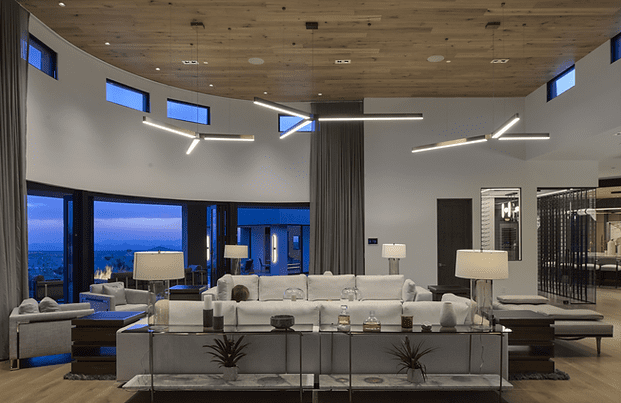
Lighting design must be resolved before drywall closes. This is one of the most commonly misunderstood sequencing requirements in new construction. A well-structured interior design timeline confirms that fixture locations, recessed layouts, junction box placements, dimming zones, and conduit runs all happen during framing and rough-in. Adding or relocating lighting after drywall means cutting into finished ceilings and walls, which creates both construction cost and schedule impact. A complete reflected ceiling plan, produced by the designer and coordinated with the electrical engineer, eliminates this problem entirely.

Custom millwork is drawn and engineered in parallel with mechanical coordination. Built-ins, wall paneling, cabinetry, and shelving systems all require detailed elevations and shop drawings that account for HVAC grille placement, electrical outlet locations, AV routing, and structural blocking. Custom millwork in luxury homes functions as architecture; it cannot be designed in isolation from the systems it encloses or surrounds.

Plumbing fixtures and hardware require early commitment because their selections drive rough-in locations, valve specifications, and drain placements. Finish consistency across fixtures, pulls, and hardware, whether a single metal finish or an intentionally mixed palette, must be resolved as a system, not room by room. Furniture and loose furnishings are introduced conceptually at the space planning stage, with procurement initiated after core finishes are confirmed. This ensures the built environment is designed to support the furnishings, not adjusted around them after the fact.

Material Selection for Luxury New Construction in the Scottsdale and Phoenix Market

Material selection for a luxury new build in Scottsdale or Paradise Valley is not simply an aesthetic exercise. The desert climate imposes real technical constraints that filter every choice before design intent even enters the conversation. Sustained UV exposure at this latitude accelerates fading and surface degradation in ways that cooler climates rarely demand. Materials also face daily temperature swings of 30 to 50 degrees Fahrenheit or more, which creates continuous expansion and contraction cycles at joints, thresholds, and transitions. Specifying without accounting for these forces leads to cracked grout lines, warped millwork, and delaminating surfaces within the first few years of occupancy. Thermal mass is an equally important variable; concrete, stone, and masonry absorb heat during peak afternoon hours and release it gradually at night, reducing HVAC loads and stabilizing interior comfort in a way no finish coating can replicate.

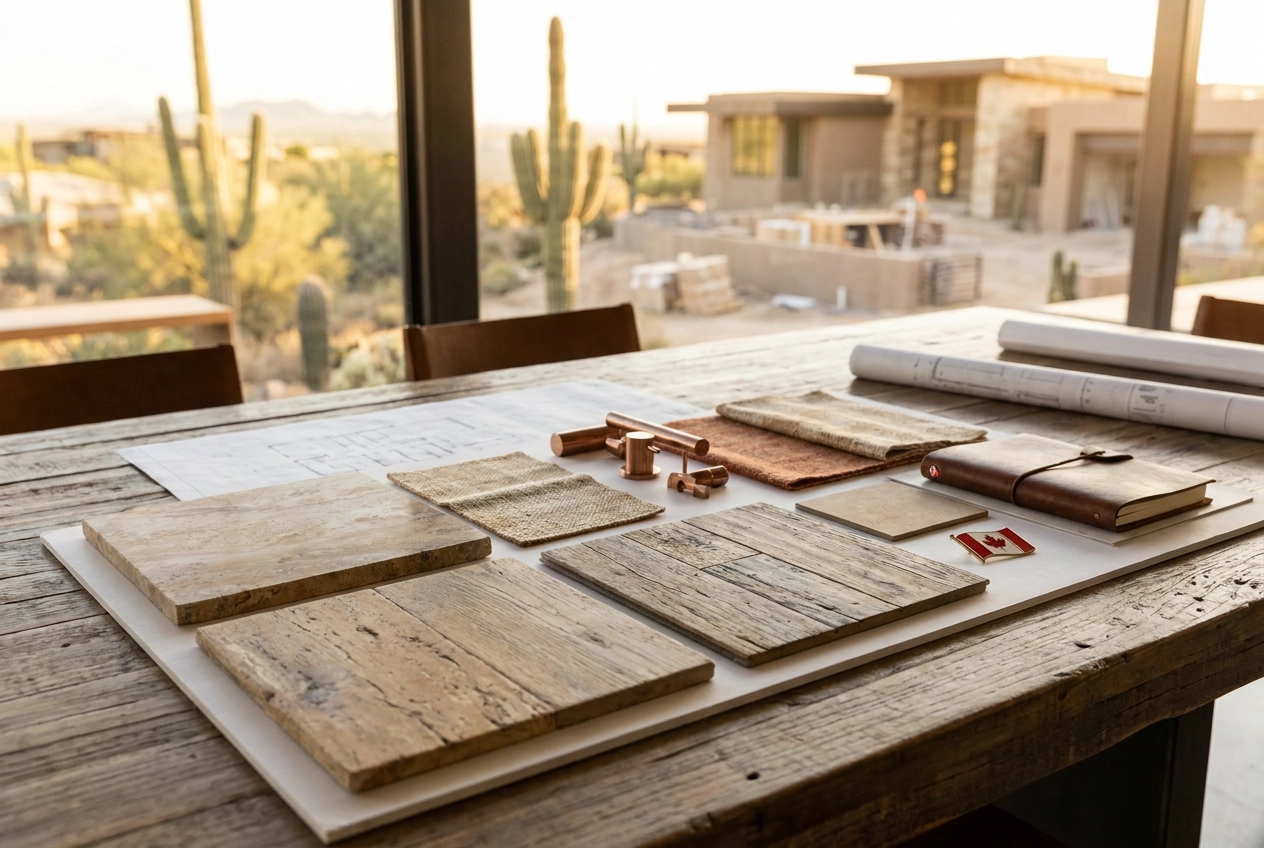
The materials that consistently perform in this environment while reading as resolved at scale are natural stone, warm-toned hardwoods, textured plaster, and concrete. Limestone, quartzite, and travertine offer thermal stability, UV resistance, and a matte depth that improves with age rather than deteriorating. Wide-plank hardwoods in white oak or similar warm-toned species, finished in matte or satin rather than high-gloss, provide organic contrast to stone and concrete without amplifying the region’s already intense natural light. Textured plaster, whether a tight Venetian application or a more breathable limewash finish, adds dimensional quality to wall surfaces and ages in a way that painted drywall simply cannot. Polished or sandblasted concrete works across floors, feature walls, and exterior-adjacent surfaces, offering seamless continuity and substantial thermal mass in a single material.

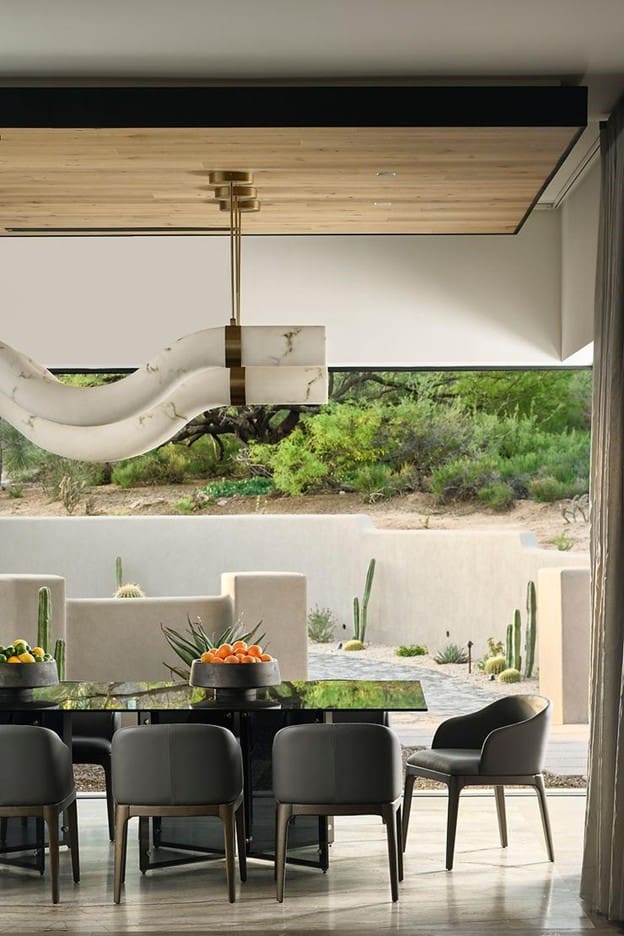
Indoor-outdoor threshold transitions are among the most technically demanding details in desert luxury construction. The goal is continuity: the same large-format stone or porcelain tile carried from the interior floor plane through the door track and onto the covered loggia, with flush or near-flush thresholds that eliminate visual interruption. This requires early coordination between the designer, architect, and builder to align subfloor heights, drainage slopes, and waterproofing membranes before slabs are poured. Material specifications must account for outdoor-rated performance without sacrificing the refined character of the interior selection. Seamless indoor-outdoor integration is one of the defining characteristics of Scottsdale luxury residential design, and it only reads as intentional when the detailing is resolved at the construction document level.

Timeless material selection in practice means choosing materials rooted in the regional landscape and grounded in craft. What reads as dated within a few years is typically a product of surface trend rather than material quality: cool gray everything, high-gloss lacquer finishes, heavily veined dramatic marbles used without restraint, or industrial elements that lack contextual grounding. These choices often reflect a specific moment rather than a considered position. Materials that age well tend to be quieter, more textural, and less dependent on contrast for their impact.

Looking at 2026 material directions for Arizona luxury builds, earthy palettes anchored in sand, clay, and warm ochre tones are displacing the cooler neutrals that defined the previous decade. Fluted and reeded millwork details have moved from accent moments into broader application on cabinetry, islands, and built-in storage, adding tactile dimension without requiring pattern or color. In wet areas, material drenching is gaining traction as a deliberate spatial strategy: wrapping a primary bath in a single stone or large-format tile across floors, walls, and ceiling creates an immersive, architecturally resolved quality that elevates the room beyond finish selection into spatial experience.

Wellness and Spatial Priorities in High-End New Builds

In high-end new construction, wellness is no longer a finish-level consideration. It is a spatial and structural commitment that must be established before framing begins. The most resolved projects treat wellness programming the same way they treat structural engineering: as a foundational input that shapes everything downstream.

The primary suite sets the standard. Spatial proportion matters as much as any fixture specification; a suite that functions as a restorative environment requires deliberate volumetric zoning, with distinct areas for sleeping, bathing, and dressing separated by physical buffer zones rather than open-plan adjacency. Acoustic separation is non-negotiable at this level. Double-stud wall assemblies, resilient channels, solid-core doors with compression seals, and insulated closet buffers between the suite and active living areas collectively reduce sound transmission in ways that directly affect sleep quality and daily recovery. Material warmth completes the equation: limewash plaster, honed stone, raw timber, and woven textiles absorb sound, age with intention, and create the sensory calm that no fixture package alone can achieve.

Sauna rooms, steam showers, heated flooring, and cold plunge installations belong in the same design conversation as kitchen layouts and structural openings. A sauna positioned adjacent to the primary bath requires moisture-resistant framing, dedicated ventilation, proper heater clearances, and a mechanical rough-in that cannot be improvised after drywall. Steam shower integration demands sloped ceiling geometry, vapor-sealed assemblies, and a generator-ready electrical circuit that must be sized during schematic design. Hydronic or electric radiant systems beneath stone and tile flooring require coordination with the subfloor build-up and heating zones well before the concrete pour. Wellness design is increasingly treated as embedded architecture, not accessorized after the fact, and the construction sequence makes that distinction consequential.

Natural light and biophilic connectivity are structural decisions first. Window placement, glazing specification, and roof aperture positioning all influence how a space performs physiologically, and these choices are locked in during architectural design development. The interior designer’s role is to be present at that stage, advocating for glazing that manages solar heat gain without sacrificing light quality, and for material selections that respond to the shifting quality of desert light across the day.

In Paradise Valley and the broader Scottsdale market, outdoor wellness extensions are a defining feature of high-performance residential design. Covered outdoor showers, cold plunge installations near pool terraces, deep shade structures, and large-format sliding glass systems that eliminate the threshold between interior and exterior require plumbing, electrical, and structural provisions coordinated long before site work is complete. Arizona’s desert climate demands that outdoor wellness spaces be designed for thermal comfort across seasons, not just summer evenings.

The documentation that supports all of this is where ambiguity becomes costly. Detailed specification books and coordinated construction drawings that map every wellness feature to its corresponding mechanical, electrical, and plumbing rough-in give the builder a clear execution path and eliminate the field decisions that erode design intent. When the designer produces this level of documentation in advance, the result is a project where wellness is genuinely built in, not bolted on.

How Interior Design Elevates Spec Home Value and Builder Efficiency

For spec builders and developers in the Scottsdale and Paradise Valley market, interior design is not a finishing touch. It is a core component of the product strategy. A well-executed design program directly influences absorption rate, list price positioning, and how a property is perceived relative to comparable inventory. Buyers at the luxury tier are not simply purchasing square footage; they are evaluating material quality, spatial coherence, and the overall sense that every decision was deliberate. When a spec home lacks that resolution, it reads as incomplete regardless of its architectural merit. Professional interior design closes that gap and signals to the market that the property was built with intention.

What builders and developers require from a design partner is fundamentally different from what an individual homeowner needs. Speed, clarity, and reliability are the operative values. Decisions must be made within defined windows to keep trade schedules intact. Documentation must be organized well enough that a superintendent can reference a finish schedule without placing a call to clarify conflicting information. Trade coordination must be proactive rather than reactive. A designer who delivers detailed specification books, cross-referenced finish schedules, and coordinated construction drawings reduces the friction that inflates costs and erodes builder margins. This kind of documentation-driven process is what converts a one-project relationship into a standing partnership.

Designing for a spec buyer profile requires a particular discipline. The selections cannot reflect the designer’s personal sensibility or the builder’s preferences; they must reflect the values and expectations of the most qualified buyer for that property. In the Scottsdale and Paradise Valley luxury segment, that typically means warm neutrals anchored by natural stone, textured plaster, and considered wood tones, combined with spatial features that support both daily living and entertaining. The palette must be broad enough to invite personalization without alienating buyers who have specific taste. Specificity of material and restraint of palette, applied consistently across every room, create the kind of cohesion that supports premium pricing.

The 2026 new-home market is increasingly design-driven at the high end, where differentiation cannot be achieved through location or lot size alone. In a submarket with significant new construction activity, standing inventory must compete on the quality of the interior program. Builders who engage design partners early, with structured workflows and clear documentation standards, consistently bring more resolved products to market and sustain the repeat relationships that reduce project overhead over time.

The Phoenix and Scottsdale New Construction Market: What Builders and Homeowners Should Know

The Phoenix metro area ranks fourth nationally for new home construction activity, with over 39,000 housing units permitted in a recent reporting period, including approximately 24,000 single-family homes. That volume places Phoenix alongside markets like Dallas and Houston as a sustained driver of residential construction output. Even with modest year-over-year fluctuations in permitting rates, demand for new builds remains elevated, largely because limited resale inventory continues to push buyers toward new construction as the more accessible path to ownership.

Within that broader market, the luxury segment operates under an entirely different set of conditions. Paradise Valley, Desert Mountain, and North Scottsdale represent the highest concentration of custom and semi-custom new construction, where buyer expectations around material quality, spatial planning, and finish execution have continued to rise. Communities in this corridor are not competing on square footage alone. They are competing on the coherence and resolution of the interior environment, from the specificity of the stone selections to the precision of millwork detailing.

High permit volume intensifies that competition in a direct way. When thousands of new homes are entering the market each year, differentiation at the interior level becomes one of the most decisive factors in the luxury tier. Buyers with the means to choose carefully will move toward projects that demonstrate design intent, not just upgraded selections from a standard options sheet. For spec builders and developers, this means that a well-documented, professionally executed interior design program is increasingly a prerequisite for competing effectively, not a premium add-on.

At the national level, single-family construction starts have tracked between approximately 872,000 and 930,000 seasonally adjusted annual units as of 2026. Phoenix’s outsized share of that activity amplifies local demand for designers, architects, and specialists who can manage the technical and aesthetic demands of new construction at scale.

For homeowners and developers operating in this market specifically, the regional context matters. The desert climate, the local construction environment, and the expectations of the Phoenix luxury buyer are all distinct variables. A designer with direct experience in this market brings an understanding of UV-sensitive materials, indoor-outdoor integration strategies, and the supply chains and trade relationships that make precise execution achievable within real project timelines and budgets.

Starting the Process Right: What to Do Before You Break Ground

New home construction interior design is a technical and creative discipline that runs in parallel with architecture, not downstream from it. The decisions made during early design development, before a single wall is framed, carry the greatest long-term impact on spatial livability, material performance, and overall property value. Waiting until construction is underway to engage a designer is one of the most common and costly missteps in high-end residential projects; by that point, structural commitments have already constrained the interior’s full potential.

The most reliable path to execution that matches intent is engaging a designer who brings documented process, construction drawing capability, and direct experience collaborating with architects and builders. Detailed specification books, reflected ceiling plans, millwork elevations, and coordinated finish schedules are not administrative formalities; they are the instruments that translate design intent into buildable outcomes and protect the project from costly mid-construction revisions.

For homeowners, spec builders, and developers planning projects in Scottsdale, Paradise Valley, Desert Mountain, or the greater Phoenix area, JSF Design provides new construction interior design services built around precision, thorough documentation, and close collaboration with the full project team from the earliest planning phases. Engaging JSF Design before ground breaks is the most direct way to protect your investment and ensure a fully resolved interior from day one. Contact JSF Design early in your planning process to begin that conversation.

Conclusion

Building a new home is one of the most significant investments you will ever make, and your interior design decisions will shape how that space feels for years to come. The key takeaways from this guide are straightforward: start early, align your design choices with construction timelines, communicate clearly with your builder and designer, and treat every finish selection as part of a larger cohesive vision.

When you approach the process with structure and intention, costly mistakes become avoidable and your dream home becomes achievable.

Now is the time to take action. Review your current project timeline, identify which design phases are coming up next, and begin building your materials and finish selections with purpose. Your future home deserves a thoughtful plan. Start building that plan today.

+ Show / Hide Comments

Share to:

Leave a Reply

Your email address will not be published. Required fields are marked *

READ        LATEST

the

BEST      THE EDIT

of

Portrait of Jeffrey Florentine of JSF Design in front of textured stone surfaces from the Elementa collection created in collaboration with Antolini Stone.

Design Inspiration

Material Moves: Inside Jeffrey Florentine’s Collaboration With Antolini Stone Some collaborations happen because of timing. Others happen because of shared philosophy. The partnership between Jeffrey Florentine of JSF Design and Antolini Stone feels very much like the latter — a collaboration rooted in a mutual belief that materials should shape architecture, not simply finish it. […]

Desert Mountain New Build Desert Mountain Remodel Portfolio | Luxury Interior Design Scottsdale – JSF Design
Desert Mountain Remodel Luxury Scottsdale Interior Design

Elevate Your Space 

Let’s Bring Your Vision to Life

Design Goes Beyond Aesthetics...
It Shapes Experience.