

Choosing a Luxury Interior Design Firm in Scottsdale or Phoenix: What Separates a Cohesive Result from a Piecemeal One
November 27, 2026


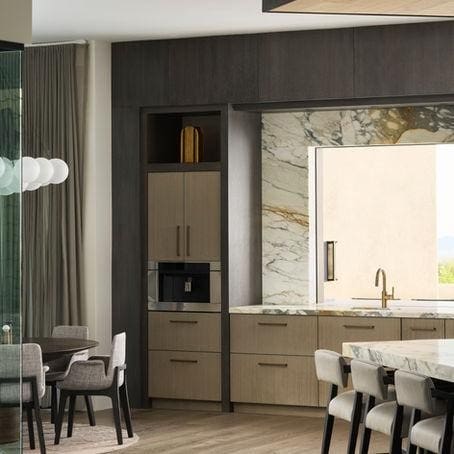
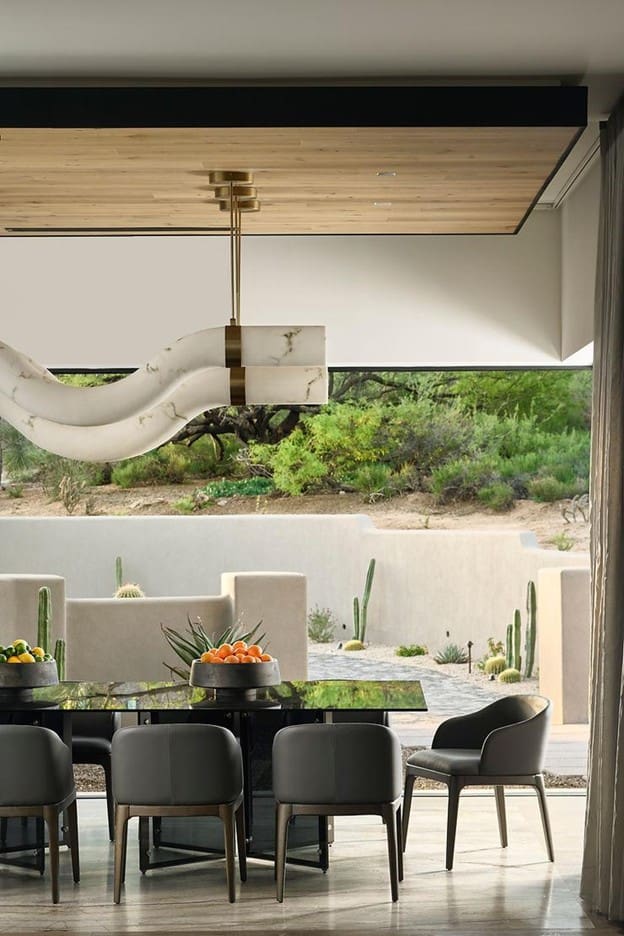

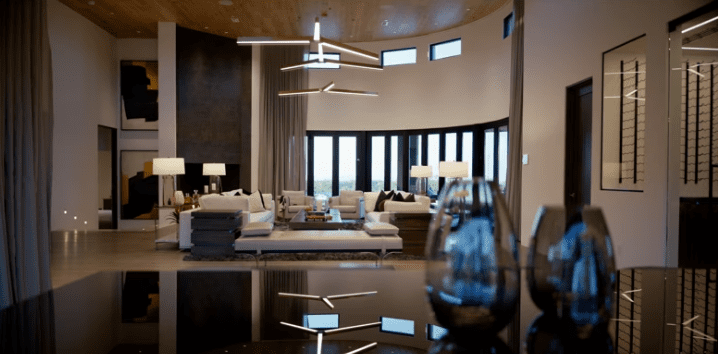
Two homes can begin with the same brief, the same square footage, and the same budget, and still resolve in opposite directions. One feels inevitable: millwork lands where it was drawn, lighting supports the architecture, and each finish was selected against the others. The other feels assembled. Beautiful pieces, no through-line. The difference rarely comes down to taste. It comes down to which engagement model was hired, and what that model actually delivers.
This is a buyer’s comparison of luxury interior design firms in Scottsdale and Phoenix, judged only by outcomes you can inspect: documentation depth, trade coordination, and who owns the final install. We walk through the three engagement models you are really choosing between, full-service design and procurement, design-only, and retail-led furnishing, then apply three criteria that separate a cohesive result from a piecemeal one. You will get four questions that reveal which model you are being sold, guidance on verifying contractor standing with the Arizona Registrar of Contractors before you sign, and a clear account of what single-firm control buys you. No names, no rankings. A framework you can use.
Why Two Homes Can Share One Brief and Still Resolve Differently
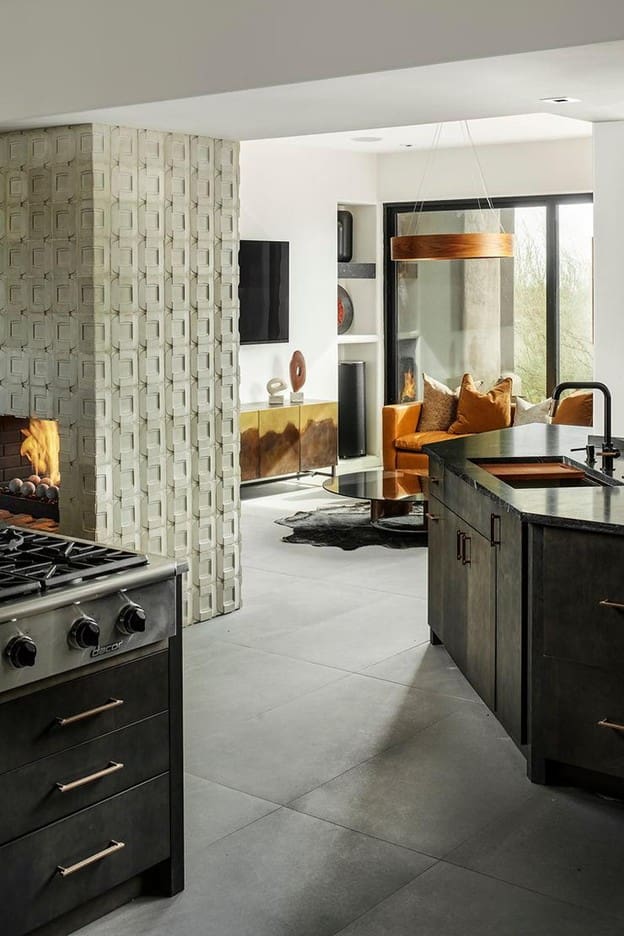
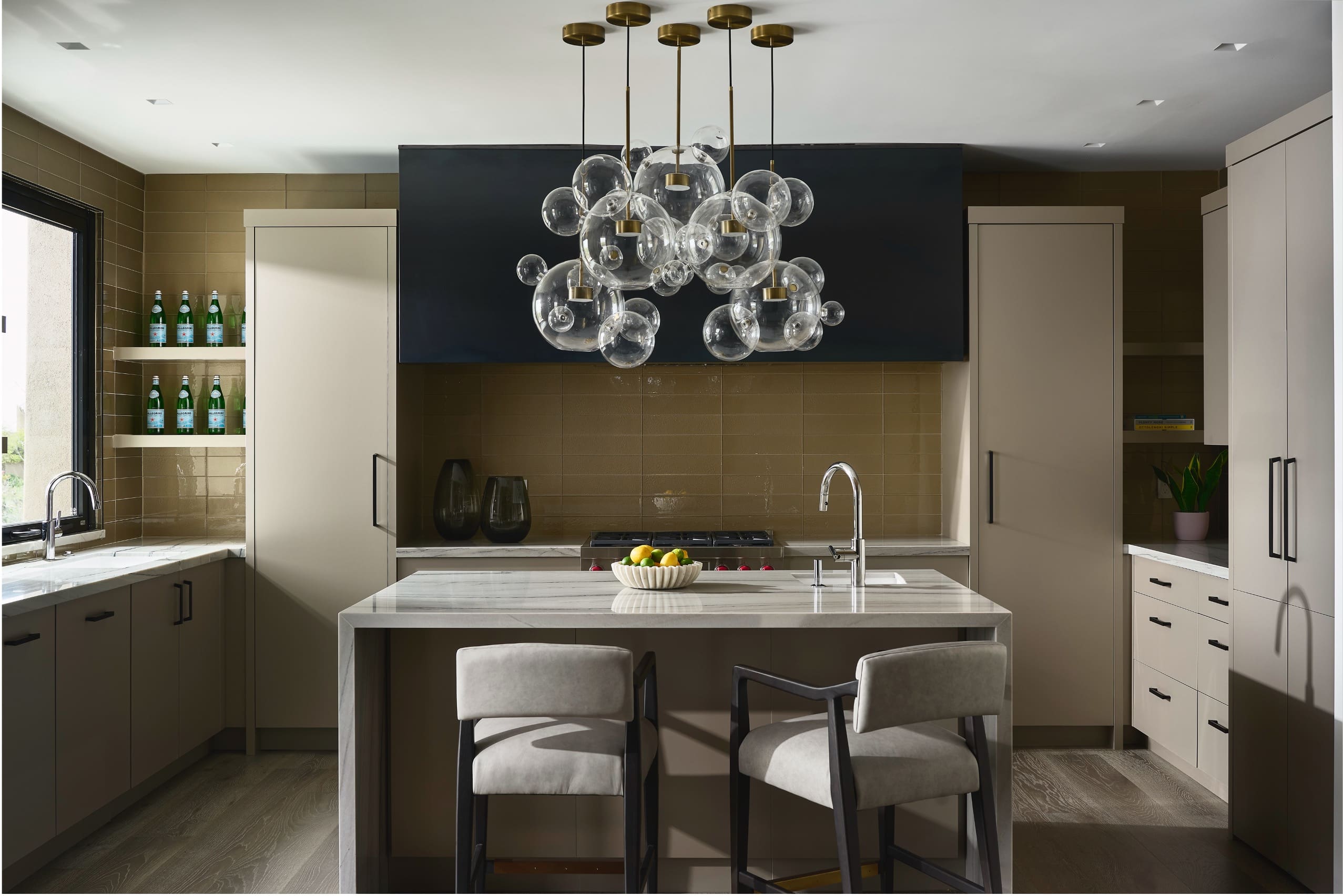
Two Paradise Valley homes, comparable briefs, budgets, and square footage. One reads as a single composition; the other reads as an assembly. Piecemeal looks like this: finishes chosen at a showroom, furniture sourced months later by a different party, decorative lighting pulled from whatever the electrical supply house stocked, accessories arriving after move-in with no one accountable for placement.
Taste is rarely the deciding variable. Engagement structure is. The same palette, run by one accountable team versus five independent vendors, produces two different houses.
The difficulty is that buyers see the sales version of a process, not the production version. Portfolios show results, not the mechanism that produced them, which is why the deliverable set matters more than the look book. It is also why evaluating high-end residential interior design firms demands more than reviewing imagery.
What follows compares three engagement models against three criteria a homeowner can inspect, plus the questions that reveal which model is being sold. No firm names, no rankings: a framework to carry into shortlist conversations.
The Three Engagement Models You Are Actually Choosing Between
Treat these three models as an analytical lens, not an industry classification. Most firms blend them, but nearly every engagement has one dominant mode that determines what the firm controls.
The dividing line is what the firm holds. Full-service design-and-procurement holds specification and procurement; design-only holds specification; retail-led furnishing holds neither in the architectural sense. Contract form follows: the AIA’s interior design agreement is drafted so a firm can redact services it does not perform, and procurement can run through a separate channel. Fee structure, staffing, and site presence track the same line.
Photography will not disclose any of this. A design-only studio can publish rooms the client’s own purchasing assembled; a retail floor can stage rooms it never specified.
This compares models, not firms. The useful question is which model matches the scope, the timeline, and who on your side will carry procurement. For a deeper filter on individual firms, see what to look for in a luxury interior designer. Identify the model in the first meeting and you avoid months of mismatched assumptions.
Full-Service Design and Procurement: One Firm From Drawings to Install
Full-service design and procurement holds specification, purchasing, and installation under one roof. Scope typically runs from concept and space planning through finish and material specification, custom millwork design, lighting coordination, furniture, textiles, and accessories, closing with final installation.
Accountability sits in one place: the team that made the design decisions issues the drawings, manages purchase orders and delivery windows, receives freight, and runs install day. Specification books and construction drawings become the shared language with the architect, builder, and trades, converting intent into instructions the field can price, build, and be inspected against.
The trade-off is depth. This model asks more of the client during decision windows and carries a fee reflecting management as well as design.
JSF Design describes its own process this way: specification books and construction drawings, furniture and textile procurement, and on-site collaboration with the build team. The firm states it is not an architectural firm. Owners directing an Arizona project from another market may find what Calgary homeowners should know before hiring an interior designer useful context.
The contrast sharpens when procurement is handed off.
Design-Only: Specified by One Firm, Executed by Many
Where the full-service model consolidates, design-only draws a line at the documents. Scope typically ends with finish schedules, specifications, and construction drawings handed to the owner or builder; purchasing, receiving, and installation sit with someone else.
That arrangement performs well under specific conditions: the owner retains a capable representative, or the builder already holds procurement authority and site supervision. Absent either, the failure mode is handoff, not design quality. Substitutions get approved in the field without the designer’s review, lighting and millwork details get value-engineered, and the work drifts from the drawings in increments no single party owns.
Ask whether the fee includes construction-phase site visits, sample approvals, and punch-list follow-through. Specification without observation is incomplete oversight, and details as fine as a bathroom’s stone layout and lighting plan only hold if someone enforces them on site.
Say the coordination assumption out loud: design-only leans on the builder to resolve sequencing, and that holds only if the documents are complete and the designer answers questions quickly.
The next model removes specification from the process altogether.
Retail-Led Furnishing: Rooms Selected, Not Specified
Retail-led furnishing sells furniture, textiles, and accessories room by room, sometimes with a design service attached to the sale. Its strength is speed and access: for a fast turnover, a staged listing, or a furnished rental, it produces a finished-looking space on a compressed timeline.
The limit is scope. Hard finishes, custom millwork, integrated lighting, and case goods requiring site dimensions sit outside this model, so those decisions were made earlier by someone else, or never made deliberately. The result often photographs well room by room yet reads as a sequence of purchases: competing wood tones, mismatched hardware standards, lighting that fights the architecture. The gap is mapped in Full-Service Interior Design vs. Retail Furniture: What’s the Difference?.
Before committing, ask whether the retailer will sequence deliveries, receive freight, inspect for damage on arrival, and manage installer access. Buyers do hold a default right to inspect goods before acceptance, and the duties above exist only if the contract assigns them. If those tasks land back on you, the furnishing is being bought, not delivered.
Criterion One: Documentation Depth
Where retail furnishing stops, specification begins.
Ask for a redacted specification book from a comparable project; depth is the fastest, most objective tell in the room, and it cannot be improvised in a meeting. A thorough set contains finish schedules keyed to room and elevation, material and supplier references, millwork shop drawings and profiles, lighting and switching plans, procurement schedules with lead times, and installation sequencing notes.
That is the mechanism, not the artifact: documentation converts a decision into an instruction a trade can price, build, and be inspected against. It is how intent survives contact with the field, and it is what What Home Interior Design Actually Involves at the Luxury Level looks like in practice.
Weak documentation fails quietly: stone picked at the slab yard by whoever is on site, the trim profile decided at the saw, the grout color chosen from a truck sample board.
Then ask who updates the set when a substitution is proposed, and how revisions reach the field so the builder works from the current version.
Criterion Two: Trade Coordination and Who Is On Site
Documentation only steers the outcome if someone enforces it in the field. Three questions reveal whether anyone will: who attends construction meetings, who issues field direction when a detail conflicts with conditions, and how often the designer is physically on site during the finish phases.
Coordination is largely a sequencing discipline. The tile setter, cabinet installer, stone fabricator, and lighting controls technician cannot work in whatever order the overall schedule assumes, and someone has to own that order. In this market, friction concentrates at concealed lighting and plaster reveals, integrated millwork with appliance panel alignment, stone layout and book-matching, door and hardware coordination, and transitions between hard surfaces. These resolve through process discipline, not luck.
In design-only models, that work is often delegated to the builder. It is workable only when the documents are complete and the designer is reachable for fast clarification. Without both, coordination becomes improvisation. The firm that specified the work is best positioned to answer for it in the field. Separating those roles is the most common structural cause of a piecemeal result.
Criterion Three: Who Owns the Final Install
Install day is where coordination meets its final test. Four answers predict the quality of the last five percent: who receives freight, who inspects on delivery, who holds the punch list, and who is present on install day.
Design responsibility is not installation liability. The contract should state which party owns damage, defects, re-orders, and the cost of a piece that arrives wrong. Ask the scenario question directly: when a lead time slips or an item arrives damaged, is the owner chasing the vendor, or is the firm? That answer reveals whether procurement was managed or merely facilitated.
In a full-service model, install is the design’s proof: furnishings placed, art hung, lighting and controls set, a stylist walk-through completed, a resolved handover rather than a delivery. It is one phase of what a full-service high-end residential interior design engagement actually involves.
In design-only and retail-led models, this stage is frequently the owner’s project. Cohesion most often breaks there, because no single party owns the final composition. The model you are buying shows up here.
Four Questions That Reveal Which Model You Are Being Sold
With the criteria set, put these questions to every firm on your shortlist before signing.
What is in the deliverable set? Ask for the enumerated document list, not a narrative of process. A firm that cannot itemize it is not selling documentation.
Who is on site during construction, and how often? Ask for a name and a cadence rather than a promise of involvement. Vague answers are themselves informative.
Who owns the final install? Ask who is physically present for delivery, placement, styling, and punch. This is the question that most reliably separates full-service from design-only.
What does your fee include after drawings are issued? Separate the design fee from construction-phase services so you can see what stops at document delivery.
For developers and repeat builders: how does the firm document scope for marketing and sale? Buyers of the finished spec home will inspect the same details you specified.
The answers map to a model more reliably than any portfolio.
Before You Sign: Verify Contractor Standing With the Arizona ROC
The engagement model and the license are separate questions. Both matter before signing. The Arizona Registrar of Contractors describes its mission as protecting the health, safety, and welfare of the public through a regulatory system designed to promote quality construction by Arizona contractors. Its site states it plainly: anyone can pretend to be a contractor, so check the license.
Verify standing through the public Contractor Search on roc.az.gov before executing a construction contract, remodel or new build. The ROC also publishes Before Hiring a Contractor and Contract Requirements pages and administers a complaint process and a Recovery Fund. Read those pages directly rather than relying on any summary, including this one.
Reciprocity matters for a firm relocating from another market: under A.R.S. §32-4302, an out-of-state license held at least twelve months in the same discipline can qualify for an Arizona license.
Design-only scope remains unresolved; ROC materials do not establish whether it requires a license. Ask the ROC directly and treat confident claims either way with caution. Verification comes first; the model decision follows.
What Single-Firm Control Actually Buys You
With license standing verified and design-only scope confirmed directly with the Registrar, the decision narrows to structure. Cohesion is a production outcome, not a taste outcome. It comes from one team holding specification, procurement, and site follow-through, and it degrades in direct proportion to how many of those three are handed off.
Identify the model before you compare portfolios. Ask for the deliverable set, the site cadence, and the install plan in writing, then match the answers to the model you believed you were buying. A design-only studio and a full-service firm can publish nearly identical photography.
Match the model to the project. Retail-led furnishing suits fast turnover staging. Design-only works when you retain capable procurement and site authority internally. Full-service, the model JSF Design is built around, is the right structure when the entire house must resolve as one composition.
The practical test is simple. Ask who can name the sequence from drawings to install without consulting anyone. If no single party can, the result is already piecemeal, no matter how strong the individual decisions were.
Conclusion
The engagement model, not portfolio photography, determines cohesion. Full-service keeps specification, procurement, and site follow-through under one firm. Design-only can work when you retain procurement and site authority internally. Retail-led furnishing suits fast turnover staging, not whole-home resolution. Documentation depth, trade coordination, and ownership of the final install reveal which model you are actually buying. Verify license standing with the Arizona ROC and confirm design-only scope directly with the Registrar before you commit. Then match the structure to the project. For a house that must resolve as one composition, JSF Design’s full-service model is built around single-firm control. Your next step is simple: ask who can name the sequence from drawings to install without consulting anyone. That answer will tell you whether the result is cohesive or already piecemeal.




BEST THE EDIT
of

The collaboration between Jeffrey Florentine of JSF Design and Antolini began with a shared conviction: natural stone should shape architecture, not simply finish it. Featured by Modern Luxury Scottsdale, Elementa is a collection developed with Antolini to explore how texture, proportion, light and repetition can give stone a more architectural role in the home. Jeffrey […]
Elevate Your Space
Let’s Bring Your Vision to Life
Design Goes Beyond Aesthetics...
It Shapes Experience.

+ Show / Hide Comments
Share to: